These notes were written by the person who submitted this item. Appraiser.AI has not verified them, and the AI's identification and estimate may rely on them.
AI Estimated Value
Not an official valuation
$9,000 - $18,000
AI estimate as of June 30, 2025 · verify with a professional before acting
AI-Generated · Verify before acting
Everything on this page is generated by AI for informational purposes only. AI can make mistakes — the AI may misidentify items or misattribute them (artist, maker, brand, designer, origin, era). This is not an official valuation and should not be used for insurance, sale, tax, estate, legal, or lending purposes — or any decision requiring a certified appraisal. It is not an authoritative claim about any person, brand, or rights holder — do not share or rely on it as a factual statement about a third party. Always consult qualified professionals before making financial decisions.
This analysis also relies on unverified notes provided by the user, which may be incomplete or inaccurate and could affect the result.
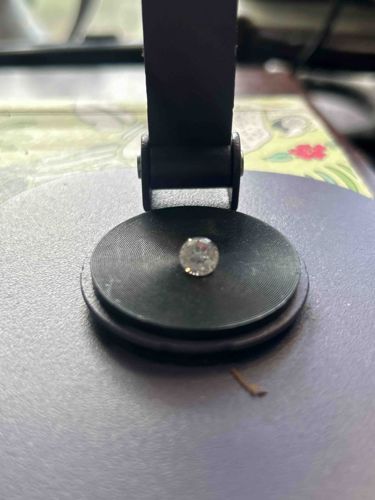
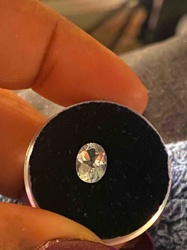
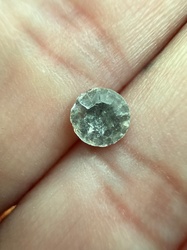
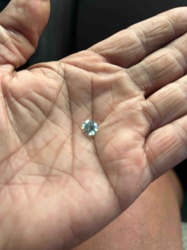
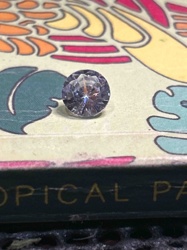
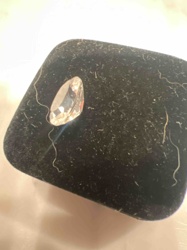
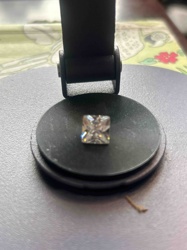
This item is a single, loose, transparent gemstone, exhibiting the characteristic facets of a round brilliant cut. The stone displays significant brilliance and luster, indicative of a high refractive index and excellent polish. It appears colorless or near-colorless, falling within the D-J range on the GIA color scale, though precise grading would require professional equipment. The cut features the standard 57 or 58 facets (including the culet), designed to maximize the stone's light performance, with distinct crown facets, a table facet, and pavilion facets converging to a point. The girdle appears to be unfaceted or bruted, creating a clean transition between the crown and pavilion. From the provided image, the diamond appears clean to the naked eye, suggesting a clarity grade of VS2 or higher, as no immediate inclusions or blemishes are readily visible. Its size is approximate based on the surrounding components; it seems to be in the range of a commercial jewelry stone, possibly between 0.5 and 2 carats, though direct measurement is necessary for accuracy. The stone is presented on a specialized dark stand, likely for examination or display purposes, which has a matte finish that helps minimize reflections and highlights the stone's characteristics. There are no visible chips, cracks, or significant abrasions on the surface, indicating the stone is in very good to excellent condition. As a loose stone, there are no manufacturer's marks or signatures. The cut style suggests a modern or recent origin, typical of contemporary diamond cutting standards. The overall impression is one of a high-quality, well-proportioned diamond, suitable for mounting in fine jewelry.
AI Appraisal Report
Based on my visual examination of the provided image, this appears to be a high-quality loose round brilliant cut diamond. Its excellent brilliance, luster, and apparent colorless to near-colorless body color (suggesting D-J range) along with apparent eye-cleanliness (suggesting VS2+ clarity) significantly contribute to its potential value. The cut exhibits good symmetry and polish, maximizing light performance. The absence of visible chips or cracks indicates very good to excellent condition.
In the current market, well-proportioned, colorless to near-colorless diamonds of good clarity and cut are in consistent demand, especially for mounting in fine jewelry. Comparables would include certified diamonds of similar size (estimated 0.5 to 2 carats), color, clarity, and cut grades. Its rarity is relative to its specific 4Cs combined, with higher grades being scarcer.
Factors significantly impacting value include its precise carat weight, exact color and clarity grades (e.g., D vs J, VS2 vs FL), and the precise cut grade (e.g., GIA Excellent, AGS Ideal). Without precise measurements, weighing, and professional grading (GIA, AGS), the estimated size range introduces significant value variability.
Limitations: My authenticity verification is strictly limited to visual assessment from the image. While it possesses the visual characteristics of a diamond, definitive authenticity, precise grading, and origin confirmation necessitate in-person examination, professional laboratory testing (e.g., Raman spectroscopy, UV fluorescence), weighing, and precise measurements. Provenance documentation, if available, would further substantiate its history and value. The current appraisal value is an informed estimate based solely on the visual information.