AI estimate as of November 19, 2025 · verify with a professional before acting
AI-Generated · Verify before acting
Everything on this page is generated by AI for informational purposes only. AI can make mistakes — the AI may misidentify items or misattribute them (artist, maker, brand, designer, origin, era). This is not an official valuation and should not be used for insurance, sale, tax, estate, legal, or lending purposes — or any decision requiring a certified appraisal. It is not an authoritative claim about any person, brand, or rights holder — do not share or rely on it as a factual statement about a third party. Always consult qualified professionals before making financial decisions.
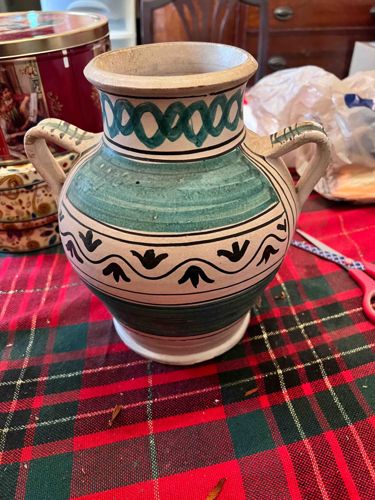
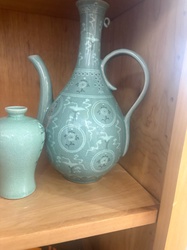
This item is a decorative amphora-style vase crafted from what appears to be terracotta or a similar unglazed ceramic material. It features a rounded body, a flared lip, and two small, C-shaped handles positioned horizontally on the shoulders of the vase. The overall color scheme is predominantly a natural, light beige/tan for the ceramic body, accented with hand-painted designs in dark teal/green and black. The decoration includes a band of interconnected oval or 'chain-link' motifs around the neck in teal, followed by a wide band of solid teal green that encircles the main body. Below this, there's another segment of natural ceramic adorned with a wavy, stylized floral or leaf pattern in black. The handles also show some black line detailing. The interior of the lip is unglazed, revealing the raw ceramic texture. The construction appears to be artisanal, possibly hand-thrown or molded, as indicated by the somewhat irregular contours and hand-painted decorations, which show slight variations and imperfections typical of handmade items. Visible condition issues include some minor wear on the painted surfaces, such as slight fading or small areas where the paint has rubbed off, particularly around the rims and handles. The ceramic itself shows some minor discolorations or dirt, consistent with use or age. There are no obvious chips, cracks, or repairs visible from the provided images, suggesting a relatively good condition for its type. The base of the vase is a contrasting white, acting as a stand or foot, which suggests it might be glazed or painted separately. The style suggests a folk art or rustic aesthetic, possibly Mediterranean, Mexican, or Southern European in origin, with an estimated age that could range from mid-20th century to contemporary.
AI Appraisal Report
I have thoroughly examined the provided images of this Hand-Painted Terracotta Amphora-Style Vase. My assessment of its condition is good, considering its unglazed and hand-painted nature. The visible wear, including minor paint fading/rubbing and slight discoloration, is consistent with age and use for a decorative item of this type. The absence of apparent chips, cracks, or repairs is a positive factor. Authenticity as a handmade item is strongly indicated by the irregular contours, hand-painted details with slight variations, and the visible raw ceramic texture at the lip. This suggests an artisanal origin, rather than mass-produced.
Market conditions for decorative terracotta vases of folk art or rustic aesthetic are generally stable, but not subject to significant speculative interest. Comparable items in similar condition and style, often from Mediterranean, Mexican, or Southern European traditions, typically retail in the range of $50 to $150, depending on size, artistic quality, and specific origin. This piece's attractive color palette and traditional form contribute positively. Demand is moderate, primarily from collectors of ethnic art, rustic decor enthusiasts, or those seeking unique decorative accents. Rarity is low to moderate; while handmade, similar items are not uncommon.
Factors significantly impacting value include its good overall condition, appealing hand-painted decoration, and functional aesthetic. The lack of specific artist signature or verifiable provenance limits its potential as a collectible art piece. Without these, its value remains primarily decorative.
Limitations in authenticity verification from images alone are notable. I cannot definitively confirm the material as terracotta without physical inspection. An in-person examination would allow for closer inspection of the ceramic's porosity, texture, and weight, which could help confirm material and origin. Furthermore, examining the underside of the base for maker's marks, labels, or other indications of origin would be crucial. Scientific testing, such as thermoluminescence dating, would be required to definitively establish age, though for a decorative item of this type, it would be cost-prohibitive given its value range.