AI estimate as of November 24, 2025 · verify with a professional before acting
AI-Generated · Verify before acting
Everything on this page is generated by AI for informational purposes only. AI can make mistakes — the AI may misidentify items or misattribute them (artist, maker, brand, designer, origin, era). This is not an official valuation and should not be used for insurance, sale, tax, estate, legal, or lending purposes — or any decision requiring a certified appraisal. It is not an authoritative claim about any person, brand, or rights holder — do not share or rely on it as a factual statement about a third party. Always consult qualified professionals before making financial decisions.
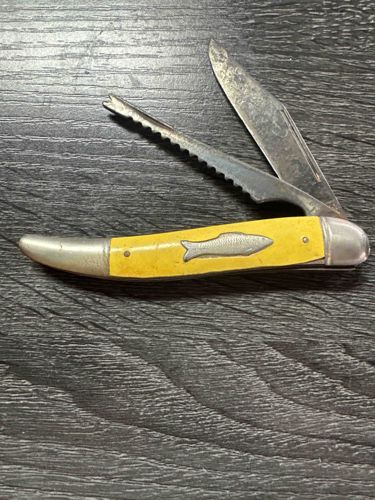
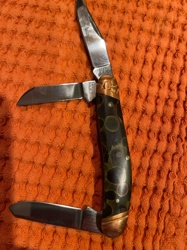
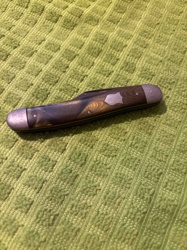
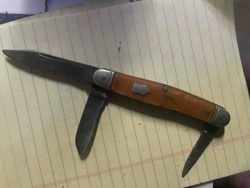
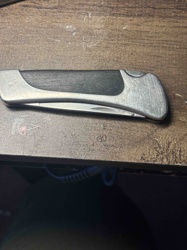
This item is a vintage multi-tool pocket knife, often referred to as a 'fish knife' due to its specialized components. It features a bright yellow handle, likely made from a synthetic material such as celluloid or a similar early plastic, which gives it a distinct aged appearance. The handle is adorned with a decorative, silver-toned inlay in the shape of a fish, suggesting its intended use for fishing activities. The knife is constructed with metal bolster caps at both ends of the handle, showing some tarnishing and minor surface scratches consistent with age and use. Two blades are visibly extended from the handle: a primary cutting blade and a serrated blade with a pointed pick or scaler end. The primary blade appears to be made of carbon steel, exhibiting significant surface wear, pitting, and discoloration, indicating oxidation and lack of recent polishing. Its edge also shows signs of use and dullness. The second blade, likely a fish scaler, also displays similar material characteristics and wear. It features a serrated edge designed for scaling fish and a pointed, bifurcated tip that could be used for cleaning or dislodging items. Small brass pins secure the handle scales to the knife's frame. The overall condition suggests a well-used item, likely from the mid-20th century, retaining its functional form despite visible wear and age-related patina. No discernible maker's marks or signatures are visible in the provided image, which could impact specific manufacturing identification.
AI Appraisal Report
I have carefully examined the provided image of this vintage multi-tool pocket knife, often referred to as a 'fish knife.' Based on my visual assessment, the item presents as a genuine vintage piece, likely dating from the mid-20th century. The bright yellow handle, possibly celluloid or an early plastic, shows the characteristic aging and color often associated with such materials. The decorative fish inlay and metal bolster caps, with their evident tarnishing and minor scratches, are consistent with period manufacturing and use.
The condition of the knife is fair to good for its age, suggesting it was a well-used utility item. The primary carbon steel blade exhibits significant wear, pitting, discoloration from oxidation, and a dull edge, which is typical for a tool that has not been consistently maintained or polished. The fish scaler blade shows similar wear. The brass pins securing the handle scales appear intact.
In terms of market conditions, vintage pocket knives, particularly utility-grade multi-tools like this 'fish knife,' generally have a modest but steady demand from collectors of vintage tools, fishing memorabilia, or general Americana. While charming, this specific item does not appear to possess exceptional rarity. Its lack of discernible maker's marks or signatures, which are frequently key identifiers for higher-value collectibles, significantly impacts its potential valuation. Without a known manufacturer like a reputable cutlery company (e.g., Case, Schrade, etc.), it's likely a more common, mass-produced item.
The primary factors affecting its value are its good, albeit used, vintage condition and its functional, appealing design. The most significant limiting factor is the absence of a discernible maker, which prevents it from being associated with a premium brand or specific historical significance.
My appraisal value of \$25-50 reflects its current condition, the lack of a prominent maker, and the existing market for similar, unmarked vintage utility knives. To provide a more definitive authentication or to potentially increase its value, an in-person examination would be crucial to look for faint maker's marks, assess blade snap and wobble, and inspect for any hidden damage or repairs not visible in the image. Provenance documentation could also shed light on its history, though this is rare for common utility items.