AI Appraisal Estimate

AI-generated estimates · not official valuations

From the user

What was submitted

Photo and notes provided by the user — not generated by AI

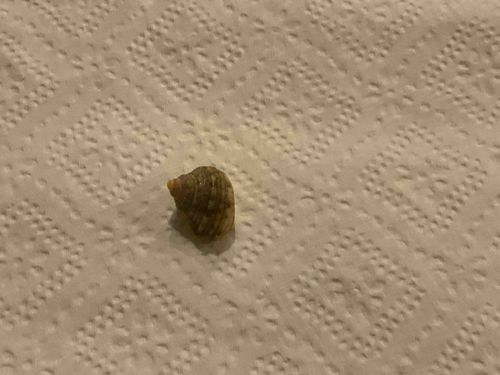
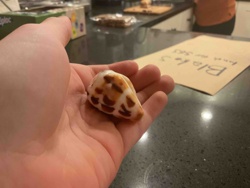
Submitted item photo
Submitted photo · May 27, 2026

User's notes

Shell from Oahu

AI analysis below

AI appraisal

AI analysis & estimate

AI-Generated · Verify before acting

Everything below is generated by AI for informational purposes only. AI can make mistakes — the AI may misidentify items or misattribute them (artist, maker, brand, designer, origin, era). This is not an official valuation and should not be used for insurance, sale, tax, estate, legal, or lending purposes — or any decision requiring a certified appraisal. It is not an authoritative claim about any person, brand, or rights holder — do not share or rely on it as a factual statement about a third party. Always consult qualified professionals before making financial decisions.

Note

This analysis also relies on unverified notes provided by the user, which may be incomplete or inaccurate and could affect the result.

Read the full disclaimer

AI Identification

·Not independently authenticated·Verify before acting

Small Marine Gastropod Shell (Nerita/Periwinkle family)

Natural History Specimen / Marine Malacology

AI Estimated Value

·Not an official valuation·Verify before acting

$1.00 - $3.00

As of May 27, 2026

AI Item Analysis

·AI can make mistakes·Verify before acting
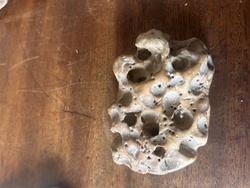
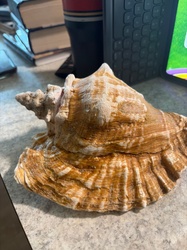
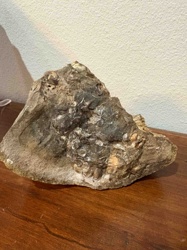
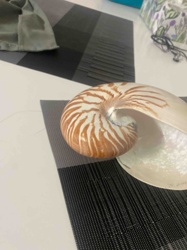
This specimen is a small marine gastropod shell, specifically a sea snail shell, originating from Oahu, Hawaii. It measures approximately 1 to 1.5 centimeters in length. The shell exhibits a globose, turbinate shape with a low spire and a prominent body whorl. The coloration is a mottled olive green and earthy brown, featuring a subtly textured surface with faint spiral cording or ribbing and fine growth lines visible under close inspection. The exterior shows a natural, matte luster typical of beach-worn specimens. Regarding condition, the shell appears relatively intact with no major fractures visible, though it shows moderate signs of natural erosion (weathering) from wave action, which has softened the sharpness of the original ridges. There are no artificial coatings or human-made alterations. This is a naturally occurring biological specimen produced by a soft-bodied mollusk. In the context of Hawaiian shoreline ecology, such shells are commonly found in the intertidal zone. The craftsmanship is entirely biological, showing the complex calcium carbonate layers secreted by the organism during its lifespan. Its small size suggests it is a mature or semi-mature individual of its specific species, likely from the Littorinidae or Neritidae family commonly found on rocky Hawaiian shores.
AI Appraisal Report

·AI can make mistakes·Verify before acting
I have conducted a visual examination of the small marine gastropod shell, likely of the Littorinidae or Neritidae family, found in Oahu, Hawaii. The specimen measures 1-1.5 cm and displays a characteristic globose form with mottled olive-green and brown pigmentation. Based on my visual assessment, the shell appears authentic and exhibits natural morphological characteristics consistent with beach-collected specimens. The condition shows moderate wave erosion and matte luster, which indicates it was found post-mortem rather than collected live. From a malacological market perspective, this is a common species with high availability. While it serves as a fine representative of Hawaiian intertidal ecology, it lacks the rarity, size, or unique color mutations required to command high prices among serious shell collectors (conchologists). Market comparables for similar weathered Hawaiian 'periwinkle' types generally retail in bulk or as low-cost souvenir items. The value of this specimen is primarily educational or sentimental rather than commercial. A significant limitation of this appraisal is the reliance on digital imagery. Full authentication and species-level identification would require hands-on inspection of the operculum (if present) and the columella details under magnification. To increase the scientific value, provenance documentation detailing the specific GPS coordinates and date of collection would be necessary. Without physical inspection, I cannot rule out internal micro-fractures or identify specific sub-species, which could marginally alter its ecological significance but not its market value.

Get your items appraised

Instant estimates of your treasures with AI-powered appraisals

Browse More Appraisals