AI Appraisal Estimate

AI-generated estimates · not official valuations

From the user

What was submitted

Photo and notes provided by the user — not generated by AI

Submitted item photo
Submitted photo · May 27, 2026

User's notes

table

AI analysis below

AI appraisal

AI analysis & estimate

AI-Generated · Verify before acting

Everything below is generated by AI for informational purposes only. AI can make mistakes — the AI may misidentify items or misattribute them (artist, maker, brand, designer, origin, era). This is not an official valuation and should not be used for insurance, sale, tax, estate, legal, or lending purposes — or any decision requiring a certified appraisal. It is not an authoritative claim about any person, brand, or rights holder — do not share or rely on it as a factual statement about a third party. Always consult qualified professionals before making financial decisions.

Note

This analysis also relies on unverified notes provided by the user, which may be incomplete or inaccurate and could affect the result.

Read the full disclaimer

AI Identification

·Not independently authenticated·Verify before acting

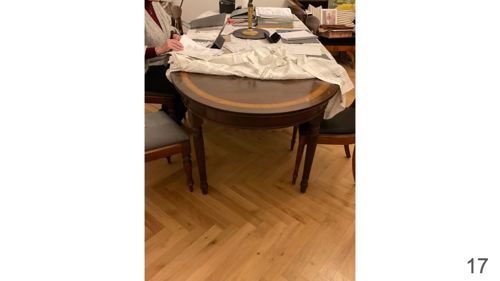
Neoclassical Style Inlaid Oval Dining Table

Furniture

AI Estimated Value

·Not an official valuation·Verify before acting

$400 - $800

As of May 27, 2026

AI Item Analysis

·AI can make mistakes·Verify before acting
This is a large, oval-shaped dining table reflecting a Neoclassical or Directoire style, likely dating from the mid-20th century or earlier. The table features a prominent decorative inlay or banding around the perimeter of the tabletop, executed in a lighter contrasting wood veneer, possibly satinwood or maple, set against a darker mahogany or walnut primary surface. The edge of the table is finished with a molded apron. It is supported by elegant, tapered legs that terminate in small spade-like or turned feet, showing classical influence. The overall construction appears solid and formal, designed for high-end residential use. Regarding condition, the visible surface of the wood shows a well-maintained polished finish with a warm patina, though there is a white cloth obstructing a significant portion of the top, which might hide surface scratches or heat marks consistent with use. No major structural damage such as cracks or missing veneers is immediately apparent from the provided angle. The craftsmanship is evident in the precision of the marquetry and the refined proportions of the leg supports.
AI Appraisal Report

·AI can make mistakes·Verify before acting
I have virtually examined the oval dining table presented, which appears to be a mid-20th-century piece executed in the Neoclassical or Directoire taste. The primary woods likely consist of mahogany veneers, accented by a decorative satinwood cross-banding along the perimeter, a hallmark of formal dining furniture from this era intended to emulate 18th-century designs. The tapered legs with spade-style feet are well-proportioned, suggesting manufacture by a quality American maker such as Henredon, Baker, or perhaps a Grand Rapids firm, though no maker's mark is visible in the provided image. The condition appears generally good, with the visible wood retaining a warm, polished luster. However, my valuation is tempered by the inability to inspect the full tabletop, which is partially obscured by a cloth. In the secondary furniture market, surface condition is paramount; hidden heat rings, deep scratches, or sun fading would significantly reduce value. Structural integrity appears sound based on the stance of the legs, but I cannot verify the stability of the joinery without physical manipulation. The market for large, formal brown furniture has softened considerably over the last decade as trends shift toward casual, modern aesthetics. While the inlay work adds a layer of desirability, tables like this now trade at a fraction of their original retail price. Prices in the $400 to $800 range are typical for auction or estate sale settings, potentially reaching $1,200 in a curated retail shop if the surface is pristine. Full authentication and a higher valuation would require an in-person inspection to identify specific maker's marks, check for veneer lifting, and confirm the absence of restoration to the legs.

Get your items appraised

Instant estimates of your treasures with AI-powered appraisals

Browse More Appraisals