AI estimate as of December 4, 2025 · verify with a professional before acting
AI-Generated · Verify before acting
Everything on this page is generated by AI for informational purposes only. AI can make mistakes — the AI may misidentify items or misattribute them (artist, maker, brand, designer, origin, era). This is not an official valuation and should not be used for insurance, sale, tax, estate, legal, or lending purposes — or any decision requiring a certified appraisal. It is not an authoritative claim about any person, brand, or rights holder — do not share or rely on it as a factual statement about a third party. Always consult qualified professionals before making financial decisions.
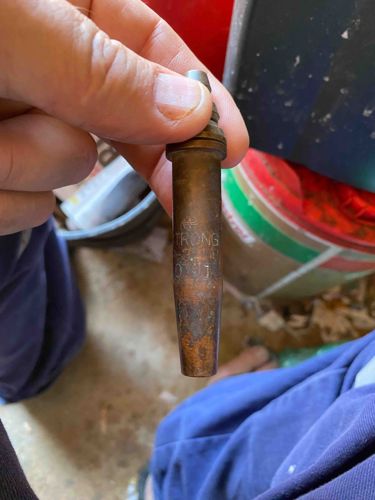
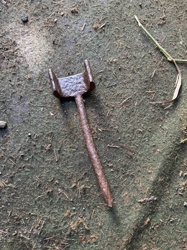
This item is an oxy-acetylene cutting torch tip, characterized by its elongated, cylindrical brass or copper alloy construction. The primary color is a dark, tarnished brass, exhibiting significant oxidation and a reddish-brown patina, particularly towards the tapered end, indicating age and usage. The tip measures approximately 2.5 to 3 inches in length and possesses a threaded connection at its wider, upper end, designed to screw into the torch body. A small, hexagonal-shaped fitting is visible at the very top, likely part of the gas mixing or preheat orifice system. "TRONG" is clearly stamped onto the side of the cylindrical body, an apparent manufacturer's mark or brand name, with additional numbers or characters 'OYY' and 'T' visible beneath it. The craftsmanship appears robust, as expected for an industrial tool, with precise machining evident around the threaded and orifice sections. There are no obvious signs of significant damage such as cracks or severe dents, but the surface shows scuffs, scratches, and discoloration consistent with a used tool that has been exposed to high temperatures and corrosive environments. The internal channels, though not fully visible, would be designed for precise gas flow 'oxygen and acetylene' to create a focused, high-temperature flame for cutting metal. The overall condition suggests a vintage or well-used industrial component, likely from the mid to late 20th century.
AI Appraisal Report
I have examined the provided image of this oxy-acetylene cutting torch tip. Its elongated, cylindrical brass or copper alloy construction, significant tarnishing, and reddish-brown patina indicate a used industrial component. The 'TRONG' stamping, along with 'OYY' and 'T', appears to be a manufacturer's mark, crucial for identifying its origin and compatibility. Precision machining is evident, consistent with a robust tool designed for high-temperature applications. While there are no obvious severe damages like cracks, the surface exhibits typical wear for its type, including scuffs, scratches, and discoloration from heat exposure.
Authenticity, based solely on this image, seems probable for a genuine torch tip, but the specific brand 'TRONG' is not widely recognized in contemporary markets for high-value collectibles. Most torch tips, regardless of a vintage mark, are functional components. My assessment of condition is 'good, used industrial,' showing expected wear without critical damage that would impede function.
Market conditions for used, unbranded, or less common brand torch tips are generally low. Comparables on industrial surplus sites or online marketplaces typically range from a few dollars to perhaps twenty-five dollars, depending on the specific model and condition. Demand for a 'TRONG' tip is likely limited to those seeking replacements for older, specific torches, or for hobbyists or collectors of vintage tools. However, without known historical significance for this particular brand or model, rarity does not translate to high monetary value. Factors impacting value negatively include its 'used' status, lack of specific historical significance, and the general availability of contemporary and more recognizable brands.
For a full authentication and more precise valuation, an in-person examination would be critical to verify internal channel integrity, assess actual material composition, and confirm the specific threading and orifice dimensions. Provenance documentation could potentially elevate value if it related to a significant industrial project or historical figure, but this is highly unlikely for a common tool. Without such verification, the value remains primarily functional or as a low-cost replacement part.