AI estimate as of July 10, 2025 · verify with a professional before acting
AI-Generated · Verify before acting
Everything on this page is generated by AI for informational purposes only. AI can make mistakes — the AI may misidentify items or misattribute them (artist, maker, brand, designer, origin, era). This is not an official valuation and should not be used for insurance, sale, tax, estate, legal, or lending purposes — or any decision requiring a certified appraisal. It is not an authoritative claim about any person, brand, or rights holder — do not share or rely on it as a factual statement about a third party. Always consult qualified professionals before making financial decisions.
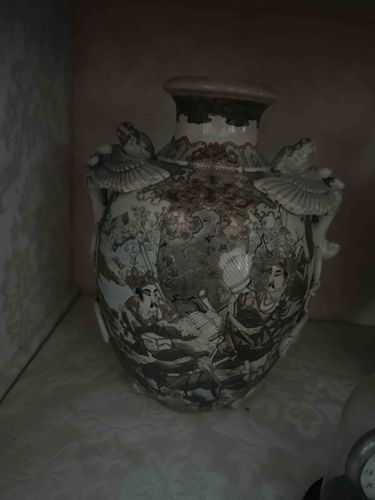
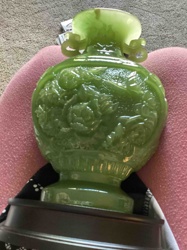
This is a large, ornately decorated ceramic vase, likely Asian, possibly Japanese or Chinese, given the figural depictions. The vase has a globular body that tapers towards a flared neck and rim. Two prominent three-dimensional handles, sculpted in the form of what appears to be mythical creatures or phoenixes with detailed wings and heads (possibly dragon-like), are attached to the upper shoulder of the vase, adding a significant sculptural element. The body of the vase is extensively decorated with hand-painted scenes, featuring multiple figures dressed in traditional attire, suggesting historical or mythological narratives. The color palette appears to be muted, dominated by browns, grays, and possibly faded blues and greens, indicating age or a specific artistic choice. The artistic style is intricate, with fine lines and detailed facial expressions on the figures. There are areas where the colors appear somewhat faded or perhaps discolored, suggesting a patina consistent with age. Some parts of the patterned background, particularly under the handles and around the neck, show what might be floral or geometric motifs. The craftsmanship appears to be of high quality, with detailed molding on the handles and fine brushwork on the painted scenes. The surface texture shows subtle variations, typical of handcrafted ceramics. No immediate signs of significant damage like chips or cracks are clearly visible in the provided image, but the overall presentation is somewhat dim, making a definitive assessment of minor wear or surface irregularities challenging. This piece likely dates from the late 19th or early 20th century, consistent with the style of figural ceramic decoration popular during that period.
AI Appraisal Report
Upon visual examination of the provided image, I have assessed this ornate figural ceramic vase with phoenix handles. The overall condition appears good, consistent with its probable age. While no major chips or cracks are immediately apparent, the dim lighting prevents a definitive assessment of minor surface wear, discoloration, or professional restorations. The intricate hand-painted scenes and three-dimensional phoenix handles suggest high-quality craftsmanship, indicative of either Japanese or Chinese origin, likely late 19th to early 20th century.
In terms of market conditions, there is a consistent demand for well-preserved, ornate Asian ceramics from this period, particularly those with strong figural or mythological elements. Comparable pieces, especially those of significant size and artistic detail, fetch strong prices at auction and in specialized antique markets. The detailed figures and mythological Phoenix handles enhance its artistic and decorative appeal, contributing to its desirability.
Factors significantly impacting value include its impressive size, the intricacy of the painted narrative scenes, and the sculptural quality of the phoenix handles, which elevate it beyond more common examples. Its rarity is moderate; while such vases are not unique, the combination of detailed artistry, condition, and sculptural elements makes it a standout piece.
It is crucial to note the limitations of image-based appraisal for authenticity. Without a direct physical examination, I cannot definitively verify the ceramic body, assess internal conditions, or detect subtle repairs or alterations. Full authentication would require in-person inspection to evaluate glaze quality, pottery marks (if present), and any signs of restoration. Provenance documentation or scientific analysis (e.g., thermoluminescence dating) would also significantly aid in confirming its age and origin, enhancing its market value.