AI Appraisal Estimate

AI-generated estimates · not official valuations

From the user

What was submitted

Photo and notes provided by the user — not generated by AI

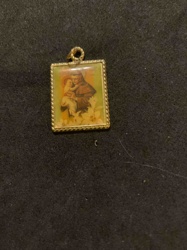
Submitted item photo
Submitted photo · June 16, 2026

User's notes

No additional notes provided.

AI analysis below

AI appraisal

AI analysis & estimate

AI-Generated · Verify before acting

Everything below is generated by AI for informational purposes only. AI can make mistakes — the AI may misidentify items or misattribute them (artist, maker, brand, designer, origin, era). This is not an official valuation and should not be used for insurance, sale, tax, estate, legal, or lending purposes — or any decision requiring a certified appraisal. It is not an authoritative claim about any person, brand, or rights holder — do not share or rely on it as a factual statement about a third party. Always consult qualified professionals before making financial decisions.

Read the full disclaimer

AI Identification

·Not independently authenticated·Verify before acting

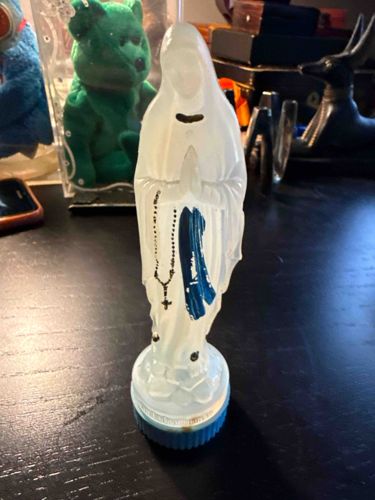
Our Lady of Lourdes Opaque Glass Bottle

Religious Devotional Object

AI Estimated Value

·Not an official valuation·Verify before acting

$30-50

As of June 16, 2026

AI Item Analysis

·AI can make mistakes·Verify before acting
This item is an opaque glass bottle, shaped in the form of a Marian apparition, specifically Our Lady of Lourdes. The bottle is approximately 8 to 10 inches tall based on visual context, and is constructed from a milky white or frosted glass, giving it a luminous, ethereal appearance. The figure is depicted with hands clasped in prayer, typical of the Virgin Mary, with drapery folds indicating a flowing gown and veil. Notable features include painted details: a dark blue sash or cloak draped over one arm, and a black rosary with a crucifix hanging from her clasped hands. The rosary is finely detailed with individual beads and a prominent cross. The base of the bottle is circular, with a threaded neck suggesting it was designed to hold a liquid, likely holy water. The cap, partially visible, appears to be made of blue plastic with a ribbed texture. The opacity of the glass makes it difficult to discern any internal contents or manufacturing marks through the material itself. The style suggests a mid-20th century production, typical of religious devotional items often sold at shrines or catholic gift shops. There are slight visible imperfections in the paint application of the rosary and sash, indicating mass production rather than bespoke craftsmanship. The overall condition appears good with no obvious chips or cracks in the glass, though the painted elements show minor wear consistent with age and handling. The item clearly serves a dual purpose as both a religious icon and a functional container.
AI Appraisal Report

·AI can make mistakes·Verify before acting
Upon visual examination of the Our Lady of Lourdes opaque glass bottle, I find it to be in good overall condition. The milky white glass appears free from chips or cracks, which is positive for an item of this age. Authenticity as a religious devotional object from the mid-20th century is strongly supported by its design, material (opaque glass was common for these items), and typical painted details like the blue sash and black rosary. The slight imperfections in the paint application confirm its mass-produced nature, common for souvenirs sold at shrines. Market conditions for such items are generally stable but not highly lucrative. Comparables are readily available in online marketplaces and antique shops specializing in religious artifacts. Demand for these specific types of devotional bottles is moderate, driven primarily by collectors of religious memorabilia or individuals seeking particular shrine souvenirs. Rarity is low; many such bottles were produced. Factors impacting value include its good condition, the intact painted details (even with minor wear), and its dual functionality as both an icon and a container. However, its mass-produced nature and the ample supply of similar articles prevent a higher valuation. It is crucial to note the limitations of authenticity verification from images alone. Without physical inspection, I cannot confirm the exact material composition of the glass, nor can I rigorously assess minute surface imperfections beyond what is visually apparent. Full authentication would benefit from an in-person examination to check for any hidden damage, confirm tactile qualities of the glass and paint, and search for unobservable manufacturing marks or labels on the base that might provide more definitive provenance or production details. Scientific testing would not be necessary for an item of this type unless specific material analysis was required.

Get your items appraised

Instant estimates of your treasures with AI-powered appraisals

Browse More Appraisals