AI estimate as of August 31, 2025 · verify with a professional before acting
AI-Generated · Verify before acting
Everything on this page is generated by AI for informational purposes only. AI can make mistakes — the AI may misidentify items or misattribute them (artist, maker, brand, designer, origin, era). This is not an official valuation and should not be used for insurance, sale, tax, estate, legal, or lending purposes — or any decision requiring a certified appraisal. It is not an authoritative claim about any person, brand, or rights holder — do not share or rely on it as a factual statement about a third party. Always consult qualified professionals before making financial decisions.
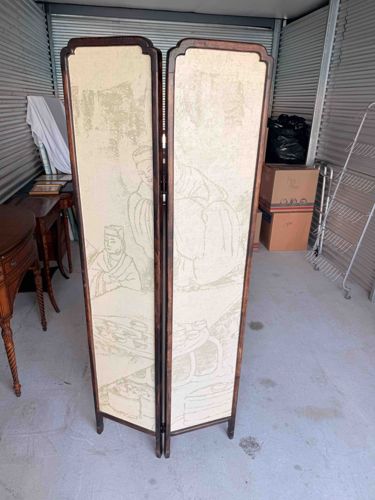
This appears to be a two-panel folding screen, likely East Asian in origin, possibly Chinese or Japanese. Each panel is rectangular with a rounded, stepped design at the top, suggesting a traditional or antique aesthetic. The frame is made of dark-stained wood, possibly rosewood or mahogany, given its rich, deep brown hue. The panels themselves are covered in a light-colored material, likely silk or a finely woven linen, acting as a canvas for what appear to be hand-drawn or embroidered outline illustrations. The drawings depict figures in traditional attire, engaged in what looks like scholarly or leisurely activities, possibly within a natural setting or indoors. The artistic style is somewhat monochromatic, relying on line work rather than color to convey detail. Visible condition issues include potential discoloration or aging of the fabric, possibly light staining, and some general wear consistent with age and use. The wood frame exhibits a warm patina, and its construction appears solid, joined with hinges that allow the panels to fold. The craftsmanship indicates a focus on delicate imagery within a sturdy, functional frame, typical of decorative screens used for privacy or as room dividers. The overall style suggests it could be from the early to mid-22th century, reflecting a blend of traditional artistic themes with practical furniture design.
AI Appraisal Report
Based on my visual examination of the provided image, this two-panel Oriental folding screen presents an interesting blend of decorative artistry and functional furniture. The dark-stained wooden frame, likely rosewood or mahogany, shows good construction with a warm patina, consistent with its suggested age of early to mid-20th century. The rounded, stepped design at the top of each panel adds to its traditional aesthetic. The light-colored panels, appearing to be silk or fine linen, feature monochromatic, hand-drawn or embroidered outline illustrations of figures in traditional attire, engaged in scholarly or leisurely activities. This style is appealing and indicates a degree of craftsmanship.
From the image, I note some condition issues impacting the value. The fabric panels show potential discoloration, light staining, and general wear, which is expected for an item of this age. While these issues detract slightly, they are often considered part of the item's historical charm and can sometimes be professionally conserved.
In terms of market conditions, decorative screens of East Asian origin, particularly those with artistic merit, maintain consistent demand. Screens depicting figural scenes are generally more sought after than purely landscape or abstract designs. Comparables in similar condition and artistic style typically range from a few hundred to several thousand dollars, depending heavily on provenance, material quality, and artist authentication. This particular screen, while decorative, doesn't exhibit the extreme fineness or recognizable artistic hand that would place it in the highest valuation tiers.
Its rarity is moderate; while many screens exist, finding one with well-preserved, detailed figural work in decent, original condition is less common than mass-produced pieces. The blend of usable condition and aesthetic appeal contributes positively to its demand.
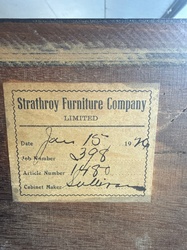
However, there are significant limitations to this appraisal based solely on an image. Authenticity verification for the wood type, age, and especially the artistic medium (hand-drawing vs. print vs. embroidery) requires in-person examination. For full authentication, I would need to physically inspect the screen to assess fabric texture, wood grain, joinery techniques, and the precise nature of the illustrations. Microscopic analysis could confirm the medium of the artwork, and an in-depth provenance review would be crucial to definitively establish its origin, exact age, and artist, all of which could significantly alter the valuation. Without this, I can only provide an estimate based on visual characteristics and general market trends for comparable decorative items.