AI Appraisal Estimate

AI-generated estimates · not official valuations

From the user

What was submitted

Photo and notes provided by the user — not generated by AI

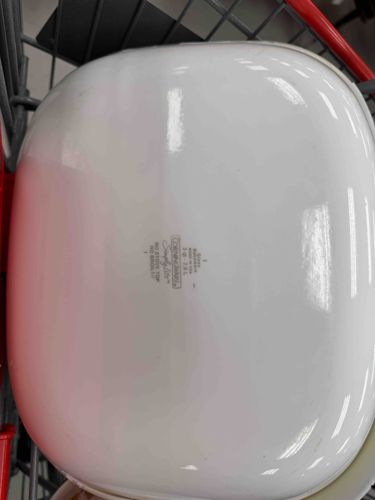
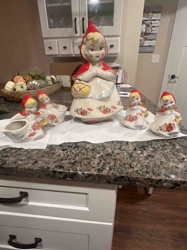
Submitted item photo
Submitted photo · May 26, 2026

User's notes

No additional notes provided.

AI analysis below

AI appraisal

AI analysis & estimate

AI-Generated · Verify before acting

Everything below is generated by AI for informational purposes only. AI can make mistakes — the AI may misidentify items or misattribute them (artist, maker, brand, designer, origin, era). This is not an official valuation and should not be used for insurance, sale, tax, estate, legal, or lending purposes — or any decision requiring a certified appraisal. It is not an authoritative claim about any person, brand, or rights holder — do not share or rely on it as a factual statement about a third party. Always consult qualified professionals before making financial decisions.

Read the full disclaimer

AI Identification

·Not independently authenticated·Verify before acting

Anchor Hocking Fire-King Square Bake Dish

Kitchenware

AI Estimated Value

·Not an official valuation·Verify before acting

$15-25

As of May 26, 2026

AI Item Analysis

·AI can make mistakes·Verify before acting
This item is an Anchor Hocking Fire-King Square Bake Dish, featuring a glossy white opal glass construction. The dish has a slightly rounded, rectangular or square shape with gently curved corners and high, somewhat sloped sides, designed likely for oven use. The primary material is milk glass, also known as opal glass, which gives it a distinctive opaque white appearance. The exterior finish is smooth and highly reflective, indicating a well-preserved glaze with minimal visible scratching or wear on the main body. The base of the dish exhibits manufacturing details printed in black text, identifying it as 'Anchor Hocking' and 'Fire-King', a popular line known for its heat-resistant properties. Specific legible markings include 'Square', '2 Qt. / 1.89 L.', 'Oven & Microwave', and 'NO BROILER TOP'. These markings confirm its intended use and capacity. The item appears to be in good pre-owned condition with no obvious chips, cracks, or significant damage, though a slight pinkish reflection on one side may be environmental lighting rather than discoloration. The overall craftsmanship suggests a mass-produced, durable kitchenware item from the mid-20th century, likely between the 1950s and 1970s, based on the Fire-King brand's prominence during that period.
AI Appraisal Report

·AI can make mistakes·Verify before acting
I have virtually examined this Anchor Hocking Fire-King Square Bake Dish. Based on visual inspection, the item appears to be in very good pre-owned condition. The opal glass is glossy and opaque white, consistent with authentic Fire-King milk glass from the mid-20th century (likely 1950s-1970s). The imprinted markings on the base, 'Anchor Hocking', 'Fire-King', 'Square', '2 Qt. / 1.89 L.', 'Oven & Microwave', and 'NO BROILER TOP', are all legible and consistent with genuine Fire-King production. I observe no chips, cracks, or significant visible wear, which is excellent for an item of this age. The slight pinkish reflection noted is likely environmental lighting rather than discoloration. Fire-King ware is generally durable, and this example seems to have been well-cared for. Market conditions for Fire-King bake ware are stable but not high. While popular for its nostalgic appeal and durability, these pieces were mass-produced. They are not rare, and there is a consistent but not overwhelming demand. Comparable sales for similar Fire-King square bake dishes in excellent condition typically fall within the $15-$25 range. Factors influencing this value include the commonality of the shape and color (white opal is ubiquitous) and the excellent condition. It is important to note that this authenticity assessment is based entirely on provided images. A full in-person examination would be necessary to definitively confirm the absence of hairline cracks, fleabites, or internal clouding that might not be visible in photographs. I would also check for any subtle repairs or alterations, though none are suggested by the images. No scientific testing or provenance documentation is typically required for such common items, as visual and tactile inspection suffice for valuation.

Get your items appraised

Instant estimates of your treasures with AI-powered appraisals

Browse More Appraisals