AI Appraisal Estimate

AI-generated estimates · not official valuations

From the user

What was submitted

Photo and notes provided by the user — not generated by AI

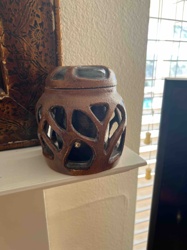
Submitted item photo
Submitted photo · June 15, 2026

User's notes

Made in Japan

AI analysis below

AI appraisal

AI analysis & estimate

AI-Generated · Verify before acting

Everything below is generated by AI for informational purposes only. AI can make mistakes — the AI may misidentify items or misattribute them (artist, maker, brand, designer, origin, era). This is not an official valuation and should not be used for insurance, sale, tax, estate, legal, or lending purposes — or any decision requiring a certified appraisal. It is not an authoritative claim about any person, brand, or rights holder — do not share or rely on it as a factual statement about a third party. Always consult qualified professionals before making financial decisions.

Note

This analysis also relies on unverified notes provided by the user, which may be incomplete or inaccurate and could affect the result.

Read the full disclaimer

AI Identification

·Not independently authenticated·Verify before acting

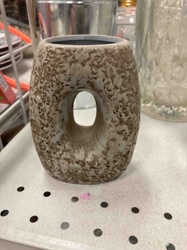
Mid-Century Japanese Relief-Molded Ceramic Amphora Vase

Art Pottery / Home Decor

AI Estimated Value

·Not an official valuation·Verify before acting

$45 - $65

As of June 15, 2026

AI Item Analysis

·AI can make mistakes·Verify before acting
This ceramic vase is a double-handled amphora-style vessel featuring a cream-white high-gloss glaze background accented by raised, periwinkle-blue floral motifs. The decoration consists of three prominent relief-molded flowers with five petals each, supported by long, slender stems that wrap around the lower body. This 'moriage-style' application gives the piece a distinctive tactile quality. Based on provided context, it was manufactured in Japan, likely during the mid-20th century (circa 1950s-1960s), a period known for exporting varied ceramic styles to the Western market. The overall silhouette is ovoid with a flared rim and two integrated loop handles. Construction appears to be slip-cast ceramic. Regarding condition, the glaze exhibits fine crazing across the surface, which is typical for Japanese ceramics of this age. There are minor imperfections in the blue glaze application, and some visible soiling near the rim and foot. Although no specific maker's mark is visible in the photograph, the craftsmanship is representative of mass-produced Japanese export ware from the post-war era. The piece reflects a transition between traditional floral motifs and simpler, more modern geometric applications.
AI Appraisal Report

·AI can make mistakes·Verify before acting
Based on my examination of this mid-century Japanese relief-molded amphora vase, I have assessed it as an example of post-war export-ware. The piece utilizes 'moriage-style' slip application, characterized by the raised periwinkle floral motifs against a high-gloss cream ground. While the design is aesthetically pleasing, the construction appears to be standard slip-cast ceramic intended for the mid-market Western florist and home decor trade. I observed significant fine crazing throughout the glaze; while common for Japanese ceramics of the 1950s-1960s, it indicates a lack of structural durability compared to higher-fired porcelains. The minor glaze skips and soiling noted are typical for mass-produced export pieces and do not significantly detract from its decorative value, though they do limit its appeal to high-end collectors. Currently, the market for unmarked Japanese 'Occupied' or post-war ceramics is stable but saturated. Comparables for similar relief-molded vases from manufacturers like Lefton or Napco typically sell within the $35-$75 range. The lack of a specific maker's mark or 'Made in Japan' backstamp slightly reduces the certainty of its origin, though the stylistic cues are unmistakable. Please note that this appraisal is based on photographic evidence. A physical inspection is required to check for hidden structural cracks, chips under the foot ring, or professional restoration which could significantly lower the value. Furthermore, the presence of a paper label or original box would provide the provenance needed to potentially place this at the higher end of the valuation scale. No scientific testing was performed; authentication relies on visual comparisons to known export catalogs of the mid-20th century.

Get your items appraised

Instant estimates of your treasures with AI-powered appraisals

Browse More Appraisals