These notes were written by the person who submitted this item. Appraiser.AI has not verified them, and the AI's identification and estimate may rely on them.
AI Estimated Value
Not an official valuation
$20 - $40
AI estimate as of October 1, 2025 · verify with a professional before acting
AI-Generated · Verify before acting
Everything on this page is generated by AI for informational purposes only. AI can make mistakes — the AI may misidentify items or misattribute them (artist, maker, brand, designer, origin, era). This is not an official valuation and should not be used for insurance, sale, tax, estate, legal, or lending purposes — or any decision requiring a certified appraisal. It is not an authoritative claim about any person, brand, or rights holder — do not share or rely on it as a factual statement about a third party. Always consult qualified professionals before making financial decisions.
This analysis also relies on unverified notes provided by the user, which may be incomplete or inaccurate and could affect the result.
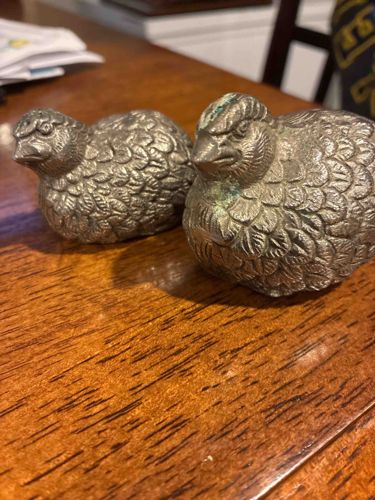
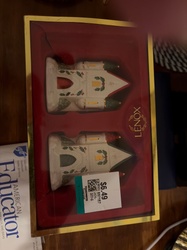
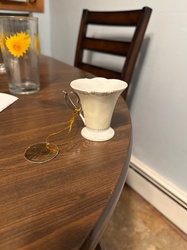
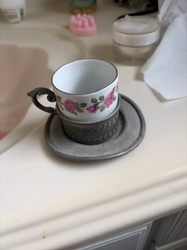
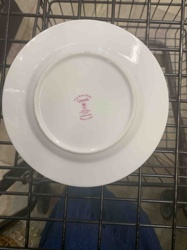
This item consists of a pair of figurative salt and pepper shakers, crafted in the form of small, rounded quail birds. Each shaker is made of what appears to be pewter, given its characteristic dull silver-gray coloration and the presence of some verdigris, particularly noticeable on the head and neck area of the bird on the right. The shakers are detailed with a textured surface designed to mimic feathers, covering the entire body from head to tail. The feather detailing is individually sculpted, providing a realistic and tactile quality to the pieces. Small, circular holes are visible on the top of the head of the left bird, indicating its function as a salt or pepper shaker. The birds have defined beaks and eyes, contributing to their lifelike appearance. Each shaker appears to be approximately 2-3 inches in length and a similar height, suggesting they are a standard size for tabletop use. The overall condition shows visible wear and a distinct patina consistent with aged pewter, including areas of green oxidation (verdigris) which suggests exposure to moisture or environmental factors. No specific manufacturing marks or signatures are discernible from the provided images. The style points to a potential mid-20th century to contemporary manufacturing period, leaning towards a rustic or traditional aesthetic. The craftsmanship is moderately detailed, focusing on the bird's form and textural elements.
AI Appraisal Report
I have virtually examined this pair of pewter quail bird salt and pepper shakers. The items present as figurative pieces, crafted with a textured surface to mimic feathers, characteristic of pewter due to their dull silver-gray coloration. A notable area of verdigris or green oxidation is visible, particularly on one bird's head and neck, suggesting exposure to moisture and an authentic aging process consistent with the material. The detailing of the feathers, beaks, and eyes is moderately executed, aiming for a lifelike representation. Condition-wise, the shakers exhibit visible wear and a distinct patina expected of aged pewter, which impacts their aesthetic but confirms their age. Without physical inspection, I cannot confirm specific manufacturing marks or signatures, which are crucial for definitive authentication and dating. The presence of verdigris is consistent with aged pewter but also highlights environmental exposure. Market conditions for decorative pewter salt and pepper shakers are generally stable but not highly fervent. Comparable items, typically from the mid-20th century, often sell in the $15-$50 range, depending on the intricacy, maker, and condition. These pieces lack immediate indicators of high rarity or a renowned maker, suggesting they fall into the more common decorative collectible category. Demand is moderate, appealing to collectors of bird-themed items or vintage tableware. Factors impacting their value include the good overall sculptural form, despite the wear, and the material. For full authentication and a more precise valuation, I would need a physical examination to search for maker’s marks, assess the exact composition of the metal, and evaluate the full extent of the wear, which is not fully discernible from imagery alone. Without this, the dating remains an estimate of mid-20th century to contemporary based on style.