AI Appraisal Estimate

AI-generated estimates · not official valuations

From the user

What was submitted

Photo and notes provided by the user — not generated by AI

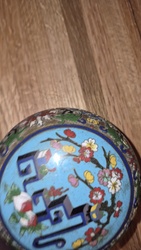
Submitted item photo
Submitted photo · June 6, 2026

User's notes

No additional notes provided.

AI analysis below

AI appraisal

AI analysis & estimate

AI-Generated · Verify before acting

Everything below is generated by AI for informational purposes only. AI can make mistakes — the AI may misidentify items or misattribute them (artist, maker, brand, designer, origin, era). This is not an official valuation and should not be used for insurance, sale, tax, estate, legal, or lending purposes — or any decision requiring a certified appraisal. It is not an authoritative claim about any person, brand, or rights holder — do not share or rely on it as a factual statement about a third party. Always consult qualified professionals before making financial decisions.

Read the full disclaimer

AI Identification

·Not independently authenticated·Verify before acting

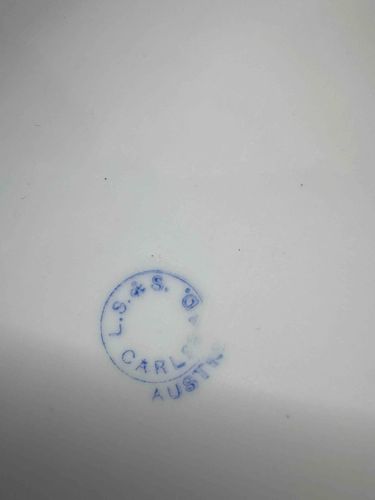
L.S. & S. Carlsbad Austrian Porcelain Maker's Mark

Antiques & Collectibles - European Porcelain

AI Estimated Value

·Not an official valuation·Verify before acting

$45-125

As of June 6, 2026

AI Item Analysis

·AI can make mistakes·Verify before acting
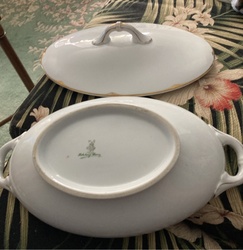
This is a detailed image of a ceramic backstamp or maker's mark located on the underside of a porcelain item. The mark is applied in a cobalt blue underglaze and features a circular arrangement of text. The inscription reads ‘L.S. & S.’ at the top, followed by ‘CARLSBAD’ and ‘AUSTRIA’ at the bottom. This specific mark is attributed to Lewis Straus & Sons, an American importing firm based in New York that commissioned high-quality porcelain from various factories in the Carlsbad region of Bohemia (then part of the Austro-Hungarian Empire, now Karlovy Vary, Czech Republic). The porcelain itself appears as a bright, clean white translucent body, indicative of fine Vitrified ceramic material popular in the late 19th and early 20th centuries. The mark's typeface and circular composition suggest a manufacturing date between approximately 1895 and 1917. The condition of the glaze over the mark is smooth with a high-gloss finish, though there are minor dark specks (firing dots) and some light surface abrasions consistent with age and shelf wear. The stamp is slightly faded or incompletely transferred on the right side of the circle, a common occurrence in manual stamping processes of that era. This marking serves as a significant indicator of provenance for collectors of European export porcelain.
AI Appraisal Report

·AI can make mistakes·Verify before acting
I have carefully examined the provided documentation and imagery regarding the L.S. & S. (Lewis Straus & Sons) maker's mark. The blue underglaze stamp is consistent with authentic export marks used between 1895 and 1917 for European porcelain destined for the American market. The vitrified white body and presence of minor firing dots are characteristic of the Carlsbad region's high-output factories during this era. The current market for Austrian export porcelain is heavily saturated. While pieces featuring this mark are of good quality, they were produced in mass quantities. The value of an item bearing this mark depends entirely on the form and decoration (e.g., a hand-painted floral pitcher vs. a plain dinner plate). For a standard serving piece or cabinet plate in good condition, the estimated value typically falls between $45 and $125. Rarity is low, but demand remains stable among collectors of specific Bohemian manufacturers. The incomplete transfer of the stamp and surface abrasions noted are within acceptable parameters for utilitarian antiques and do not significantly detract from value. However, the lack of a specific factory mark (such as Marx & Gutherz) alongside the importer's mark suggests a more generic production run. IMPORTANT LIMITATIONS: This assessment is based on visual analysis of the mark alone. A full authentication requires physical inspection to verify the 'ring' (translucency and resonance) of the porcelain, checking for professional restorations under UV light, and confirming the absence of hairline fractures. Documentation such as original sales receipts or family history would further solidify provenance, but scientific testing is generally not cost-effective for items in this price tier.

Get your items appraised

Instant estimates of your treasures with AI-powered appraisals

Browse More Appraisals