AI Appraisal Estimate

AI-generated estimates · not official valuations

From the user

What was submitted

Photo and notes provided by the user — not generated by AI

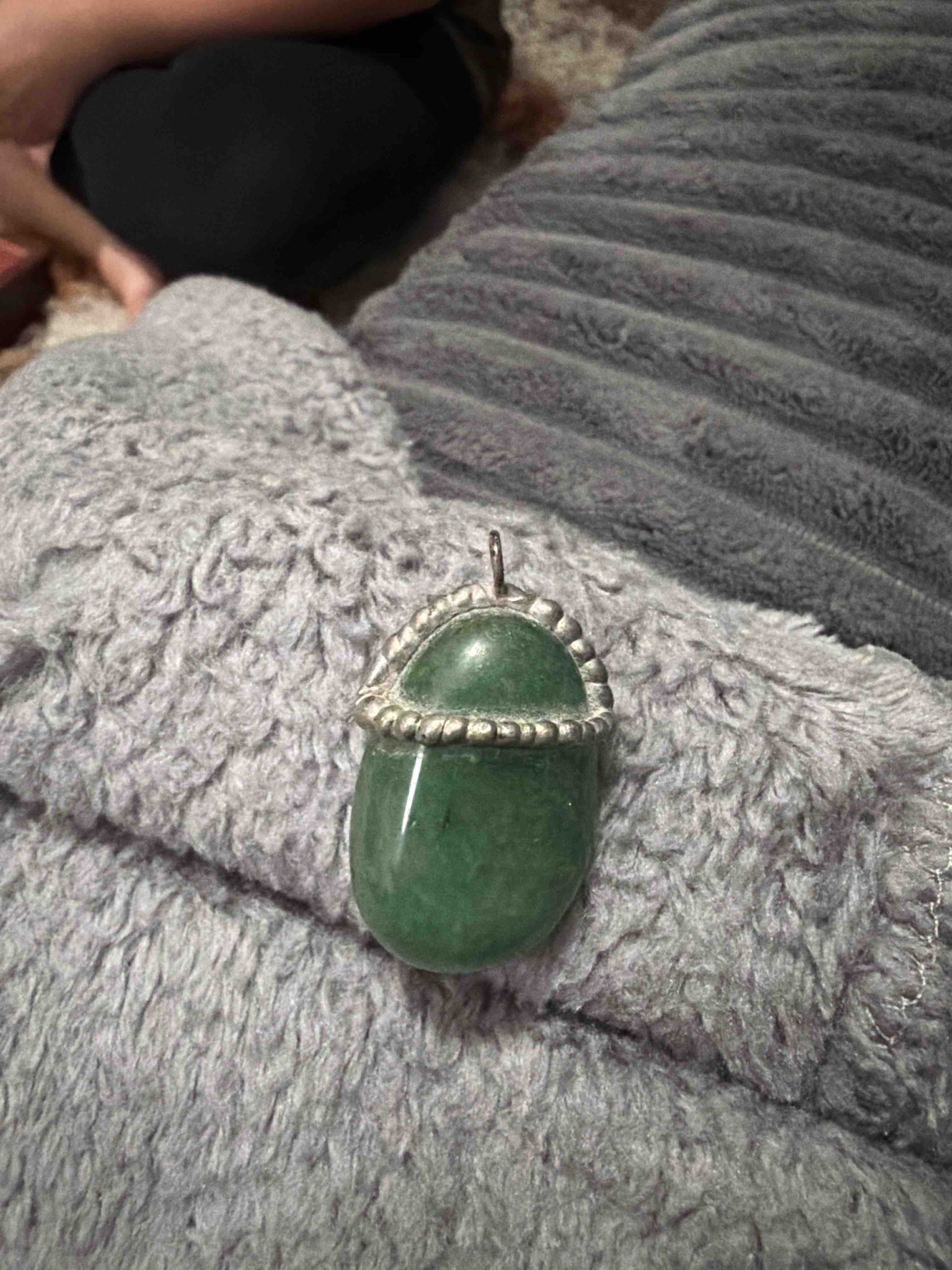
Submitted item photo
Submitted photo · May 28, 2026

User's notes

No additional notes provided.

AI analysis below

AI appraisal

AI analysis & estimate

AI-Generated · Verify before acting

Everything below is generated by AI for informational purposes only. AI can make mistakes — the AI may misidentify items or misattribute them (artist, maker, brand, designer, origin, era). This is not an official valuation and should not be used for insurance, sale, tax, estate, legal, or lending purposes — or any decision requiring a certified appraisal. It is not an authoritative claim about any person, brand, or rights holder — do not share or rely on it as a factual statement about a third party. Always consult qualified professionals before making financial decisions.

Read the full disclaimer

AI Identification

·Not independently authenticated·Verify before acting

Articulated Green Hardstone Pendant in Silver-Toned Mounting

Antique & Vintage Jewelry

AI Estimated Value

·Not an official valuation·Verify before acting

$125 - $225

As of May 28, 2026

AI Item Analysis

·AI can make mistakes·Verify before acting
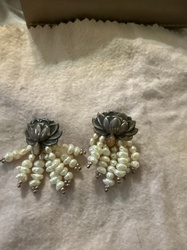
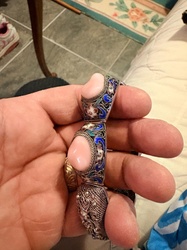
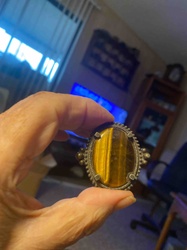
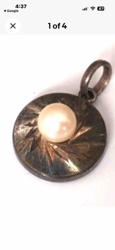
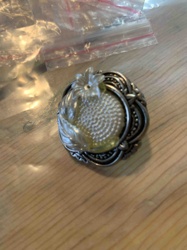
This item is an unusual articulated pendant featuring two polished cabochons of a deep green hardstone, likely nephrite jade or aventurine quartz, characterized by a smooth, waxy luster and internal mossy inclusions. The piece is constructed in two distinct sections: an upper domed cap and a larger oblong lower body. These stone components are housed within a silver-toned metal mounting, possibly sterling silver or a white metal alloy. The metalwork features a distinctive 'beaded' or granulated texture along the edges where the metal grips the stone. A horizontal metal band separates the two sections, suggesting a hinged or articulated movement mechanism typical of late 20th-century artisan jewelry. The top of the piece is finished with a simple wire bale for suspension. Regarding condition, the metal shows a significant dark patina and surface oxidation, particularly in the recessed areas between the beads, which is consistent with age and exposure. There are minor surface scratches on the stones visible under light, but no major chips or fractures are apparent. The craftsmanship appears to be hand-wrought rather than mass-produced, indicated by the irregular spacing of the decorative beads. No hallmarks or maker's marks are visible in the provided image, but the style is reminiscent of mid-to-late 20th-century brutalist or organic-style studio jewelry.
AI Appraisal Report

·AI can make mistakes·Verify before acting
I have carefully examined the provided images of this articulated green hardstone pendant. Based on my visual inspection, the item is an artisan-crafted piece likely dating to the 1960s or 1970s. The stones exhibit characteristics consistent with nephrite jade or aventurine, showing typical mossy inclusions and a waxy luster. The construction is ‘hand-wrought,’ as evidenced by the irregular spacing of the granulated beads and the specific articulation of the hinge. The condition is fair to good; while the stones are intact, the heavy oxidation on the silver-toned mounting suggests either high copper content in a silver alloy or significant age-related patina on sterling silver. The current market for mid-century studio jewelry remains stable. Comparables for unsigned artisan pendants of this style and material generally hammer between $100 and $250. The lack of hallmarks (maker's marks or fineness stamps) slightly suppresses the value, as the metal cannot be guaranteed as .925 sterling without testing. The 'Brutalist' aesthetic and organic form are currently desirable among collectors of vintage individualist jewelry. It is important to note the limitations of this image-based appraisal. Without a physical examination, I cannot perform a streak or hardness test to differentiate between jadeite, nephrite, or quartz, nor can I conduct a localized acid test or XRF scan to determine the exact metal composition. Furthermore, the absence of provenance documentation makes it impossible to attribute the work to a specific studio. To finalize this valuation, I recommend an in-person inspection to verify metal purity and stone identity through refractometry.

Get your items appraised

Instant estimates of your treasures with AI-powered appraisals

Browse More Appraisals