AI Appraisal Estimate

AI-generated estimates · not official valuations

From the user

What was submitted

Photo and notes provided by the user — not generated by AI

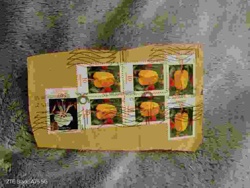
Submitted item photo
Submitted photo · June 23, 2026

User's notes

No additional notes provided.

AI analysis below

AI appraisal

AI analysis & estimate

AI-Generated · Verify before acting

Everything below is generated by AI for informational purposes only. AI can make mistakes — the AI may misidentify items or misattribute them (artist, maker, brand, designer, origin, era). This is not an official valuation and should not be used for insurance, sale, tax, estate, legal, or lending purposes — or any decision requiring a certified appraisal. It is not an authoritative claim about any person, brand, or rights holder — do not share or rely on it as a factual statement about a third party. Always consult qualified professionals before making financial decisions.

Read the full disclaimer

AI Identification

·Not independently authenticated·Verify before acting

Russian Imperial Arms Surplus Surcharge Postage Stamp

Philately / Collectible Postage Stamps

AI Estimated Value

·Not an official valuation·Verify before acting

$45.00 - $75.00

As of June 23, 2026

AI Item Analysis

·AI can make mistakes·Verify before acting
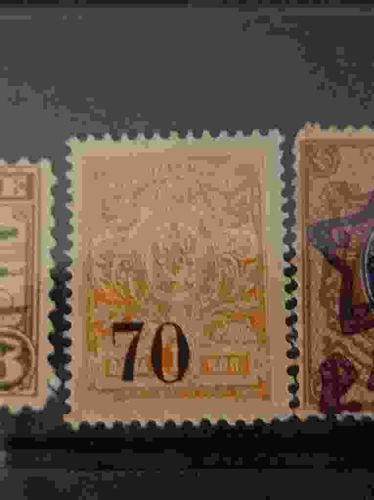
This rectangular postage stamp is part of an overprinted series originating from the early Soviet era, specifically utilizing leftover stock from the Russian Imperial period (likely the 1908–1917 Arms and Crest series). The item is characterized by a vertically oriented rectangular shape with distinct comb perforations on all four sides. The primary design features a traditional lithographic or typographic print of the Imperial Russian Coat of Arms—the double-headed eagle—rendered in muted orange and brown tones on a light tan background. A bold, black typographic overprint of the numeral '70' is positioned prominently in the lower central region, signifying a re-valuation of the stamp's face value during the Hyperinflation period of the early 1920s. To the right of the numeral, additional Cyrillic characters are visible as part of the surcharge. The paper exhibits a slight beige patina consistent with late 19th or early 20th-century wood-pulp based philatelic paper. Condition-wise, the perforations appear mostly intact, though there is a slight blurring of the underlying fine engraved lines, possibly due to ink saturation or environmental wear. There are no visible cancel marks (postmarks), suggesting this is an unused, mint specimen with its surcharge intact. The craftsmanship reflects the transition from high-detail imperial engraving to the functional, utilitarian rubber-stamp or typographic surcharges of the revolutionary period.
AI Appraisal Report

·AI can make mistakes·Verify before acting
I have conducted a visual examination of this early Soviet re-valuation surcharge on a Russian Imperial Arms series base. The specimen appears to be the 70-ruble surcharge on a 1-kopeck orange-colored stamp (Scott #181 or similar). This specific issue represents the RSFSR transition period during the hyperinflation of 1921-1922. The visual condition is favorable for a mint, never-hinged (MNH) or lightly hinged specimen; the perforations are largely intact, and the registration of the black typographic overprint is crisp, which is a key indicator of authenticity. Market demand for 'inflation era' Russian philately is steady but fluctuates based on the specific surcharge type and the underlying base stamp. While the Imperial base stamp is common, the surcharge adds historical value. Comparables for common surcharges in this series typically realize between $30 and $90 depending on the quality of the gum and the absence of 'foxing' or toning. The slight blurring noted in the engravings appears to be a characteristic of the lithographed 1917-1920 printings rather than damage. Limitations: My analysis is based solely on the provided image. A digital photograph cannot verify the presence of a watermark (crucial for distinguishing between the 1908 and 1917 series) or the condition of the original gum on the reverse side. To provide a definitive certification, I would need to perform a physical inspection to check for 'thins,' assess the gum for hinge marks, and use a UV light to identify potential repairs or 'faked' overprints, which are unfortunately common in this niche. Provenance or a certificate from the British Philatelic Federation or similar body would significantly bolster the higher end of this valuation.

Get your items appraised

Instant estimates of your treasures with AI-powered appraisals

Browse More Appraisals