AI Appraisal Estimate

AI-generated estimates · not official valuations

From the user

What was submitted

Photo and notes provided by the user — not generated by AI

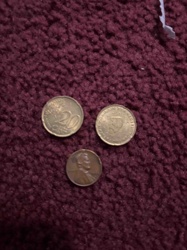
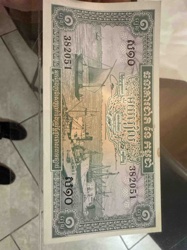
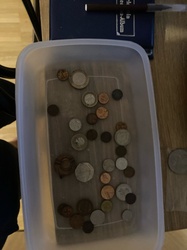
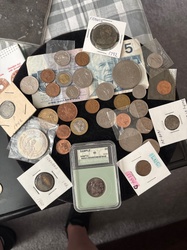
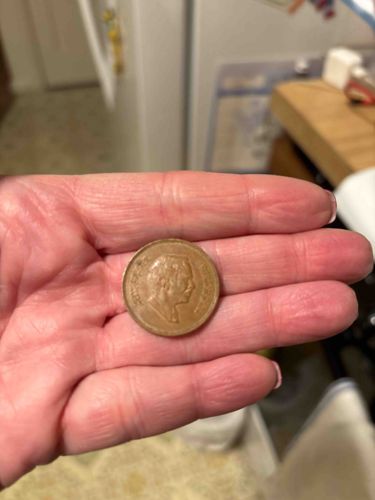
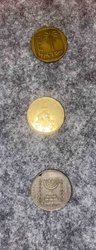
Submitted item photo
Submitted photo · May 26, 2026

User's notes

The Hashemite Kingdom of Jordon Ten Fils

AI analysis below

AI appraisal

AI analysis & estimate

AI-Generated · Verify before acting

Everything below is generated by AI for informational purposes only. AI can make mistakes — the AI may misidentify items or misattribute them (artist, maker, brand, designer, origin, era). This is not an official valuation and should not be used for insurance, sale, tax, estate, legal, or lending purposes — or any decision requiring a certified appraisal. It is not an authoritative claim about any person, brand, or rights holder — do not share or rely on it as a factual statement about a third party. Always consult qualified professionals before making financial decisions.

Note

This analysis also relies on unverified notes provided by the user, which may be incomplete or inaccurate and could affect the result.

Read the full disclaimer

AI Identification

·Not independently authenticated·Verify before acting

Jordanian 10 Fils Coin (King Hussein Bin Talal)

Numismatics / International Currency

AI Estimated Value

·Not an official valuation·Verify before acting

$0.25 - $2.50

As of May 26, 2026

AI Item Analysis

·AI can make mistakes·Verify before acting
This is a circular bronze or bronze-plated steel currency coin from the Hashemite Kingdom of Jordan, specifically a 10 Fils denomination. The obverse side features the right-facing profile portrait of King Hussein bin Talal, who reigned from 1952 to 1999. The portrait shows the King in mature profile with a clean-shaven face and short hair. Flanking the portrait is Arabic calligraphy indicating the King's title and name. The coin appears to be approximately 20-25mm in diameter with a smooth or slightly worn edge. The coloration is a dull coppery brown, characteristic of aged bronze, with a noticeable matte finish and moderate patina consistent with circulation. There are signs of light surface wear on the high points of the portrait and the surrounding rim, but the central design remains clearly legible. Based on the portrait style, this coin likely dates from the late 1960s to the 1990s. The minting demonstrates standard industrial quality for mid-to-late 20th-century state coinage, with well-defined relief. No significant gouges or dents are visible, though general handled wear is present across the surface.
AI Appraisal Report

·AI can make mistakes·Verify before acting
I have carefully examined the provided images and descriptions of the Jordanian 10 Fils coin featuring King Hussein bin Talal. Based on the visual evidence, the coin appears to be an authentic specimen of the second or third portrait series (likely KM# 19 or KM# 48). The bronze surfaces exhibit a natural, aged patina with moderate circulation wear on the high points of the King's profile and the legends, consistent with a grade of 'Very Fine' to 'Extra Fine'. These coins were minted in quantities of millions to facilitate daily commerce in Jordan during the late 20th century. Due to this high mintage, they are common in the numismatic market. Current market conditions for circulated 10 Fils pieces show very low demand from high-end collectors, though they remain popular for 'World Coin' type sets. Values for such pieces typically remain near nominal levels, rarely exceeding a few dollars unless in Mint State (MS) condition with original red luster. Authenticity is tentatively confirmed by the standard die-striking characteristics observed; however, a definitive identification of the metal composition (bronze vs. copper-plated steel) and a precise weight measurement (standard 5.0g) would require physical handling. My evaluation is limited by the digital nature of the inspection, which may obscure fine surface alterations or cleaning. For absolute authentication, one would need to verify the specific diameter and weight with a digital caliper and scale, and check for magnetic properties to determine the specific year/metal subtype. Provenance documentation is generally not required for coins of this value, though it is always beneficial for the historical record.

Get your items appraised

Instant estimates of your treasures with AI-powered appraisals

Browse More Appraisals