AI Appraisal Estimate

AI-generated estimates · not official valuations

From the user

What was submitted

Photo and notes provided by the user — not generated by AI

Submitted item photo
Submitted photo · June 12, 2026

User's notes

Omega

AI analysis below

AI appraisal

AI analysis & estimate

AI-Generated · Verify before acting

Everything below is generated by AI for informational purposes only. AI can make mistakes — the AI may misidentify items or misattribute them (artist, maker, brand, designer, origin, era). This is not an official valuation and should not be used for insurance, sale, tax, estate, legal, or lending purposes — or any decision requiring a certified appraisal. It is not an authoritative claim about any person, brand, or rights holder — do not share or rely on it as a factual statement about a third party. Always consult qualified professionals before making financial decisions.

Note

This analysis also relies on unverified notes provided by the user, which may be incomplete or inaccurate and could affect the result.

Read the full disclaimer

AI Identification

·Not independently authenticated·Verify before acting

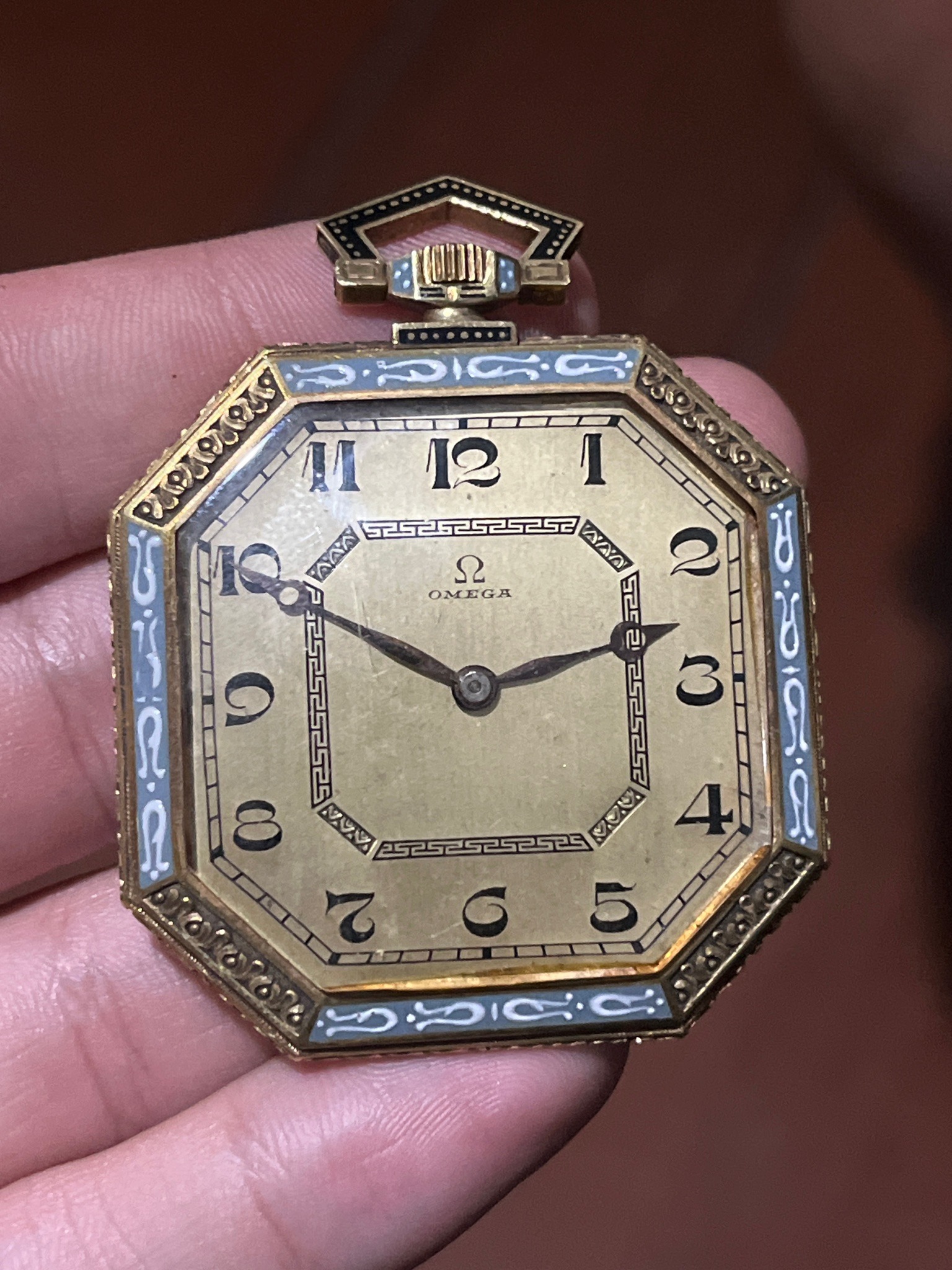
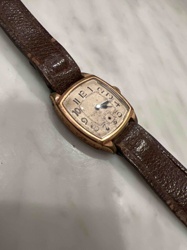
Vintage Omega Art Deco Octagonal Pendant/Pocket Watch with Champlevé Enamel

Horology / Vintage Timepieces

AI Estimated Value

·Not an official valuation·Verify before acting

$1,800 - $2,500

As of June 12, 2026

AI Item Analysis

·AI can make mistakes·Verify before acting
This is a highly distinctive Art Deco era pocket or pendant watch by the Swiss manufacturer Omega, likely dating to the 1920s or 1930s. The piece features a geometric octagonal case constructed from yellow gold or gold-plated metal. The bezel is intricately decorated with a light blue and white Champlevé enamel scroll pattern, bordered by a textured rope-style or gadrooned gold edge. The matching pentagonal-shaped bow at the top also incorporates black and blue enamel detailing, which is a hallmark of high-end Art Deco horology. The champagne-colored dial displays a 'Greek Key' or meander border in the center, framing the Omega nomenclature and logo. It utilizes bold, stylized black Arabic numerals and elegant cathedral-style or 'poire' hands. The overall craftsmanship reflects a period when timepieces were treated as jewelry. Regarding the condition, there is visible oxidation and darkening on the metal hands and around the perimeter of the dial, suggesting some moisture ingress over time. The crystal shows light surface scratches, and there is slight wear to the enamel near the crown/pendant area. The quality is indicative of Omega's luxury production during the early 20th century, combining precise mechanical engineering with decorative arts.
AI Appraisal Report

·AI can make mistakes·Verify before acting
I have virtually examined this octagonal Omega Art Deco pendant watch. The piece is an exceptional example of the 'Joaillerie' influence on horology during the 1920s. Based on visual cues, the Champlevé enamel work on the bezel and the stylized meander dial appear consistent with Omega’s high-grade production from this era. The use of a pentagonal bow with integrated enamel is a rare design cue that significantly elevates its desirability among collectors of Art Deco objects. The condition shows signs of age: specifically, oxidation on the handset and patina on the dial periphery, likely due to gasket failure over the decades. While this slightly impacts the 'mint' status, the integrity of the enamel—which is prone to cracking—remains largely intact, preserving its aesthetic value. In the current market, Omega brand equity is exceptionally strong, and early 20th-century decorative pieces have seen a resurgence as 'wearable art.' Comparable sales of enamel Omega pendant watches in gold cases typically range from $1,500 to $3,000 depending on the weight of the gold and the complexity of the movement. Note: This appraisal is based strictly on photographic evidence. A formal authentication requires an in-person inspection to verify the metal purity (14k vs 18k gold), movement serial numbers to confirm the production date, and a mechanical check for the escapement's health. Evidence of provenance or original box/papers would provide a significant premium. Without opening the case back to inspect the calibre, I cannot definitively confirm if internal parts are original or if the movement has suffered historical corrosion.

Get your items appraised

Instant estimates of your treasures with AI-powered appraisals

Browse More Appraisals