AI Appraisal Estimate

AI-generated estimates · not official valuations

From the user

What was submitted

Photo and notes provided by the user — not generated by AI

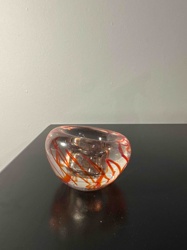
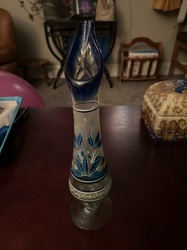
Submitted item photo
Submitted photo · June 17, 2026

User's notes

Vintage bowl

AI analysis below

AI appraisal

AI analysis & estimate

AI-Generated · Verify before acting

Everything below is generated by AI for informational purposes only. AI can make mistakes — the AI may misidentify items or misattribute them (artist, maker, brand, designer, origin, era). This is not an official valuation and should not be used for insurance, sale, tax, estate, legal, or lending purposes — or any decision requiring a certified appraisal. It is not an authoritative claim about any person, brand, or rights holder — do not share or rely on it as a factual statement about a third party. Always consult qualified professionals before making financial decisions.

Note

This analysis also relies on unverified notes provided by the user, which may be incomplete or inaccurate and could affect the result.

Read the full disclaimer

AI Identification

·Not independently authenticated·Verify before acting

Mid-Century Modern Hand-Blown Murano Style Art Glass Bowl

Decorative Arts / Art Glass

AI Estimated Value

·Not an official valuation·Verify before acting

$125.00 - $185.00

As of June 17, 2026

AI Item Analysis

·AI can make mistakes·Verify before acting
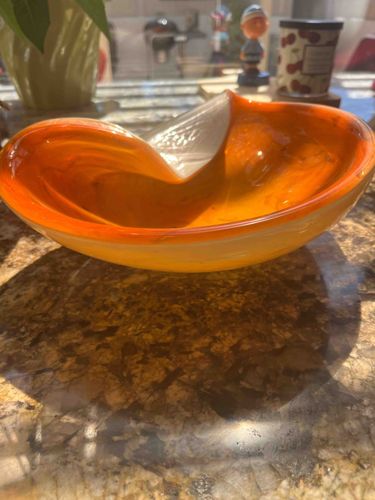
This is a vintage hand-blown art glass bowl featuring a striking biomorphic, asymmetrical shape characteristic of the Mid-Century Modern era. The piece is constructed from thick glass using a technique that blends a vibrant, saturated orange interior with a pale yellow-to-white exterior, creating a swirl or 'calcedonia' effect. The rim is pulled and folded inward at one side to create a organic, shell-like or heart-shaped silhouette. Hand-blown craftsmanship is evident in the fluid movement of the color gradients and the soft, rounded edges of the rim. Based on the style, palette, and form, this piece likely originates from the 1960s or 1970s, reminiscent of Italian Murano or West Virginia glass makers like Viking or Kanawha. The condition appears excellent with a glossy finish; there are no visible chips, cracks, or heavy abrasions, though some light 'flea bites' or shelf wear on the bottom resting surface would be expected for an item of this age. The glass exhibits high clarity and light-refractive quality, typical of art-grade lead crystal or soda-lime glass composition. No maker's marks or signatures are visible in the photograph, which is common for art glass of this period that originally featured paper or foil labels.
AI Appraisal Report

·AI can make mistakes·Verify before acting
I have carefully examined the provided images of this Mid-Century Modern biomorphic art glass bowl. The piece exhibits high-quality craftsmanship, specifically the 'sommerso' or cased glass technique, layering a vivid tangerine orange within a milky opalline white exterior. The free-form, organic manipulation of the rim suggests a mid-20th-century origin, circa 1960-1975. While the form is highly reminiscent of Murano masters such as Seguso, the lack of a pontil mark or signature—and the specific color palette—also aligns with high-end American 'Epic' lines by companies like Viking or Chalet Artistic Glass in Canada. The condition appears to be 'Fine' to 'Very Good.' I note a high refractive index and excellent clarity, with no visible 'sick glass' or internal clouding. The market for unsigned Mid-Century art glass remains steady, fueled by the popular 'Mod' interior design trend, though values for unsigned pieces are naturally lower than those with etched signatures (e.g., Venini or Barbini). Comparables for unsigned biomorphic bowls of this size and color density typically realize between $100 and $200 at specialty auctions or high-end vintage boutiques. Important Limitation: This valuation is based solely on visual inspection of the provided images. A definitive attribution to Murano vs. North American makers cannot be confirmed without a physical examination of the base to analyze the wear pattern and the presence (or absence) of a polished pontil mark. To fully authenticate, I would need to observe the glass under UV light to check for manganese or uranium content, which can help pinpoint the factory location. Provenance, such as original foil labels or purchase receipts from the touring glass exhibitions of the 1960s, would significantly enhance the upper-tier value.

Get your items appraised

Instant estimates of your treasures with AI-powered appraisals

Browse More Appraisals