AI Appraisal Estimate

AI-generated estimates · not official valuations

From the user

What was submitted

Photo and notes provided by the user — not generated by AI

Submitted item photo
Submitted photo · June 4, 2026

User's notes

No additional notes provided.

AI analysis below

AI appraisal

AI analysis & estimate

AI-Generated · Verify before acting

Everything below is generated by AI for informational purposes only. AI can make mistakes — the AI may misidentify items or misattribute them (artist, maker, brand, designer, origin, era). This is not an official valuation and should not be used for insurance, sale, tax, estate, legal, or lending purposes — or any decision requiring a certified appraisal. It is not an authoritative claim about any person, brand, or rights holder — do not share or rely on it as a factual statement about a third party. Always consult qualified professionals before making financial decisions.

Read the full disclaimer

AI Identification

·Not independently authenticated·Verify before acting

Assorted sub-centimeter mineral specimens and polished stone

Mineral Specimens and Gemstones

AI Estimated Value

·Not an official valuation·Verify before acting

$15 - $40

As of June 4, 2026

AI Item Analysis

·AI can make mistakes·Verify before acting
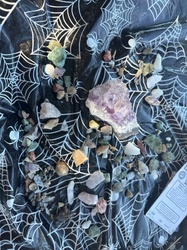
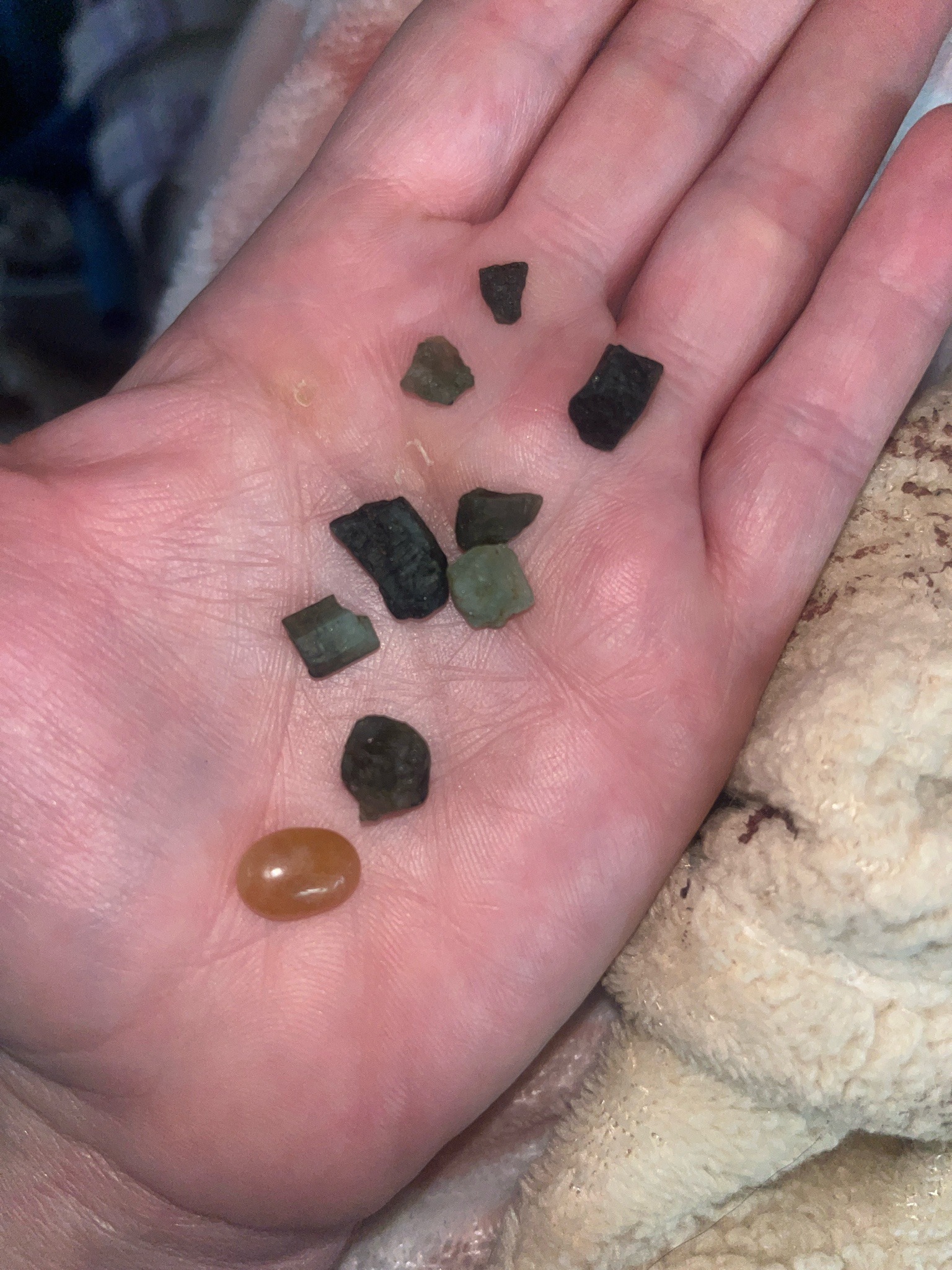
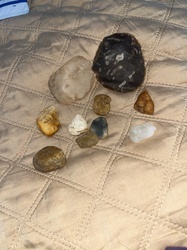
This collection consists of approximately eight small mineral fragments held in a palm for scale. Seven of the specimens appear to be raw, unpolished fragments ranging in color from deep forest green and olive to nearly black and translucent seafoam green. These rough pieces exhibit irregular, angular fractures and varying degrees of transparency, stylistically consistent with green tourmaline or similar silicate minerals in their natural state. One specimen stands out as a polished, oval-shaped cabochon featuring a warm, honey-amber or brownish-orange hue with a smooth, glossy surface that reflects overhead lighting. The size of the pieces is small, with each appearing to be under one centimeter in length. There are no visible markings, etchings, or labels on any of the specimens to indicate a specific geographic origin or mine. The rough fragments show natural crystalline structures rather than man-made damage, while the polished stone appears to be in good condition with no visible chips or cracks. Due to the lack of physical testing for hardness or refractive index, these identifications remain hypotheses based on visual color and luster.
AI Appraisal Report

·AI can make mistakes·Verify before acting
Based on my visual examination of the photograph provided, I have assessed a collection of approximately eight small mineral specimens. Most of these pieces appear to be rough, unpolished fragments with colorations and fracture patterns consistent with green tourmaline or similar silicate minerals. One specimen is a polished, honey-toned cabochon that may be amber, citrine, or common opal. I must note that I cannot verify the specific mineral species or chemical composition from a photo alone; physical testing for hardness and refractive index would be required to establish identity. The value for small, loose mineral shards depends heavily on their clarity and provenance, which are currently unknown. In the current market, small 'parcel' collections of this type are typically valued for their interest as lapidary rough or educational specimens rather than as high-end investment gems. The range provided assumes these are natural mineral fragments. If they were found to be synthetic glass or composite materials, the value would be negligible, likely under $5. Conversely, if the green fragments were confirmed as gem-grade tourmaline with high clarity, the value could sit at the higher end of the estimate. To confirm these hypotheses, an in-person gemological inspection and density testing are recommended. The provided estimate reflects the general market for small, uncertified mineral lots of similar size and apparent quality.

Get your items appraised

Instant estimates of your treasures with AI-powered appraisals

Browse More Appraisals