AI estimate as of October 8, 2025 · verify with a professional before acting
AI-Generated · Verify before acting
Everything on this page is generated by AI for informational purposes only. AI can make mistakes — the AI may misidentify items or misattribute them (artist, maker, brand, designer, origin, era). This is not an official valuation and should not be used for insurance, sale, tax, estate, legal, or lending purposes — or any decision requiring a certified appraisal. It is not an authoritative claim about any person, brand, or rights holder — do not share or rely on it as a factual statement about a third party. Always consult qualified professionals before making financial decisions.
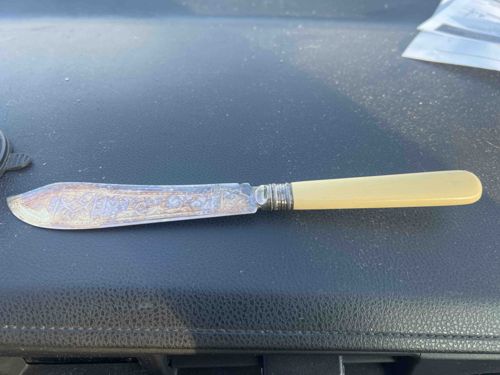
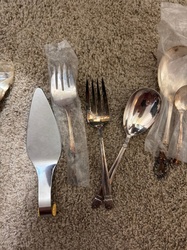
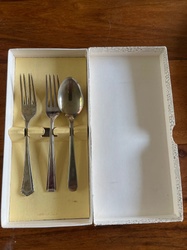
This item is an antique butter spreader, characterized by its ornate silver-plated blade and a cream-colored handle, likely made from faux ivory or celluloid. The blade measures approximately 4-5 inches in length and features an intricately etched or engraved pattern across its surface. The pattern appears to be a floral or foliate design, possibly in an Aesthetic Movement or Victorian style, covering most of the blade's visible area, adding significant decorative appeal. The silver-plating shows signs of age, with visible tarnishing and some minor discoloration, indicative of its age and material degradation over time. There are no obvious deep scratches or dents, but surface wear consistent with use and age is apparent. The handle, which is about 3-4 inches long, is a smooth, rounded rectangle shape, tapering slightly towards the blade. Its color is a consistent light cream or pale yellow, suggesting either aged natural material or a well-preserved synthetic. A metal ferrule, composed of several ridged bands of silver-toned metal, connects the blade to the handle. This ferrule also exhibits some tarnishing and possibly minor oxidation, but it retains its structural integrity. The overall construction suggests a piece from the late 19th or early 20th century. No specific maker's marks or signatures are discernible from the provided image, which could impact its specific provenance. The craftsmanship is decent, with the etching being detailed, but the materials, particularly the handle, suggest it was a mass-produced item for domestic use rather than a bespoke luxury piece. The condition is fair, with expected signs of age and use, but no major damage that would impede its function as a decorative or collectible item.
AI Appraisal Report
Based on my visual examination of the provided image, this antique silver-plated butter spreader with a faux ivory handle appears to be a piece from the late 19th to early 20th century. The ornate, likely floral or foliate, etched design on the blade is characteristic of the Aesthetic Movement or Victorian era, adding to its decorative appeal. The silver-plating exhibits expected signs of age, including tarnishing and minor discoloration, which are consistent with its presumed age and material degradation. Surface wear is present but I see no significant dents or deep scratches, indicating reasonable care over its lifetime. The handle, described as smooth, rounded, and cream-colored, is consistent with faux ivory or celluloid, common materials for such utilitarian items of the period. The ridged ferrule connecting the blade to the handle shows similar signs of age-related tarnishing. Authenticity is supported by the style and material degradation. However, without maker's marks or hallmarks, precise provenance is limited. The craftsmanship, while detailed in the etching, suggests a mass-produced item for domestic use rather than a bespoke luxury piece. The condition is considered fair given its age, with no major damage that would impede its decorative or collectible function. Market conditions for such silver-plated items are generally stable but not exceptionally strong, with demand primarily from collectors of Victorian-era flatware or those seeking decorative accents. The lack of specific maker's marks or a precious metal composition significantly limits its top-tier value. Comparables in similar condition typically fetch modest prices. Without a hands-on examination, I cannot conclusively determine the exact composition of the handle (e.g., celluloid, bone, or early plastic), nor can I definitively confirm the absence of all hallmarks, which might be obscured by tarnish or located in an area not clearly visible in the image. Physical inspection would also allow for precise measurement, weight assessment, and a more thorough condition report, including the stability of the handle-blade join. Furthermore, scientific testing would be required to positively identify the handle material. These limitations prevent a higher valuation, as provenance and material confirmation are key value drivers for antiques.