AI Appraisal Estimate

AI-generated estimates · not official valuations

From the user

What was submitted

Photo and notes provided by the user — not generated by AI

Submitted item photo
Submitted photo · June 21, 2026

User's notes

No additional notes provided.

AI analysis below

AI appraisal

AI analysis & estimate

AI-Generated · Verify before acting

Everything below is generated by AI for informational purposes only. AI can make mistakes — the AI may misidentify items or misattribute them (artist, maker, brand, designer, origin, era). This is not an official valuation and should not be used for insurance, sale, tax, estate, legal, or lending purposes — or any decision requiring a certified appraisal. It is not an authoritative claim about any person, brand, or rights holder — do not share or rely on it as a factual statement about a third party. Always consult qualified professionals before making financial decisions.

Read the full disclaimer

AI Identification

·Not independently authenticated·Verify before acting

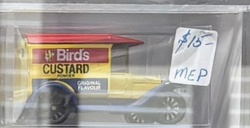
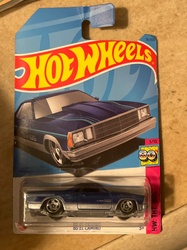
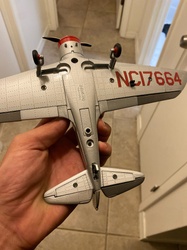
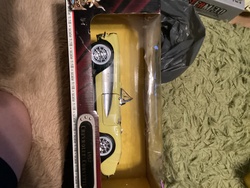
Collection of Matchbox Lesney Models of Yesteryear Vintage Diecast Cars

Vintage Diecast Collectible Vehicles

AI Estimated Value

·Not an official valuation·Verify before acting

$45.00 - $70.00

As of June 21, 2026

AI Item Analysis

·AI can make mistakes·Verify before acting
This set of five vintage diecast vehicles belongs to the celebrated 'Models of Yesteryear' series produced by Lesney Products in England during the late 1960s to mid-1970s. The assortment features early 20th-century automotive designs, including models resembling the 1911 Maxwell Roadster (teal and yellow), 1912 Packard (white), and 1914 Prince Henry Vauxhall (red and yellow). Each car is constructed from zinc alloy (Zamac) with plastic seating, brass-toned plastic radiators, and spoked wheels. The color palette is vibrant, utilizing period-inspired rich teals, sunny yellows, and deep reds. Condition across the set is remarkably good for its age; while there are minor paint chips visible on some of the fenders and running boards, the plastic canopies and delicate windshield frames remain largely intact. The tires are made of solid plastic or rubber, and the underside of the vehicles typically features stamped lettering identifying the model number, name, and 'Made in England by Lesney.' These items are prized by collectors for their intricate detailing on a small scale, representing a significant era in toy manufacturing craftsmanship before production moved away from the UK. The patina is minimal, suggesting they were likely used for display rather than heavy play.
AI Appraisal Report

·AI can make mistakes·Verify before acting
I have conducted a visual examination of this five-piece collection of Matchbox 'Models of Yesteryear' by Lesney. The set includes a 1911 Maxwell Roadster (Y-14), a 1912 Packard Landaulet (Y-11), and a 1914 Prince Henry Vauxhall (Y-2), among others. Based on the visible hallmarks—including the characteristic brass-effect plastic trim and stamped metal chassis—these appear to be authentic British-made specimens from the mid-to-late 1960s. The condition is 'Excellent' to 'Near-Mint' for unboxed items. I note only minor edge wear on the mudguards and nominal oxidation on the axels. The preservation of the delicate plastic windshield frames and steering wheels, which are often the first components to break, suggests these were display pieces rather than playthings. The market for Lesney Models of Yesteryear is currently stable but highly sensitive to packaging. These specific models are common 'second-generation' Yesteryears; while they boast superior detail compared to earlier iterations, they were produced in high volumes. Comparables for loose models in this condition typically range from $8 to $15 per unit. The lack of original 'wood-grain' or 'straw' boxes limits the ceiling for serious investors but maintains appeal for entry-level enthusiasts. Limitations: This appraisal is based solely on digital images. A physical inspection is necessary to verify the integrity of the diecast metal (checking for 'zinc pest' or internal fatigue) and to confirm that no parts have been expertly glued or replaced. Full authentication would require verifying the specific 'baseplate variations' (such as hole counts or font sizes) which can occasionally reveal rare, high-value transitional variants. No provenance documentation was provided, which would be required to establish a lineage of ownership.

Get your items appraised

Instant estimates of your treasures with AI-powered appraisals

Browse More Appraisals