AI estimate as of August 16, 2025 · verify with a professional before acting
AI-Generated · Verify before acting
Everything on this page is generated by AI for informational purposes only. AI can make mistakes — the AI may misidentify items or misattribute them (artist, maker, brand, designer, origin, era). This is not an official valuation and should not be used for insurance, sale, tax, estate, legal, or lending purposes — or any decision requiring a certified appraisal. It is not an authoritative claim about any person, brand, or rights holder — do not share or rely on it as a factual statement about a third party. Always consult qualified professionals before making financial decisions.
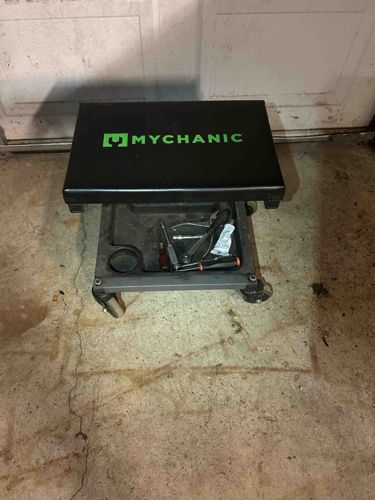
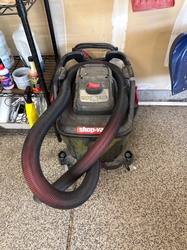
The item is a black, rectangular, mobile creeper seat, designed for use in automotive or mechanical work. Its primary function appears to be to provide a comfortable, wheeled seat for technicians working on low-lying components. The top surface is a padded cushion, approximately 2-3 inches thick, covered in a black material, likely vinyl or synthetic leather, for durability and ease of cleaning. The brand name 'MYCHANIC' is prominently displayed in a bright green, sans-serif font on the top surface, indicating the manufacturer. Below the padded top, there is an open storage tray, constructed from what appears to be dark gray or black metal or heavy-duty plastic. This tray is visible and contains various tools, including screwdrivers and what looks like a wrench or a pair of pliers, suggesting it is actively in use. The base of the creeper seat is supported by at least two, and likely four, heavy-duty swivel casters, indicating good maneuverability. These casters appear to be made of dark-colored, possibly rubberized, material, suggesting resistance to common garage liquids and scuffing. The overall construction appears robust, built to withstand the typical rigors of a workshop environment. The item shows some signs of use, such as minor scuffs or dust on the caster wheels and general wear consistent with its purpose, but no significant damage or structural deterioration is immediately visible. The visible tools inside the tray further confirm its utility as a functional piece of workshop equipment. It appears to be a relatively modern piece of equipment, likely manufactured within the last 10-15 years, given the 'MYCHANIC' branding which is a contemporary tool brand.
AI Appraisal Report
Upon visual examination of the MYCHANIC Rolling Creeper Seat with Storage, I assess its condition as good, consistent with active use in a workshop environment. The 'MYCHANIC' branding appears authentic and aligns with current market offerings for this type of equipment. The padded seat shows minimal wear, and the integrated storage tray, currently holding tools, indicates functional integrity. I observe minor scuffs and dust on the casters, typical for a used item, but no significant damage or structural deterioration that would impact its performance. The robust construction and heavy-duty swivel casters suggest durability.
In terms of market conditions, similar new creeper seats from reputable brands like MYCHANIC, Torin, or Pro-Lift typically retail in the range of $50-$100. Used examples, depending on condition, usually fetch 50-70% of their new price. Demand for such functional shop equipment is consistently moderate, as they are essential tools for many automotive enthusiasts and professional mechanics. This item is not rare; however, its good condition and utility ensure a steady demand in the secondary market.
Factors significantly impacting its value include its good operational condition and apparent durability. The presence of tools in the tray, while not part of the appraisal value for the seat itself, underscores its immediate utility.
It is important to note the limitations of authenticity verification from images alone. While the branding appears correct, an in-person examination would allow for tactile assessment of material quality, verification of caster smooth operation, and detection of any hidden structural defects or repairs. Full authentication would ideally involve reviewing original purchase receipts or provenance documentation, which is unavailable from the image. Scientific testing is not typically applicable or necessary for this type of retail product.