These notes were written by the person who submitted this item. Appraiser.AI has not verified them, and the AI's identification and estimate may rely on them.
AI Estimated Value
Not an official valuation
$3,500 - $5,500
AI estimate as of November 4, 2025 · verify with a professional before acting
AI-Generated · Verify before acting
Everything on this page is generated by AI for informational purposes only. AI can make mistakes — the AI may misidentify items or misattribute them (artist, maker, brand, designer, origin, era). This is not an official valuation and should not be used for insurance, sale, tax, estate, legal, or lending purposes — or any decision requiring a certified appraisal. It is not an authoritative claim about any person, brand, or rights holder — do not share or rely on it as a factual statement about a third party. Always consult qualified professionals before making financial decisions.
This analysis also relies on unverified notes provided by the user, which may be incomplete or inaccurate and could affect the result.
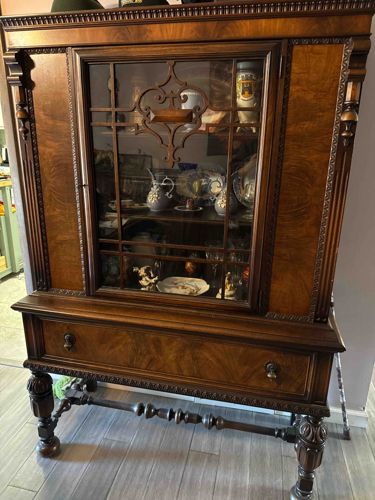
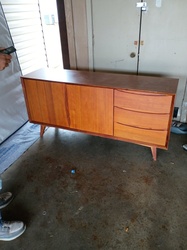
This is a substantial antique display cabinet, likely manufactured by Kittinger given the context provided, exhibiting characteristics of the Baroque Revival style. The piece is constructed primarily from a dark, warm-toned wood, possibly mahogany or walnut, showcasing prominent and attractive burled grain patterns on the cabinet doors and drawer front, indicating high-quality wood selection. The overall finish appears to be a rich, glossy lacquer or varnish, contributing to its luxurious appearance.
The upper section features a central glass-paned door, through which decorative items are visible. This door is adorned with a large, ornate carved wood overlay, suggesting a scrolling, perhaps classical motif, adding significant visual interest. The glass itself is divided into smaller panes by wooden mullions. Flanking this central display area are solid wooden panels, also featuring the striking burled wood grain. The top of the cabinet is finished with a molded cornice, detailed with a repetitive carved or embossed pattern, possibly an egg-and-dart or dentil molding, indicative of fine craftsmanship.
Beneath the upper display section, there is a single, wide drawer with a classic brass or dark metal pull handle. This drawer also displays the beautiful burled wood. The lower part of the cabinet is supported by four robust, heavily carved legs, which appear to be turned and fluted or reeded, culminating in a round foot. These legs are connected by a stretcher bar with multiple turned elements, further enhancing the antique aesthetic. Decorative molding or carving is also present around the bottom edge of the cabinet body, above the legs.
Visible condition issues are minimal based on the provided images, with the finish appearing well-maintained and free from major scuffs or damage. There might be some minor surface wear consistent with age, but no significant structural concerns are apparent. The craftsmanship, particularly the detailed carving, wood selection, and joinery (though not directly visible, implied by the structure), suggests a high-quality piece from a reputable manufacturer like Kittinger, consistent with a late 19th to early 20th-century period, possibly between 1880 and 1920. The intricate details and robust construction point to a handcrafted or semi-handcrafted origin.
AI Appraisal Report
Based on my visual examination of the provided image and the owner's assertion of Kittinger manufacture, this Antique Kittinger Display Cabinet, in Baroque Revival style, is a substantial and high-quality piece. The dark, burled wood, likely mahogany or walnut, is a significant value factor, indicating superior material selection. The rich, glossy finish appears exceptionally well-maintained, suggesting minimal surface wear consistent with age, but no apparent major damage or structural issues. This excellent perceived condition greatly enhances its marketability.
The intricate details, such as the ornate carved wood overlay on the central glass door, the molded cornice with repetitive carving, the robust carved, turned, and reeded legs, and the turned stretcher bar, all point to a piece of fine craftsmanship typical of the late 19th to early 20th-century Baroque Revival period (circa 1880-1920). While I cannot definitively confirm Kittinger's authenticity solely from images, the construction quality and design elements are consistent with their known output during that era.
Market demand for well-preserved, ornate antique furniture, especially from reputable American manufacturers like Kittinger, remains stable. Comparables would include other high-end Baroque Revival cabinets from manufacturers such as R.J. Horner or similar era Kittinger pieces. The craftsmanship, rich materials, and excellent condition contribute to its rarity and appeal.
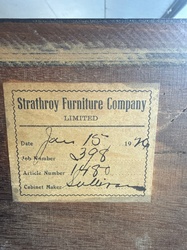
Limitations exist in fully authenticating the piece from images alone. A physical inspection would be crucial to verify the wood species definitively, examine joinery and construction methods firsthand, and search for Kittinger's marks, labels, or stencils. Provenance documentation, such as original sales receipts or family history, would also be invaluable. Without these, my assessment of authenticity is based on strong visual correlation and the owner's information.