AI identification & appraisal estimate

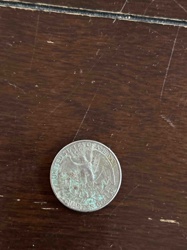
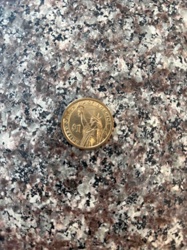
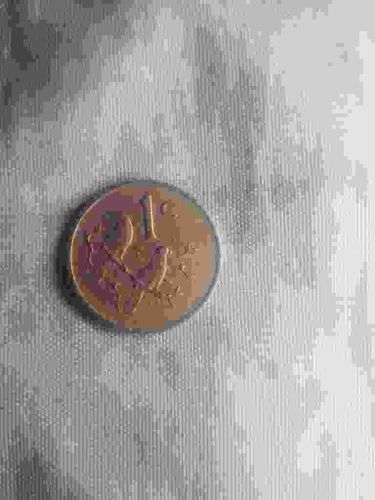
European 1 Euro Cent Coin

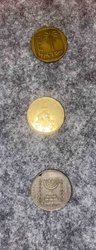
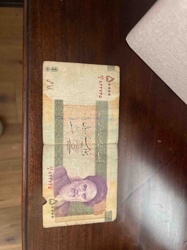
Submitted photo of European 1 Euro Cent Coin
Photo submitted by the user — not generated by AI

AI Estimated Value

Not an official valuation

$0.01

AI estimate as of March 3, 2026 · verify with a professional before acting

AI-Generated · Verify before acting

Everything on this page is generated by AI for informational purposes only. AI can make mistakes — the AI may misidentify items or misattribute them (artist, maker, brand, designer, origin, era). This is not an official valuation and should not be used for insurance, sale, tax, estate, legal, or lending purposes — or any decision requiring a certified appraisal. It is not an authoritative claim about any person, brand, or rights holder — do not share or rely on it as a factual statement about a third party. Always consult qualified professionals before making financial decisions.

Read the full disclaimer

AI Item Analysis

This item is a standard-issue European Union 1-cent coin, primarily composed of copper-covered steel. The coin is circular with a smooth edge, a diameter of 16.25 mm, and a thickness of 1.67 mm. The common reverse side (visible in the image) features a globe showing Europe in relation to Africa and Asia, symbolizing the Euro's place in the world. Next to the globe is the numeral '1' followed by the words 'EURO CENT' in smaller lettering. Six fine lines are also visible, cutting diagonally across the globe, with a total of twelve stars placed at the ends of these lines, representing the European Union members at the time of design. This side was designed by Luc Luycx. The obverse side (not visible) typically features a national symbol specific to the issuing country. The coin shows a reddish-brown copper hue but exhibits significant darkening and environmental toning around the raised relief, suggesting exposure to moisture or handling oils. There is visible wear on the high points of the '1' and the globe, and the surface displays minor abrasions and surface scratches consistent with circulation. The craftsmanship is of standard industrial mint quality, featuring sharp strikes on the original design elements despite the subsequent wear-and-tear and atmospheric patina found on the metal surface.
AI Appraisal Report

I have conducted a visual examination of the provided imagery for a standard-issue European Union 1-cent coin. The specimen is composed of copper-covered steel and exhibits the common reverse design by Luc Luycx. My assessment confirms this is a common circulation-grade coin showing significant evidence of use, including environmental toning, surface abrasions, and wear on the high relief points of the '1' and globe. From a numismatic standpoint, this coin lacks rarity. Billions of these units have been minted since 2002. Currently, there is a diminishing demand for low-denomination 1-cent coins, with some EU nations phasing them out. While it remains legal tender, its market value is strictly its face value. There are no visible 'mint errors' or unique die markers that would command a premium from collectors. Comparable circulated examples are typically sold in bulk by the kilogram rather than as individual specimens. Regarding authenticity, the strike and metallurgy appear consistent with industrial minting standards; however, a digital image cannot confirm weight, diameter, or magnetic properties necessary to rule out counterfeit status. A definitive appraisal would require a physical scale measurement (standard 2.30g) and a magnet test to confirm the steel core. Without a view of the obverse side to identify the issuing country and year, a complete historical profile is impossible. No provenance documentation is required for such a common item, as its value is dictated purely by its denomination.

Keep exploring

More numismatics / currency appraisals

Get your items appraised

Instant AI-powered appraisal estimates from a photo

Browse More Appraisals