AI identification & appraisal estimate

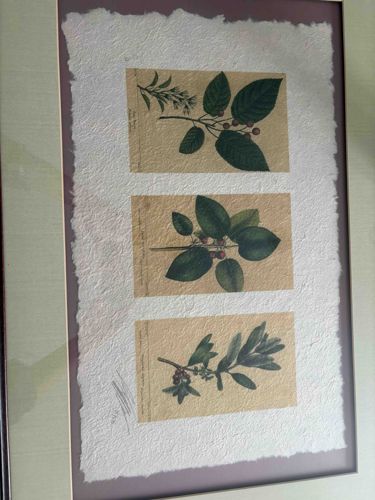
Limited Edition Botanical Triptych Print by Butler (28/375)

Submitted photo of Limited Edition Botanical Triptych Print by Butler (28/375)
Photo submitted by the user — not generated by AI

User's notes

Thonk artist is Butler numbered 28 out of 375

These notes were written by the person who submitted this item. Appraiser.AI has not verified them, and the AI's identification and estimate may rely on them.

AI Estimated Value

Not an official valuation

$150 - $250

AI estimate as of February 5, 2026 · verify with a professional before acting

AI-Generated · Verify before acting

Everything on this page is generated by AI for informational purposes only. AI can make mistakes — the AI may misidentify items or misattribute them (artist, maker, brand, designer, origin, era). This is not an official valuation and should not be used for insurance, sale, tax, estate, legal, or lending purposes — or any decision requiring a certified appraisal. It is not an authoritative claim about any person, brand, or rights holder — do not share or rely on it as a factual statement about a third party. Always consult qualified professionals before making financial decisions.

This analysis also relies on unverified notes provided by the user, which may be incomplete or inaccurate and could affect the result.

Read the full disclaimer

AI Item Analysis

This is a limited edition botanical art piece featuring three distinct illustrations of leafy branches with berries, arranged vertically on a single sheet. The artwork is printed on a unique, heavy-textured handmade paper characterized by a fibrous, almost crinkled surface and rough deckled edges. This paper substrate is mounted upon a lavender or dusty-rose colored mat within a thin, metallic-finish frame. The illustrations themselves utilize a naturalistic color palette of deep greens, earthy browns, and reddish-purple berries on a tan rectangular background, reminiscent of classic scientific botanical plates. A notable feature is the artist's signature 'Butler' and the edition numbering '28/375' located in the lower-left corner of the textured paper, indicating it is an authentic limited edition. The craftsmanship is evident in the choice of high-quality tactile materials and the clean, centered composition. Regarding condition, the piece appears well-preserved under glass; there are no signs of foxing, water damage, or fading visible in the current view. The style suggests a late 20th-century contemporary interpretation of 18th or 19th-century botanical studies, blending traditional natural history aesthetics with modern handmade paper techniques.

AI Appraisal Report

I have virtually examined this contemporary botanical triptych print attributed to the artist 'Butler,' numbered 28/375. The piece presents as a decorative fine art print executed on heavy, handmade deckled-edge paper, which adds significant textural interest and suggests a production date in the late 20th century. Based on the provided imagery, the condition appears excellent; there is no evidence of UV-induced fading, acid-burn from the matting, or foxing. The vertical composition and 'natural history' aesthetic remain highly desirable for interior design purposes. Market conditions for mid-tier limited edition botanical prints are stable but saturated. The value is driven primarily by the high-quality presentation—specifically the handmade substrate and professional framing—rather than a high-appreciating secondary market for the artist herself. Comparable works of this scale and edition size frequently realize prices between $150 and $250 at retail galleries or decorative auctions. Critically, a definitive authentication cannot be performed via digital images alone. While the signature and numbering appear consistent with known 'Butler' editions, an in-person inspection is required to verify the printing method (e.g., lithography vs. high-quality giclée) and to inspect the paper's watermark. To finalize this appraisal, I would require provenance documentation or a bill of sale from the original gallery. Furthermore, removing the backing to inspect for archival mounting techniques would be necessary to ensure long-term value preservation, as non-archival adhesives can cause irreversible staining over time.

Keep exploring

More fine art prints appraisals

Get your items appraised

Instant AI-powered appraisal estimates from a photo

Browse More Appraisals