AI estimate as of August 15, 2025 · verify with a professional before acting
AI-Generated · Verify before acting
Everything on this page is generated by AI for informational purposes only. AI can make mistakes — the AI may misidentify items or misattribute them (artist, maker, brand, designer, origin, era). This is not an official valuation and should not be used for insurance, sale, tax, estate, legal, or lending purposes — or any decision requiring a certified appraisal. It is not an authoritative claim about any person, brand, or rights holder — do not share or rely on it as a factual statement about a third party. Always consult qualified professionals before making financial decisions.
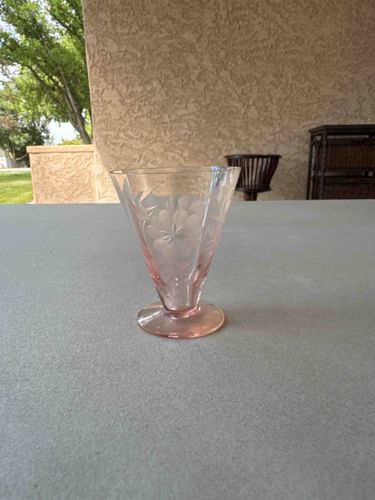
This item is a vintage pink depression glass footed dessert or sherbet dish, notable for its delicate pale rose or salmon pink tint, characteristic of depression-era glass. It stands approximately 4-5 inches tall, featuring a flared, V-shaped bowl that narrows significantly towards a short stem and a circular footed base. The bowl is faceted, giving it a somewhat hexagonal or octagonal cross-section, which adds visual interest and catches the light. The primary decorative element is an etched floral pattern, prominent on at least one visible panel of the bowl, depicting a large, open flower with a star-like center and surrounding leaves. The etching appears subtle and well-integrated into the glass. The glass clarity is good, with some light reflections visible, suggesting good optical quality for its age. There are no readily apparent chips, cracks, or significant abrasions from the provided image, indicating it is in good, used vintage condition with an intact structure. The overall craftsmanship appears standard for mass-produced depression glass, focusing on classic design and functionality rather than intricate bespoke details. Due to its color, style, and common production methods of the era, it likely dates from the 1920s to the 1940s. Its simple yet elegant design would have made it suitable for various desserts or cocktails during that period. No specific maker's marks or signatures are visible in the image, which is common for this type of glassware.
AI Appraisal Report
Upon examining the provided image of this Pink Depression Glass Footed Dessert/Sherbet Dish, I assess it to be in good, used vintage condition. The clarity of the glass appears excellent for its age, with no visible chips, cracks, or significant abrasions from the photo. The pale rose/salmon pink tint, faceted bowl, short stem, and etched floral pattern are all consistent with authentic Depression-era glass, likely dating from the 1920s-1940s. Its overall craftsmanship is standard for the period's mass production.
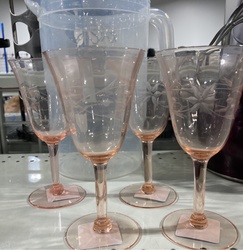
Market conditions for common forms of Depression glass, particularly dessert dishes, are generally stable but often not high-value without exceptional rarity or provenance. Comparables typically sell in the single to low double-digit range. Demand for general pink depression glass remains consistent among collectors, but this specific form is not considered rare. Factors impacting value positively include its appealing color and intact decorative etching. However, the lack of a discernible maker's mark, which is common for this type, prevents identification of a specific pattern that might command a premium.
It is crucial to note the limitations of image-based appraisal. While the visual evidence strongly suggests authenticity and good condition, a definitive verification would require in-person examination to detect subtle flaws (e.g., fleabites, internal inclusions), assess true glass quality and weight, and confirm the tactile nature of the facets and etching. Provenance documentation, if available, would further enhance authenticity and value, as would scientific testing of the glass composition, though this is rarely performed for items of this value.