AI estimate as of August 3, 2025 · verify with a professional before acting
AI-Generated · Verify before acting
Everything on this page is generated by AI for informational purposes only. AI can make mistakes — the AI may misidentify items or misattribute them (artist, maker, brand, designer, origin, era). This is not an official valuation and should not be used for insurance, sale, tax, estate, legal, or lending purposes — or any decision requiring a certified appraisal. It is not an authoritative claim about any person, brand, or rights holder — do not share or rely on it as a factual statement about a third party. Always consult qualified professionals before making financial decisions.
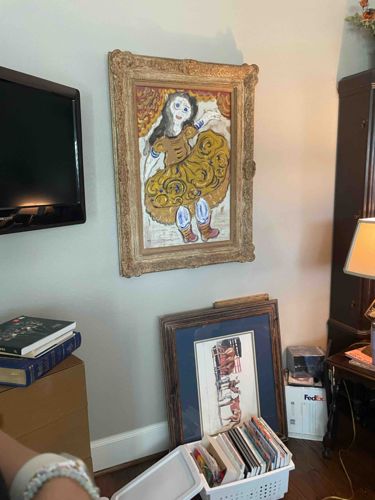
The item is a framed folk art painting, likely executed with oil or acrylic paints on a canvas or board substrate. It depicts a whimsical, stylized female figure with an elongated face, prominent blue eyes, and dark, flowing hair. She is dressed in a heavily textured, golden-yellow gown that appears to be in motion, possibly mid-twirl or dance, suggested by the large, swirling patterns on the skirt. The figure's arms are adorned with blue cuffs and her legs are visible beneath the dress, terminating in rustic, orange-brown boots. The background of the painting features abstract, splotchy areas of orange and white, providing a somewhat dreamlike or naive setting. The overall style suggests a naive or outsider art aesthetic, characterized by simplified forms, bold colors, and a lack of traditional academic perspective or proportion. The painting is housed within a substantial, ornate gold-toned frame with visible decorative moldings and a somewhat distressed or antique finish, suggesting either age or intentional patination to give it an aged look. There are no clearly discernible artist signatures or marks from the given image. The visible condition appears good with no obvious tears, major scuffs on the painting surface, or significant damage to the frame, though the frame's finish exhibits expected minor wear consistent with handling or age. The artwork's size is vertical and appears to be medium to large scale, dominating the wall space it occupies, perhaps around 24x36 inches or larger for the visible area of the painting itself. The craftsmanship of the painting is indicative of a direct, spontaneous approach, typical of folk or self-taught artists, with thick impasto in areas like the dress showcasing the texture of the paint.
AI Appraisal Report
Upon visual examination of the provided image, I assess this framed folk art painting depicts a whimsical dancing figure. The condition appears good, with no evident tears or major scuffs to the painting surface, and the frame shows expected minor wear consistent with its ornate style and presumed age. Authenticity, based solely on this image, leans toward it being a genuine piece of folk art given its naive style, bold colors, and spontaneous brushwork. The absence of a visible signature is common for self-taught artists.
In terms of market conditions, the folk art segment is stable, driven by collectors seeking unique, narrative-driven pieces. Comparables for unsigned folk art of this scale and visual appeal typically fall within a modest range, as provenance and artist recognition significantly influence higher values. Demand for charming, well-executed pieces like this remains consistent, though rarity is difficult to ascertain without knowing the artist or their body of work.
Factors significantly impacting its value include the appealing subject matter, the vibrant color palette, and the substantial, period-appropriate frame which enhances presentation. The lack of an artist signature and documented provenance are the primary limitations to achieving a higher valuation.
For full authentication and a more precise valuation, an in-person examination is crucial to assess paint surface texture, identify the specific medium, and check for any hidden marks or inscriptions. Provenance documentation, if available, correlating the piece to a known folk artist or collection, would significantly enhance its value. Scientific testing, such as pigment analysis, could confirm age and materials but is generally not necessary unless there are specific authenticity concerns beyond what visual inspection can discern for folk art.