AI estimate as of October 16, 2025 · verify with a professional before acting
AI-Generated · Verify before acting
Everything on this page is generated by AI for informational purposes only. AI can make mistakes — the AI may misidentify items or misattribute them (artist, maker, brand, designer, origin, era). This is not an official valuation and should not be used for insurance, sale, tax, estate, legal, or lending purposes — or any decision requiring a certified appraisal. It is not an authoritative claim about any person, brand, or rights holder — do not share or rely on it as a factual statement about a third party. Always consult qualified professionals before making financial decisions.
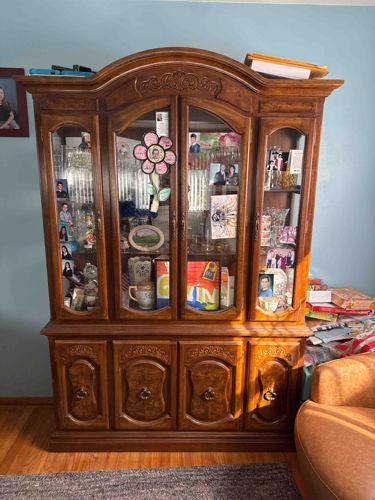
This is a large, two-piece traditional wooden china cabinet, likely constructed from a rich, medium-brown stained hardwood such as oak, cherry, or a similar veneer over composite. The upper section features a stately arched pediment with an ornate, scrolled carving at its center, adding a classic decorative touch. This section includes three separate display compartments, each with a glass-front door, allowing for the showcasing of collectibles. The central compartment is wider and also features an arched top, mirroring the overall pediment design, while the two narrower side compartments have straight tops. The glass in these doors appears to be clear, offering unobstructed views of the interior, which holds various personal items, photographs, and decorative objects. The lower section of the cabinet acts as a buffet or storage unit, featuring four solid wood doors. These doors are characterized by a slightly recessed panel design with a burlwood or highly figured wood veneer insert in the center, surrounded by a raised, carved border. Each lower door is fitted with a dark, possibly brass or iron, decorative pull handle, likely in a ring or teardrop style, consistent with traditional hardware. The entire cabinet is elevated on a simple plinth base, indicating a sturdy construction. The overall aesthetic suggests a traditional, possibly Mediterranean or old-world style, popular in the mid-to-late 20th century. There are no obvious signs of significant damage like cracks or deep scratches visible from the image, but the item is in a lived-in setting and shows a general patina consistent with age and use. The craftsmanship, particularly the detailed carvings and paneled doors, suggests a piece of moderate quality.
AI Appraisal Report
Based on my visual examination of the Traditional Wooden China Cabinet with Carved Details, I assess its fair market value to be in the range of $400-700. The cabinet presents as a sturdy, two-piece unit, likely constructed from stained hardwood or veneer. I observe good overall condition, with no overt signs of significant damage such as deep scratches, cracks, or veneer lifting, suggesting it has been reasonably well-maintained. The detailed carvings on the pediment and the raised, carved borders on the lower doors indicate a moderate level of craftsmanship. The burlwood or figured veneer inserts on the lower doors add a touch of sophistication.
Market conditions for traditional, large-scale furniture like this china cabinet have seen a decline in recent years, as contemporary and mid-century modern styles often dominate current consumer preferences. While the detailed work is commendable, it doesn't elevate it to a highly sought-after antique status. Comparables in the secondary market, including online marketplaces and estate sales, typically fetch prices in this range for similar mid-to-late 20th-century pieces. Demand is moderate, primarily from individuals furnishing traditional homes or seeking functional storage with decorative appeal. Rarity is not a significant factor here; similar styles were mass-produced.
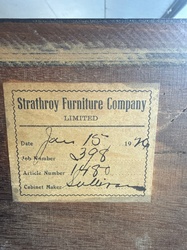
Factors significantly impacting value include its good condition, detailed traditional aesthetic, and functional design. However, its age is not yet in the true antique category, and its style, while classic, isn't currently at peak demand. Without an in-person examination, I cannot definitively confirm the wood species (solid hardwood vs. veneer over composite), the exact quality of the hardware, or potential hidden defects. Full authentication of material and detailed condition assessment would require a physical inspection.