AI identification & appraisal estimate

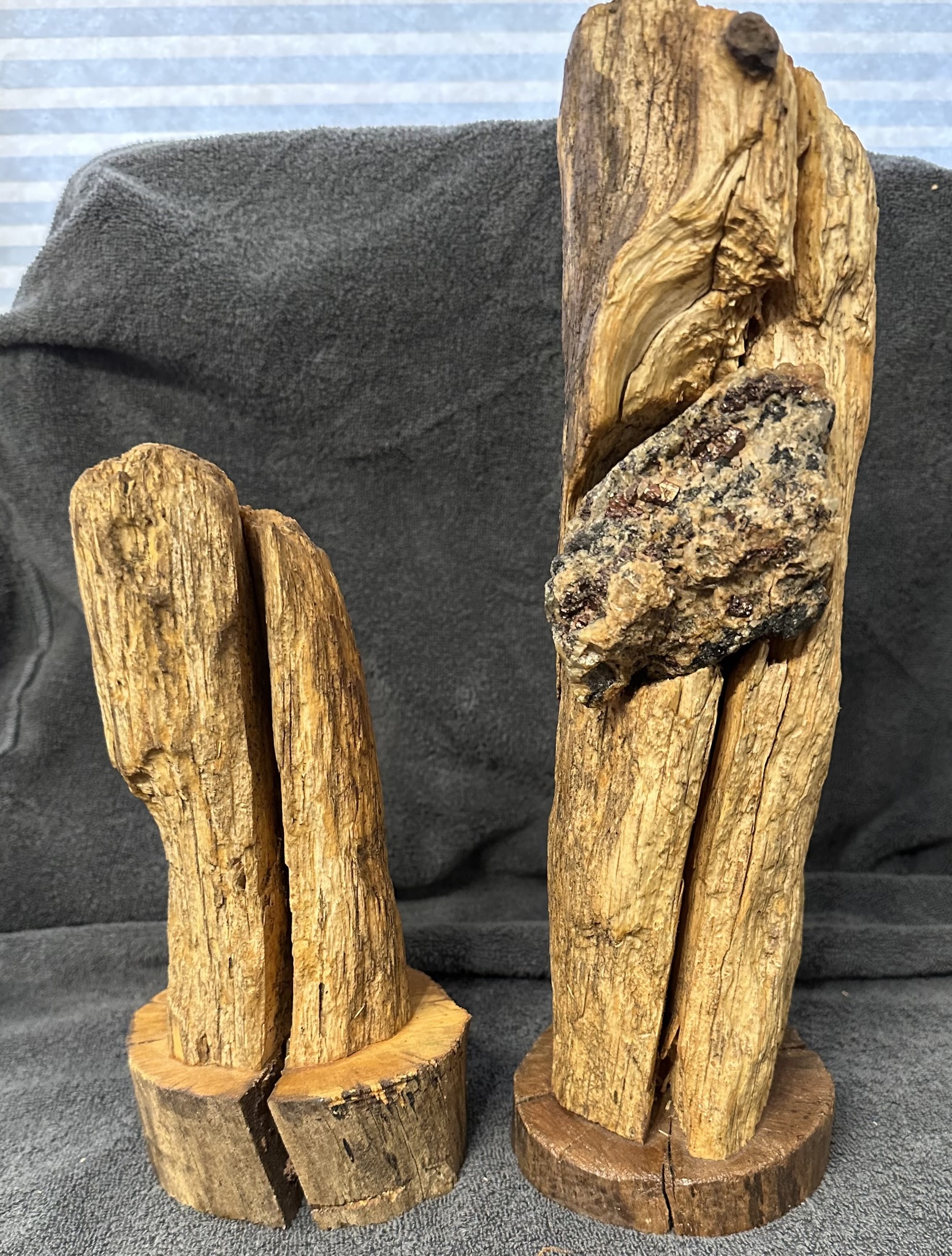
Artisanal Found Wood Sculptures with Garnet-bearing Host Rock

Submitted photo of Artisanal Found Wood Sculptures with Garnet-bearing Host Rock
Photo submitted by the user — not generated by AI

User's notes

unique wood with stone

These notes were written by the person who submitted this item. Appraiser.AI has not verified them, and the AI's identification and estimate may rely on them.

AI Estimated Value

Not an official valuation

$150 - $250

AI estimate as of April 17, 2026 · verify with a professional before acting

AI-Generated · Verify before acting

Everything on this page is generated by AI for informational purposes only. AI can make mistakes — the AI may misidentify items or misattribute them (artist, maker, brand, designer, origin, era). This is not an official valuation and should not be used for insurance, sale, tax, estate, legal, or lending purposes — or any decision requiring a certified appraisal. It is not an authoritative claim about any person, brand, or rights holder — do not share or rely on it as a factual statement about a third party. Always consult qualified professionals before making financial decisions.

This analysis also relies on unverified notes provided by the user, which may be incomplete or inaccurate and could affect the result.

Read the full disclaimer

AI Item Analysis

This pair of decorative pieces consists of vertically mounted, weathered wood fragments, one of which features a natural mineral inclusion. The primary specimen on the right stands taller and is characterized by its light, honey-colored wood with deep vertical graining and natural fissures. Embedded within its center is a large, rough-hewn metamorphic host rock containing visible crystals, likely almandine garnets, characterized by their dark red to brownish-black hue and isometric crystal structure. The wood shows signs of natural aging with a dry, matte patina and lacks any synthetic varnish. The smaller piece on the left complements the pair, exhibiting similar deeply striated bark-free wood with a vertical split that mimics the taller piece's form. Both pieces are mounted on circular, cross-cut wood bases that have been sanded but remain simple in construction. There are no visible maker's marks, suggesting these are artisanal or ‘found-object’ folk art creations, likely from the late 20th or early 21st century. The condition appears stable, though the wood exhibits natural desiccation cracks and some fraying at the edges which is consistent with the organic, rustic aesthetic. The mounting method appears to be a direct insertion or pin mount, emphasizing the raw, unrefined beauty of the materials.
AI Appraisal Report

I have virtually examined this pair of artisanal found-wood sculptures featuring a mineral inclusion. The primary piece features a metamorphic host rock with what appear to be almandine garnets. The wood exhibits a dry, matte patina with natural desiccation cracks, consistent with weathered 'driftwood' or forest-find timber. The construction is rudimentary, utilizing simple cross-cut wood slab bases and pin mounts, which confirms an artisanal or folk-art origin rather than a commercial high-end design house. The market for 'Natural History Decor' is currently stable, though value is heavily driven by the size/quality of the mineral specimen and the artist's reputation. As these are unsigned and the garnets are of 'specimen' rather than 'gem' quality, the value lies in their decorative appeal (Curiosity Cabinet aesthetic) rather than mineralogical rarity. Similar items sold at regional craft fairs or boutique decor shops typically range from $75 to $150 per unit. The condition appears fair; however, the natural fraying and fissures in the wood suggest it has not been stabilized with resin, making it susceptible to further cracking in low-humidity environments. Limitations: My assessment is based purely on visual inspection of the provided images. To provide a definitive valuation, an in-person examination is required to confirm the mineral's hardness and chemical composition via Mohs testing or spectroscopy. Scientific testing would also confirm if the stone is naturally occurring within the wood or if it has been manually inset/adhered. Provenance regarding the geographical source of the wood and stone could potentially increase the value to collectors of regional geology.

Keep exploring

More art & decor / natural history collectibles appraisals

Get your items appraised

Instant AI-powered appraisal estimates from a photo

Browse More Appraisals