AI estimate as of July 12, 2025 · verify with a professional before acting
AI-Generated · Verify before acting
Everything on this page is generated by AI for informational purposes only. AI can make mistakes — the AI may misidentify items or misattribute them (artist, maker, brand, designer, origin, era). This is not an official valuation and should not be used for insurance, sale, tax, estate, legal, or lending purposes — or any decision requiring a certified appraisal. It is not an authoritative claim about any person, brand, or rights holder — do not share or rely on it as a factual statement about a third party. Always consult qualified professionals before making financial decisions.
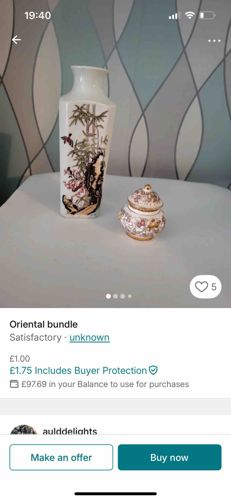
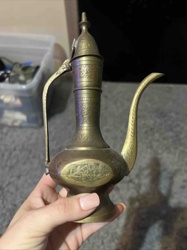
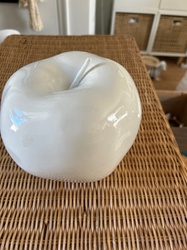
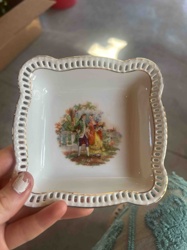
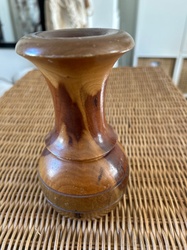
This lot features two decorative ceramic or porcelain items, likely from an 'Oriental' or East Asian inspired design period. The first item is a rectangular-oblong vase with slightly flared corners and a gently undulating rim. It possesses a predominant off-white or cream base color, adorned with polychrome hand-painted or transferware decoration. The motif on the vase depicts bamboo stalks with green leaves, and what appears to be a figural scene or flora resembling blossoming trees or shrubs, possibly with a butterfly or bird element. The colors visible include greens, browns, pinks, and blacks. The second item is a small, lidded pot or ginger jar, bulbous in shape with a smaller foot and a domed lid topped with a small finial. This piece also features an off-white base color, heavily embellished with intricate floral patterns in various shades of red, pink, gold, and green, suggesting rich gilding or enameled details. The surface appears to be textured or molded with raised elements that define some of the decorative motifs. Both items show no visible cracks or chips from the provided image, but detailed inspection for crazing, paint loss, or repairs would be necessary for a full condition assessment. The style suggests a 20th-century decorative piece, possibly mid to late 20th century, produced for the export market, mimicking traditional Asian aesthetics. The craftsmanship appears to be of decent quality for decorative items, with attention paid to the painted details.
AI Appraisal Report
Upon visual inspection of the provided image, I^{
ve assessed this lot of two 'Oriental' decorative ceramic pieces. Both the rectangular vase and the lidded pot appear to be in good overall condition, showing no immediate signs of cracks or significant chips. The vase features a hand-painted or transferware bamboo and figural motif in polychrome enamels on a cream ground. The lidded pot is heavily decorated with intricate floral and possibly gilded patterns, displaying what appear to be raised textured elements, suggesting molded decoration or heavy enamel application.
Authenticity: Based solely on the image, these items appear to be decorative works from the 20th century, likely mid to late, produced for the export market. The style mimics traditional East Asian aesthetics but lacks the hallmarks of period antique or fine art ceramics. Without in-person examination, I cannot definitively determine if the decorations are fully hand-painted or partially transferware, nor can I identify specific maker's marks or factory origins. Thorough in-person examination would be crucial to assess crazing, subtle repairs, paint loss, material quality (e.g., porcelain vs. ceramic), and definitive dating.
Market Conditions and Comparables: The market for 20th-century decorative 'Oriental' ceramics varies. Pieces of this nature, while aesthetically pleasing, typically do not command high values unless attributed to a renowned maker or possess exceptional artistic merit. Demand is moderate, driven by interior design trends rather than collector rarity.
Factors Affecting Value: The primary factors are decorative appeal, condition, and perceived quality. The lack of specific provenance, maker^{
's marks, or historical significance limits the value. The items' utility as decorative accents supports their marketability. For full authentication and to ascertain primary origin, I would recommend a physical examination for marks, body material analysis, and a black light test for repairs.
Considering these factors, particularly the decorative nature and origin for the export market, I estimate the value.