AI estimate as of December 7, 2025 · verify with a professional before acting
AI-Generated · Verify before acting
Everything on this page is generated by AI for informational purposes only. AI can make mistakes — the AI may misidentify items or misattribute them (artist, maker, brand, designer, origin, era). This is not an official valuation and should not be used for insurance, sale, tax, estate, legal, or lending purposes — or any decision requiring a certified appraisal. It is not an authoritative claim about any person, brand, or rights holder — do not share or rely on it as a factual statement about a third party. Always consult qualified professionals before making financial decisions.
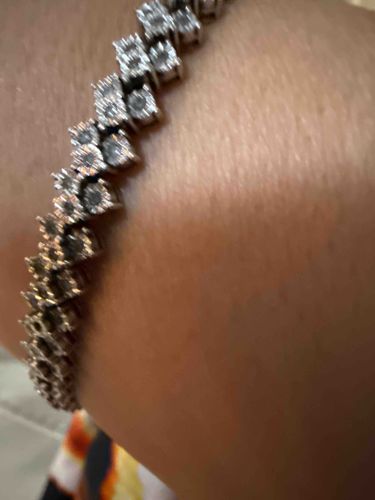
This item is a diamond cluster tennis bracelet, characterized by its continuous line of gemstones. The bracelet is constructed from a silvery-toned metal, likely white gold or platinum, given the brilliance and setting style typically associated with fine diamond jewelry. The overall design features distinct clusters of diamonds rather than single stones, creating a more opulent and textured appearance compared to a traditional single-row tennis bracelet. Each cluster appears to consist of a central, slightly larger diamond surrounded by smaller diamonds, all set closely together in what looks like a pave or bead setting to maximize sparkle. The individual settings for these clusters are squared or rhomboid in shape, giving the bracelet an alternating, somewhat jagged or undulating edge when viewed closely, which adds visual interest. The diamonds themselves appear to be round brilliant cuts, ranging in size within each cluster. The clarity and color of the diamonds cannot be precisely determined from the image, but they exhibit significant brilliance and fire, suggesting at least a good commercial quality. The metal shows a polished finish, reflecting light, and there are no immediately visible signs of heavy wear, tarnish, or significant damage such as missing stones or bent links. The construction seems robust, with each cluster independently linked, allowing for flexibility on the wrist. The overall aesthetic is one of elegant luxury, likely dating from the late 20th century to contemporary, as cluster settings became popular for maximizing carat weight appearance and sparkle. The craftsmanship appears to be of good quality, with secure settings and a clean overall presentation.
AI Appraisal Report
Based on my visual examination of the provided image, I assess this diamond cluster tennis bracelet. The bracelet appears to be in very good pre-owned condition, showing a polished finish with no visible signs of heavy wear, tarnish, or damage such as missing stones or bent links. The continuous line of diamond clusters, each featuring a presumed central larger stone surrounded by smaller diamonds in a pave or bead setting, indicates a design focused on maximizing brilliance. The silvery-toned metal, likely white gold given the quality of the diamonds and setting style, contributes to its elegant aesthetic. The squared/rhomboid cluster settings and flexible linking suggest good quality craftsmanship, popular in contemporary and late 20th-century luxury jewelry.
Market conditions for diamond tennis bracelets remain consistently strong, driven by their classic appeal. Comparables include similar cluster or multi-row diamond bracelets from reputable jewelers. Demand for such pieces is steady, as they offer significant sparkle and perceived carat weight.
Factors significantly impacting value include the total carat weight, the specific clarity and color grades of the diamonds, and the metal purity (e.g., 14k or 18k white gold, or platinum). Without knowing these specifics, I must provide a range.
It is crucial to note that authenticity verification from images alone is limited. A full in-person examination is essential to confirm the metal type and purity (e.g., using an acid test or XRF analysis), accurately grade diamond clarity, color, and cut (e.g., using a loupe and master stones), and determine precise total carat weight. Furthermore, provenance documentation would confirm the item's history and origin, aiding in full authentication and valuation.