AI identification & appraisal estimate

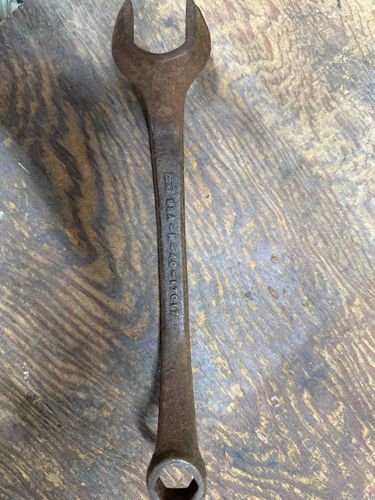
Combination Open-End and Box-End Wrench

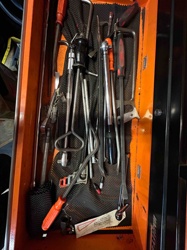
Submitted photo of Combination Open-End and Box-End Wrench
Photo submitted by the user — not generated by AI

AI Estimated Value

Not an official valuation

$5 - $15

AI estimate as of July 27, 2025 · verify with a professional before acting

AI-Generated · Verify before acting

Everything on this page is generated by AI for informational purposes only. AI can make mistakes — the AI may misidentify items or misattribute them (artist, maker, brand, designer, origin, era). This is not an official valuation and should not be used for insurance, sale, tax, estate, legal, or lending purposes — or any decision requiring a certified appraisal. It is not an authoritative claim about any person, brand, or rights holder — do not share or rely on it as a factual statement about a third party. Always consult qualified professionals before making financial decisions.

Read the full disclaimer

AI Item Analysis

The item is an open-end and box-end combination wrench, a common type of hand tool used for tightening and loosening nuts and bolts. It is constructed from metal, likely steel, given its typical application and visible oxidation. The wrench exhibits a dark, reddish-brown patina across its entire surface, indicative of significant rust and corrosion. This heavy oxidation suggests it has been exposed to moisture and has not been maintained for some time, or perhaps it was stored in an unfavorable environment. The physical characteristics include an open-end jaw on one side and a hexagonal box-end on the opposite side, designed to fit different fastener types or sizes. The size cannot be precisely determined without a reference, but it appears to be a medium to large-sized wrench. Visible markings are present along the shaft of the wrench, though some letters are obscured by rust. It appears to read "U.S.A. F-40-17C17" or similar, suggesting it might be a military-issue or government-spec tool, with 'U.S.A.' indicating its country of manufacture and 'F-40-17C17' potentially being a part number, stock number, or manufacturing code. The corners and edges of both the open-end jaw and the box-end opening show wear typical of use, though the extent of 'rounding' on the fasteners cannot be fully assessed due to the overall rust. There are no obvious signs of significant structural damage such as bends or cracks, but the heavy rust undoubtedly affects its functionality and aesthetic appeal. The overall condition suggests a vintage or antique tool that has been heavily used and subsequently neglected in storage. The craftsmanship appears robust, as is typical for such tools, designed for durability rather than intricate aesthetics. Its age could range from the mid-20th century onwards, especially if it is indeed a military or industrial tool.
AI Appraisal Report

Upon examining the provided image of this combination open-end and box-end wrench, I've assessed its condition and likely authenticity. The wrench exhibits heavy oxidation, indicated by the dark, reddish-brown patina covering its entire surface. This suggests significant neglect and exposure to moisture. Despite the rust, there are no overt signs of structural damage like bends or cracks, indicating its inherent robustness. The visible markings "U.S.A. F-40-17C17" are intriguing, strongly suggesting a military-issue or government-spec tool. This potential provenance elevates its interest from a generic tool to a collectible item. In terms of market conditions, heavily rusted tools generally see low demand among users due to functionality issues. However, if this is indeed a military-issue tool, it could appeal to militaria collectors or tool collectors specializing in vintage government-spec items. Its rarity isn't high within the general tool market, but if its military designation is confirmed, it gains a niche appeal. The primary factor significantly impacting value is the extensive rust, rendering it non-functional for its intended use without significant restoration. Its value lies almost entirely in its collectible nature as a historical artifact. My assessment of authenticity is based solely on visual cues. The 'U.S.A.' marking is a strong indicator, but definitive authentication requires an in-person examination to confirm the specific markings, material integrity, and manufacturing characteristics. Provenance documentation (e.g., military surplus records) would be ideal. Scientific testing, such as elemental analysis of the steel, could confirm its period of manufacture or origin, but this is usually reserved for higher-value items. Without physical inspection, I cannot confirm the exact size, the depth of corrosion, or its precise grade of steel. This limits the certainty of its full historical context and collectible value.

Keep exploring

More hand tool appraisals

Get your items appraised

Instant AI-powered appraisal estimates from a photo

Browse More Appraisals