AI estimate as of August 17, 2025 · verify with a professional before acting
AI-Generated · Verify before acting
Everything on this page is generated by AI for informational purposes only. AI can make mistakes — the AI may misidentify items or misattribute them (artist, maker, brand, designer, origin, era). This is not an official valuation and should not be used for insurance, sale, tax, estate, legal, or lending purposes — or any decision requiring a certified appraisal. It is not an authoritative claim about any person, brand, or rights holder — do not share or rely on it as a factual statement about a third party. Always consult qualified professionals before making financial decisions.
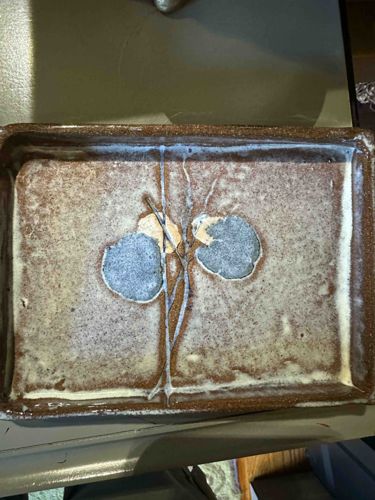
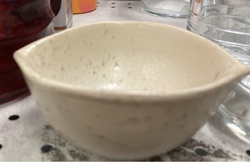
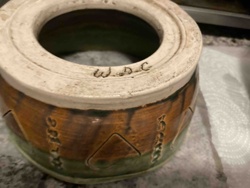
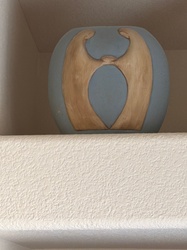
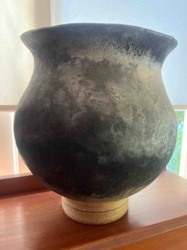
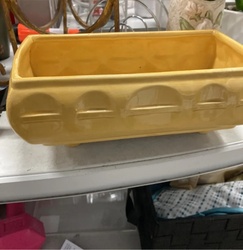
This is a rectangular ceramic baking dish or serving tray, likely handcrafted, given its rustic appearance and unique glaze. The primary color scheme consists of earthy tones, with a dark brown or reddish-brown base clay body visible, especially on the rim and around the raised design. The interior surface of the dish is covered in a mottled glaze, ranging from a speckled cream or off-white to a light brown, indicating a reduction firing process or a specific type of reactive glaze. A prominent design elements an abstract botanical motif, possibly stylized trees or flowers, centered within the dish. This design features a raised, textured trunk-like element in a lighter, sandy buff color, branching out into two distinct, roughly circular or irregular 'leaves' or 'blossoms' rendered in a muted blue-gray glaze. The edges of these blue-gray elements are defined by a white or very light cream outline, creating a slight relief. The craftsmanship appears to be art pottery or studio pottery, characterized by slight imperfections in symmetry and glaze application which contribute to its handcrafted charm rather than indicating flaw. There are visible drips and pooling of the lighter glazes, particularly along the inside of the rim, adding to its artisanal character. The overall condition appears good, with no obvious cracks or chips visible from this angle, though a natural patina and slight variations in the glaze are inherent to this style. The robust construction suggests it is functional ware, suitable for baking or serving. Without a visible maker's mark or signature, its exact origin and age are hard to pinpoint, but its aesthetic suggests a mid-20th century to contemporary studio pottery style, often associated with a natural, organic, or wabi-sabi aesthetic.
AI Appraisal Report
I have carefully examined the provided image of this Handcrafted Ceramic Rectangular Baking/Serving Dish with Botanical Motif. The dish presents as a fine example of studio pottery, likely handcrafted due to its rustic aesthetics, visible imperfections, and unique glaze textures. The condition appears to be good; no significant chips or cracks are discernable from this visual examination, though typical wear, minor glaze variations, and drips inherent to handcrafted ceramic are present and contribute to its artisanal charm. The absence of a visible maker's mark limits my ability to definitively attribute it to a specific artist or studio, which is a common challenge with art pottery viewed solely through images.
Authenticity, based purely on visual evidence, points towards a mid-20th century to contemporary studio piece, aligning with organic and wabi-sabi aesthetics. However, a full authentication would require in-person examination to check for internal flaws, the presence of a faint signature, or specific clay body characteristics. Provenance documentation would be highly beneficial for confirming its history and origin. Scientific testing, such as thermoluminescence dating, could provide insights into its age if deemed necessary, especially for higher value attribution.
Market conditions for handcrafted ceramic art like this are moderately strong, particularly for pieces that combine functionality with artistic merit. Comparable items from un-attributed studio potters of this style typically range from under a hundred to several hundred dollars, depending on size, complexity, and aesthetic appeal. Given its attractive botanical motif and apparent robust construction, there is a good demand among collectors of artisanal kitchenware and art pottery. Its relative uniqueness, while not necessarily rare in the broader scope of studio ceramics, sets it apart from mass-produced items. Factors impacting its value negatively include the lack of a known artist attribution, which significantly caps its potential ceiling. Conversely, its visual appeal and functional design enhance its desirability.