AI estimate as of July 22, 2025 · verify with a professional before acting
AI-Generated · Verify before acting
Everything on this page is generated by AI for informational purposes only. AI can make mistakes — the AI may misidentify items or misattribute them (artist, maker, brand, designer, origin, era). This is not an official valuation and should not be used for insurance, sale, tax, estate, legal, or lending purposes — or any decision requiring a certified appraisal. It is not an authoritative claim about any person, brand, or rights holder — do not share or rely on it as a factual statement about a third party. Always consult qualified professionals before making financial decisions.
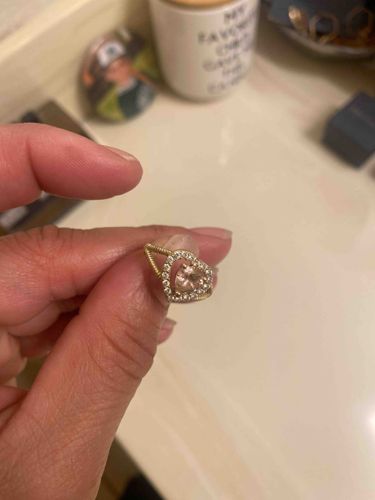
The item is a small, ornate piece of jewelry, specifically a ring, held between a thumb and forefinger, suggesting a size suitable for wearing on a digit. The primary material appears to be a polished yellow metal, likely gold or gold-plated, given its lustrous finish. The ring features a prominent heart-shaped setting at its crown. Within this heart outline, there is a central, faceted gemstone exhibiting a soft, blush pink or peach hue, possibly morganite or a light pink sapphire, or a simulant like cubic zirconia. This central stone is encircled by a halo of smaller, clear, round-cut stones, which appear to be diamonds or diamond simulants, set tightly together to create a continuous sparkle. The setting style for these smaller stones seems to be pave or bead setting, indicating careful craftsmanship. The band of the ring, though mostly obscured by the fingers, appears to be slender and merges seamlessly into the heart-shaped setting. There are no immediate visible signs of significant wear, damage, or repairs, suggesting the ring is in good to very good condition. The metal exhibits a uniform shine with no apparent tarnishing or deep scratches. The stones are all present and appear securely set, with good brilliance from the clear stones and a consistent color from the central stone. Given its romantic heart motif and potentially precious materials, this ring likely dates from a contemporary period, possibly early 21st century, designed for occasions such as engagements, anniversaries, or as a general fashion accessory. Without specific hallmarks or maker's marks, further manufacturing details or precise age estimation are difficult, but the overall presentation points to a commercially manufactured piece with an emphasis on decorative appeal.
AI Appraisal Report
Upon visual examination of the provided image, this Heart-Shaped Gemstone Ring with Diamond Halo appears to be in very good to excellent condition. The yellow metal, likely 14K gold, shows no visible tarnish, scratches, or wear marks on the visible portions. The central heart-shaped gemstone, with its soft pink/peach hue, could be morganite, pink sapphire, or a high-quality simulant like cubic zirconia. The surrounding halo of smaller, clear stones exhibits good brilliance, consistent with diamonds or well-cut diamond simulants. All stones appear securely set, and the craftsmanship of the pave or bead setting is fine.
Current market conditions for heart-motif jewelry, particularly those featuring colored gemstones and diamond halos, are stable, reflecting consistent demand for romantic and sentimental pieces. While not exceptionally rare, the combination of a significant heart-shaped stone and a diamond halo makes it a desirable fashion or occasion-specific item. Factors significantly impacting value include the actual material of the central stone (natural vs. synthetic vs. simulant), the quality and carat weight of the clear stones, and the purity of the metal. Without physical inspection, I cannot definitively determine the exact composition of the stones or metal.
Limitations in authenticity verification from images alone are substantial. To provide a definitive appraisal, an in-person examination is crucial. This would involve a gemological assessment to identify the central stone and diamonds (or simulants), a metal purity test (e.g., acid test or XRF analysis), and a detailed weigh-in. Provenance documentation, such as original purchase receipts or GIA certificates, would also significantly aid in authentication and value ascertainment.