AI Appraisal Estimate

AI-generated estimates · not official valuations

From the user

What was submitted

Photo and notes provided by the user — not generated by AI

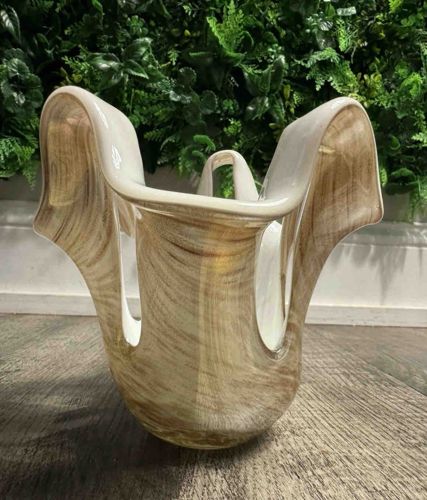
Submitted item photo
Submitted photo · June 1, 2026

User's notes

Gold flecks hand blown

AI analysis below

AI appraisal

AI analysis & estimate

AI-Generated · Verify before acting

Everything below is generated by AI for informational purposes only. AI can make mistakes — the AI may misidentify items or misattribute them (artist, maker, brand, designer, origin, era). This is not an official valuation and should not be used for insurance, sale, tax, estate, legal, or lending purposes — or any decision requiring a certified appraisal. It is not an authoritative claim about any person, brand, or rights holder — do not share or rely on it as a factual statement about a third party. Always consult qualified professionals before making financial decisions.

Note

This analysis also relies on unverified notes provided by the user, which may be incomplete or inaccurate and could affect the result.

Read the full disclaimer

AI Identification

·Not independently authenticated·Verify before acting

Murano Aventurine Gold Hand-Blown Art Glass Vase

Art Glass / Collectible Glassware

AI Estimated Value

·Not an official valuation·Verify before acting

$450 - $650

As of June 1, 2026

AI Item Analysis

·AI can make mistakes·Verify before acting
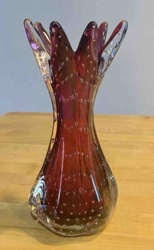
This mid-century modern art glass vase features a distinctive hand-blown 'handkerchief' or 'swung' silhouette, characterized by four dramatic upright folds that create a petal-like or folded-fabric aesthetic. The piece is constructed with internal gold aventurine (gold flecks), which is a labor-intensive technique involving the suspension of copper crystals within the glass to create a shimmering bronze and gold aesthetic. This metallic layering is set against an opaque cream or latte-colored base. The vase's organic, undulating rim demonstrates high-quality craftsmanship through its thin yet uniform edges and symmetrical folding. While no specific maker's mark is visible in the image, the style and gold aventurine inclusions are hallmarks of mid-20th-century Murano glassmaking, likely dating from the 1950s to the 1970s. The piece maintains a smooth, glossy finish with no evident cracks, deep scratches, or significant clouding, though standard shelf wear to the base can be anticipated. The interior appears consistent with the exterior coloration, suggesting a solid or heavily cased glass construction. Its abstract, sculptural form serves as both a functional vessel and a decorative statement piece typical of the Venetian glass tradition.

AI Appraisal Report

·AI can make mistakes·Verify before acting
Upon examination of this Murano handkerchief vase, I find a high-quality example of Venetian glassmaking from the mid-20th century. The 'Fazzoletto' style, popularized by designers like Fulvio Bianconi for Venini, is expertly executed here with four symmetrical, organic folds. The use of gold aventurine (avventurina) is particularly well-done, showing a dense, uniform distribution of copper crystals that suggests the work of a skilled 'maestro' rather than a mass-market reproduction. The cream-colored opaque base provides a sophisticated contrast that enhances the metallic shimmer. Market demand for mid-century Murano remains strong, especially for pieces involving labor-intensive metallic inclusions. Comparable sales for unsigned aventurine handkerchief vases of this scale typically fall in the $400 to $700 range. Signed pieces or those with intact foil labels (such as Barovier & Toso or Venini) can command double or triple this value. The excellent condition—noting the lack of chips on the delicate 'petal' tips—preserves its maximum market potential. While the technique and form are highly characteristic of authentic Murano production, I must note that visual inspection via imagery cannot definitively confirm the maker without a signature or label. A full authentication would require an in-person physical examination to verify the 'pontil' mark at the base (which should be ground smooth or expertly snapped), weight-to-volume ratio, and UV light testing to observe the glass's fluorescence. Provenance documentation, such as original gallery receipts, would further solidify this valuation. As it stands, this is a premium decorative asset for any collector of Italian art glass.

Get your items appraised

Instant estimates of your treasures with AI-powered appraisals

Browse More Appraisals