Japanese Gofun Gosho-Ningyo Figurine
Asian Art and Collectibles - Dolls

Japanese Gofun Gosho-Ningyo Figurine

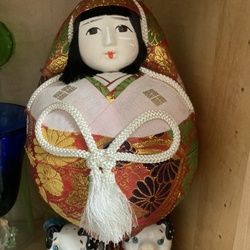
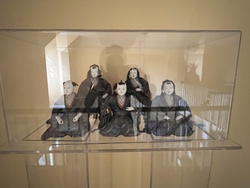
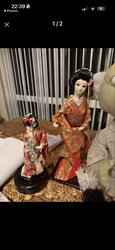
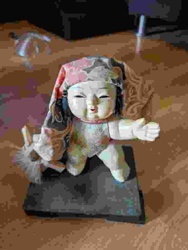
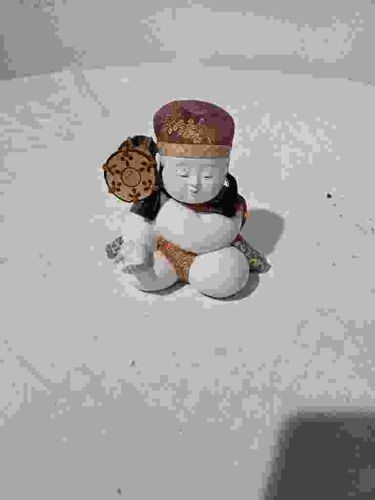
This is a traditional Japanese Gosho-ningyo (Palace Doll) figurine depicting a plump, seated child-like figure. The doll features the characteristic white, porcelain-like finish of 'gofun,' a traditional material made from crushed oyster shells and glue. The figure is styled with a distinct purple and gold brocade cap (eboshi) and a matching loincloth sash (haragake). To its side, it carries a miniature wooden property drum or accessory with a wheel design. The doll has a serene expression with delicate, painted facial features including slit eyes and rosy lips. Structurally, the figure appears to be in good vintage condition, though the image resolution limits a full assessment of surface micro-cracking common in older gofun. The craftsmanship reflects Mid-20th Century Showa-era production, noted for the high-quality textile application and subtle modeling of the figure's rounded 'fukure' form. The overall aesthetic is one of auspiciousness and health, typical of dolls presented as gifts to royal or noble households.
Estimated Value

$350-500

Basic Information

Category

Asian Art and Collectibles - Dolls

Appraised On

March 4, 2026

Estimated Value

$350-500

Item Description

This is a traditional Japanese Gosho-ningyo (Palace Doll) figurine depicting a plump, seated child-like figure. The doll features the characteristic white, porcelain-like finish of 'gofun,' a traditional material made from crushed oyster shells and glue. The figure is styled with a distinct purple and gold brocade cap (eboshi) and a matching loincloth sash (haragake). To its side, it carries a miniature wooden property drum or accessory with a wheel design. The doll has a serene expression with delicate, painted facial features including slit eyes and rosy lips. Structurally, the figure appears to be in good vintage condition, though the image resolution limits a full assessment of surface micro-cracking common in older gofun. The craftsmanship reflects Mid-20th Century Showa-era production, noted for the high-quality textile application and subtle modeling of the figure's rounded 'fukure' form. The overall aesthetic is one of auspiciousness and health, typical of dolls presented as gifts to royal or noble households.
Get Your Items Appraised

Instant estimates of your treasures with AI-powered instant appraisals

Browse More Appraisals