AI Appraisal Estimate

AI-generated estimates · not official valuations

From the user

What was submitted

Photo and notes provided by the user — not generated by AI

Submitted item photo
Submitted photo · June 25, 2026

User's notes

No additional notes provided.

AI analysis below

AI appraisal

AI analysis & estimate

AI-Generated · Verify before acting

Everything below is generated by AI for informational purposes only. AI can make mistakes — the AI may misidentify items or misattribute them (artist, maker, brand, designer, origin, era). This is not an official valuation and should not be used for insurance, sale, tax, estate, legal, or lending purposes — or any decision requiring a certified appraisal. It is not an authoritative claim about any person, brand, or rights holder — do not share or rely on it as a factual statement about a third party. Always consult qualified professionals before making financial decisions.

Read the full disclaimer

AI Identification

·Not independently authenticated·Verify before acting

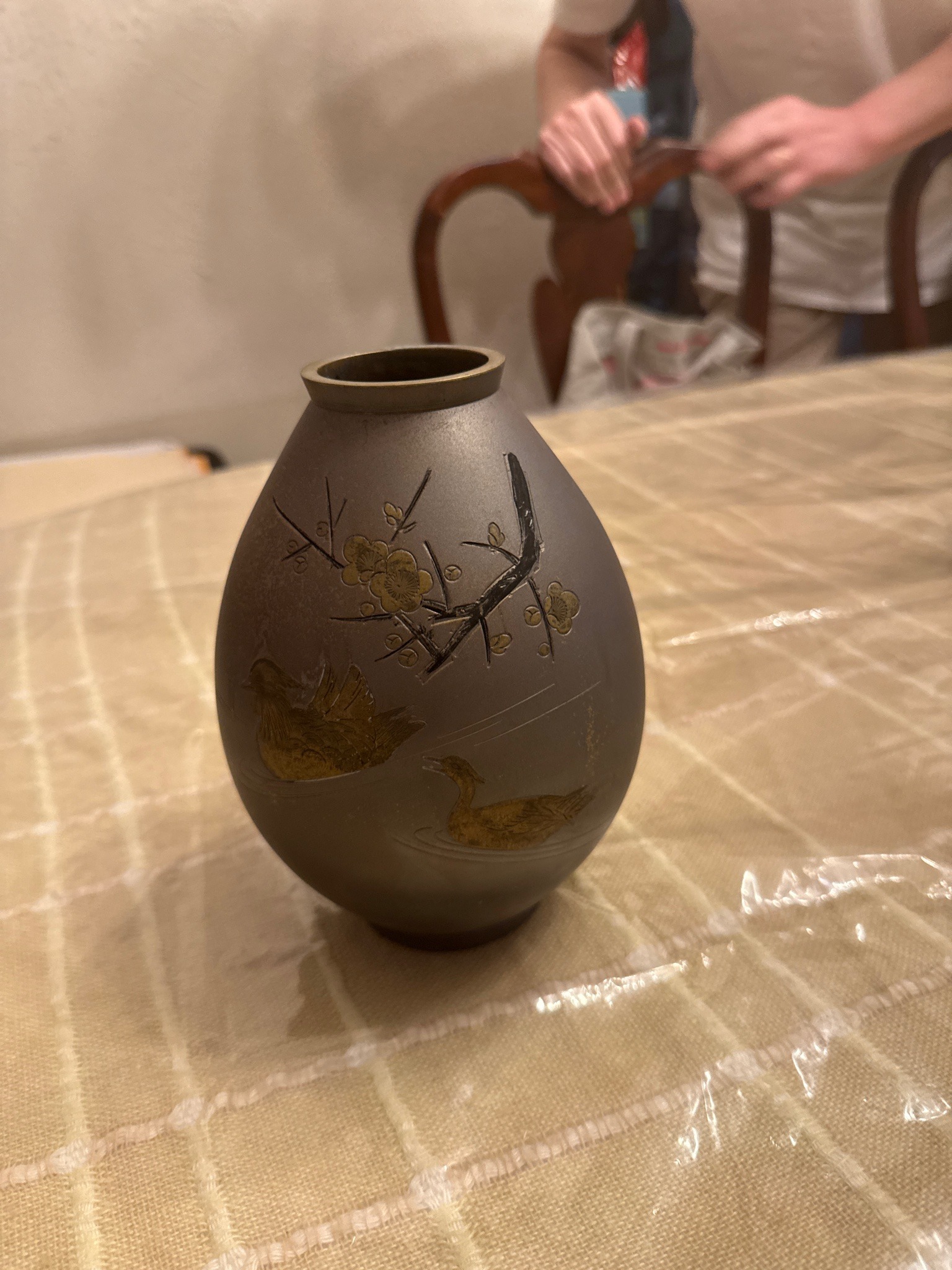
Japanese-style mixed metal ovoid vase

Decorative Metalware

AI Estimated Value

·Not an official valuation·Verify before acting

$1,200 - $1,800

As of June 25, 2026

AI Item Analysis

·AI can make mistakes·Verify before acting
This item appears to be an ovoid-shaped metal vase, stylistically consistent with late 19th or early 20th-century Japanese metalwork, such as pieces produced during the Meiji or Taisho periods. The vessel features a textured, matte grey finish that may be consistent with patinated bronze or a similar alloy. It is decorated with mixed-metal high-relief or inlaid imagery depicting a naturalistic scene of two ducks swimming beneath a blossoming flowering branch, likely plum or cherry blossoms. The decorative elements appear to be executed in shades of gold-tone metal and darkened silver or copper-toned metal, suggesting techniques like 'zogan' (inlay) or 'takazogan' (high-relief inlay). The vase has a short, slightly recessed neck and a rounded, tapered body that sits on a small integrated foot. No maker’s marks or signatures are visible in the provided image; therefore, any specific attribution to a workshop or artist is hypothetical and subject to physical inspection for a seal or signature on the base. The overall craftsmanship suggests a high level of detail in the rendering of the feathers and floral petals. Visible condition includes some minor surface variations and possible light oxidation consistent with age, though the integrity of the form appears intact.
AI Appraisal Report

·AI can make mistakes·Verify before acting
Based on my visual analysis of the provided image, this ovoid vase appears to be a high-quality example of Japanese mixed-metal work, hypothesized to date from the Meiji (1868–1912) or early Taisho period. The vessel's decorative program, featuring ducks and floral branches in high-relief zogan techniques, suggests a level of craftsmanship associated with skilled metalwork ateliers from that era. However, from a photo alone, I cannot verify the exact metal composition or the presence of a hidden signature under the base. The value of $1,200–$1,800 is an estimate for an item of this type assuming the attribution to the Meiji period is correct and that the piece is an unsigned workshop product of high quality. Typically, if this piece were found to bear a signature consistent with a known master such as Miyabe Atsuyoshi or a member of the Komai workshop, the value could increase significantly. Conversely, if physical inspection reveals it to be a mid-20th-century mass-produced 'in the style of' reproduction using lower-quality casting and surface plating rather than true mixed-metal inlay, the value would likely drop below $300. Market demand for authentic Meiji-era metalwork remains strong among collectors of Asian art, though prices depend heavily on the crispness of the detail and the condition of the patination. A physical examination is required to check for structural repairs, confirm the specific alloys used, and search for maker marks. Definitive authentication would require provenance documentation and a hands-on review by a specialist in Japanese decorative arts.

Get your items appraised

Instant estimates of your treasures with AI-powered appraisals

Browse More Appraisals