AI identification & appraisal estimate

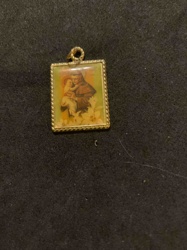
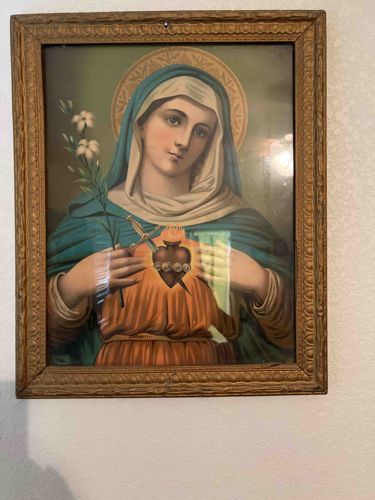
Vintage Framed Lithograph of the Immaculate Heart of Mary

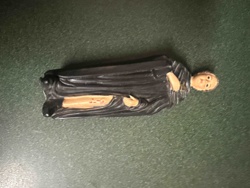
Submitted photo of Vintage Framed Lithograph of the Immaculate Heart of Mary
Photo submitted by the user — not generated by AI

AI Estimated Value

Not an official valuation

$125 - $175

AI estimate as of January 12, 2026 · verify with a professional before acting

AI-Generated · Verify before acting

Everything on this page is generated by AI for informational purposes only. AI can make mistakes — the AI may misidentify items or misattribute them (artist, maker, brand, designer, origin, era). This is not an official valuation and should not be used for insurance, sale, tax, estate, legal, or lending purposes — or any decision requiring a certified appraisal. It is not an authoritative claim about any person, brand, or rights holder — do not share or rely on it as a factual statement about a third party. Always consult qualified professionals before making financial decisions.

Read the full disclaimer

AI Item Analysis

This item is a commercially produced religious lithograph depicting the Immaculate Heart of Mary, likely dating from the early to mid-20th century (c. 1920s–1950s). The artwork features Mary in a traditional blue mantle and white veil, holding a stem of white lilies, symbolizing purity. Her heart is visible on her chest, encircled by roses and pierced by a sword, representing her sorrows. The style is characteristic of Catholic devotional art from this era, utilizing soft gradients and a serene, idealized facial expression. The print is housed in its original or period-appropriate carved wooden frame with a gilded or 'shabby chic' bronze-tone finish, featuring a repeating circular or scalloped pattern. Physically, the piece consists of a paper print under glass. The frame appears to have a weathered patina consistent with age, showing minor scuffs and some potential loss of gilding on the corners and edges. The lithograph itself shows slight color fading, particularly in the saturation of the teal and orange tones, which is common for prints of this age due to light exposure. No major tears or water damage are immediately visible on the print face, though its position in the frame suggests it may have shifted slightly over time. The craftsmanship of the frame indicates a mass-market production intended for home altars or domestic decor. There is a small nail visible at the top center which may be a later repair or used for additional hanging support. Overall, the condition is fair to good, retaining significant aesthetic appeal for collectors of vintage religious iconography.
AI Appraisal Report

I have virtually examined this lithograph of the Immaculate Heart of Mary. The item is a mass-produced devotional print from the mid-20th century, likely 1930s-1950s. The chromolithographic process used here is consistent with the era's budget-friendly religious art intended for domestic use. The condition is fair; while the frame retains its period charm with a pleasant bronze-tone patina, the print shows noticeable light-induced fading and chromatic shift. My visual inspection indicates the print has slightly shifted within the housing, potentially exposing the paper edges to acidic mount materials. Market demand for mid-century religious iconography remains steady, driven primarily by 'shabby chic' interior decorators and collectors of Catholic memorabilia rather than fine art investors. This piece is not rare; however, its value is bolstered by the original decorative carved frame, which is often more desirable to contemporary buyers than the print itself. Recent auction results for similar mass-market religious lithographs of this size generally fall between $80 and $200 depending on frame integrity. Limitations: This appraisal is based strictly on digital imagery. I cannot verify the substrate's exact composition or check for hidden foxing or mold on the verso without removing the backing. A physical inspection would be required to determine if the frame is solid wood or molded gesso. To fully authenticate the age, I would need to examine the paper's fiber under magnification (40x-100x) and check for a publisher’s mark often hidden by the frame lip. Provenance documentation, such as original purchase receipts or family records, would clarify its history but would not significantly alter the market value of a mass-produced item.

Keep exploring

More religious art and devotional objects appraisals

Get your items appraised

Instant AI-powered appraisal estimates from a photo

Browse More Appraisals