AI Appraisal Estimate

AI-generated estimates · not official valuations

From the user

What was submitted

Photo and notes provided by the user — not generated by AI

Submitted item photo
Submitted photo · June 6, 2026

User's notes

Ceramic

AI analysis below

AI appraisal

AI analysis & estimate

AI-Generated · Verify before acting

Everything below is generated by AI for informational purposes only. AI can make mistakes — the AI may misidentify items or misattribute them (artist, maker, brand, designer, origin, era). This is not an official valuation and should not be used for insurance, sale, tax, estate, legal, or lending purposes — or any decision requiring a certified appraisal. It is not an authoritative claim about any person, brand, or rights holder — do not share or rely on it as a factual statement about a third party. Always consult qualified professionals before making financial decisions.

Note

This analysis also relies on unverified notes provided by the user, which may be incomplete or inaccurate and could affect the result.

Read the full disclaimer

AI Identification

·Not independently authenticated·Verify before acting

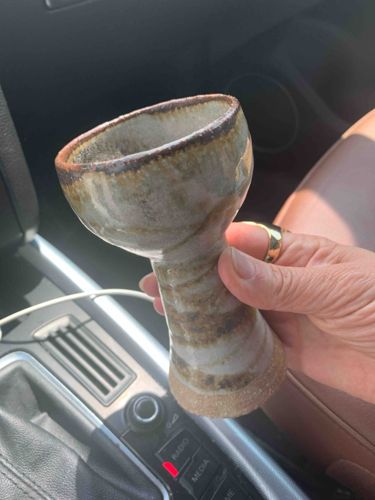
Handcrafted Ceramic Goblet/Chalice

Ceramics

AI Estimated Value

·Not an official valuation·Verify before acting

$40-$75

As of June 6, 2026

AI Item Analysis

·AI can make mistakes·Verify before acting
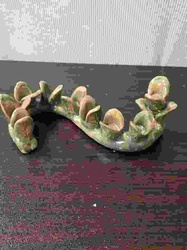
The item is a small, handcrafted ceramic goblet or chalice, characterized by its rustic and organic aesthetic. It features a broad, slightly flared rim at the top, tapering down to a slender, elongated stem, and a stable, flat base. The construction appears to be coil-built or thrown on a wheel, given the subtle concentric rings visible, particularly on the stem. The primary material is likely stoneware or earthenware, evident from the earthy tones and visible grit in the unglazed sections. The color palette is natural and muted, dominated by shades of speckled off-white, light gray, and taupe, with a prominent dark brown or reddish-brown rim, which appears to be a natural oxidation of the clay or an applied glaze. The surface is glazed over most of the body, giving it a somewhat glossy but irregularly textured finish, while the bottom portion and some horizontal bands on the stem appear to be intentionally unglazed, revealing the raw texture of the clay body. There are no obvious signs of significant damage such as chips or cracks, and the visible patina suggests it might be an older piece or intentionally aged to achieve its rustic look. The craftsmanship appears to be artistic and unique, suggesting a studio pottery piece rather than mass-produced. Its irregular form and varied surface treatment indicate a handmade origin. No clear maker's marks or signatures are visible in the provided images. The piece has a wabi-sabi quality, embracing imperfections as part of its charm. The visible condition appears good, with no overt wear or structural issues.
AI Appraisal Report

·AI can make mistakes·Verify before acting
Upon examination of the images provided, this handcrafted ceramic goblet presents as a unique piece of studio pottery. The construction, likely wheel-thrown or coil-built from stoneware, displays an intentional rustic and organic aesthetic, often referred to as 'wabi-sabi'. The combination of a glossy, speckled glaze on the body with unglazed sections on the stem and base is a common technique used by studio artists to showcase the natural texture of the clay. The condition appears to be good, with no visible chips or cracks. The primary challenge in valuing this piece is the absence of a visible maker's mark or signature. This significantly impacts its value, as it cannot be attributed to a known or listed artist. The market for unsigned studio pottery is driven by decorative appeal rather than collectibility. Comparable unsigned, well-crafted ceramic goblets of this nature typically sell in the artisan market or online platforms. While the craftsmanship is artistic, its anonymity limits its potential value. Without a clear maker or provenance, its rarity is difficult to establish. A definitive appraisal would require in-person examination to search for any faint or obscured markings, assess the weight and feel of the piece, and confirm the clay body type. Full authentication and a higher valuation would be contingent upon identifying the artist, either through a discovered mark or provenance documentation.

Get your items appraised

Instant estimates of your treasures with AI-powered appraisals

Browse More Appraisals