These notes were written by the person who submitted this item. Appraiser.AI has not verified them, and the AI's identification and estimate may rely on them.
AI Estimated Value
Not an official valuation
$350-600
AI estimate as of October 18, 2025 · verify with a professional before acting
AI-Generated · Verify before acting
Everything on this page is generated by AI for informational purposes only. AI can make mistakes — the AI may misidentify items or misattribute them (artist, maker, brand, designer, origin, era). This is not an official valuation and should not be used for insurance, sale, tax, estate, legal, or lending purposes — or any decision requiring a certified appraisal. It is not an authoritative claim about any person, brand, or rights holder — do not share or rely on it as a factual statement about a third party. Always consult qualified professionals before making financial decisions.
This analysis also relies on unverified notes provided by the user, which may be incomplete or inaccurate and could affect the result.
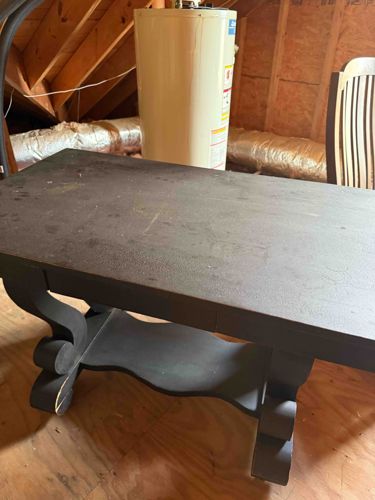
This is a rectangular library table, likely constructed from wood, characterized by its dark, possibly black or very dark brown, painted finish. The table features an ornate base composed of two heavily scrolled or S-shaped pedestals connected by a stretcher. The pedestals exhibit decorative carving or molding, with visible wear to the paint on the edges, particularly on the lower left scroll, revealing a lighter color, possibly the original wood or an undercoat. The tabletop appears solid and substantial, possibly made from a single slab or well-joined planks, and shows signs of wear such as dust accumulation, minor scratches, and possibly some surface discoloration or fading consistent with age and use. The finish on the top has a matte or satin appearance, not glossy. The overall construction suggests a robust and stable piece of furniture. While no specific maker's marks, signatures, or stamps are visible, the stylistic elements of the base, with its substantial scrolling, suggest a traditional or possibly an early 20th-century design influence, perhaps Neoclassical revival or Arts and Crafts with a unique twist. The visible condition issues point towards it being an older piece that has seen considerable use, currently stored in an attic environment as indicated by the background. The craftsmanship appears solid, emphasizing durability and decorative form.
AI Appraisal Report
Upon examining the provided image of this library table, I note its robust rectangular form, likely crafted from wood and finished in a dark, possibly black or very dark brown, paint. The most distinctive feature is its ornate base, comprised of two heavily scrolled pedestals—suggesting an S-shape—connected by a sturdy stretcher. The pedestals exhibit decorative carving or molding, with noticeable wear to the paint, particularly on the lower left scroll, revealing a lighter color underneath. This wear is consistent with an antique or vintage item that has seen considerable use.
The tabletop appears substantial, showing signs of age such as dust accumulation, minor scratches, and potential surface discoloration. The matte or satin finish on the top further indicates age and use. The overall construction points to a durable and stable piece.
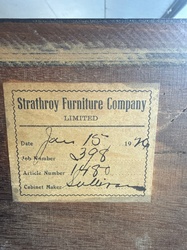
Authenticity: Without visible maker's marks or signatures, a definitive attribution is challenging. The stylistic elements, especially the elaborate scrolled base, suggest a traditional design, possibly late 19th to early 20th century. The wear and design align with pieces from the Neoclassical revival or Arts and Crafts periods, though it exhibits a unique, heavy scrolled aesthetic. An in-person examination would be crucial to confirm wood type, construction methods (e.g., joinery), and the age of the finish. Disassembly, if possible, could reveal hidden marks.
Market Conditions and Demand: Library tables of this age and style generally see moderate demand. The dark painted finish, while potentially original, might limit its appeal compared to tables with natural wood finishes, especially if the underlying wood is not of particularly high quality. The ornate base is a positive, adding character. Comparables in similar condition typically fall within the $350-$600 range, especially with condition issues like paint wear and surface scratches. Rarity is not particularly high for a library table of this general type, though the specific ornate base is distinctive.
Impact on Value: The primary factors impacting value are its condition (paint wear, surface imperfections), lack of definitive provenance or maker, and current market trends for traditional furniture. While the substantial construction and decorative base add inherent value, the painted finish and wear necessitate a lower appraisal than a pristine, signed piece. Being stored in an attic, as indicated, often means it has not been actively maintained or displayed, contributing to the wear. If the paint is not original, a professional stripping and refinishing to reveal a desirable wood grain could increase its value, but that is a significant investment. My appraisal is based on its current condition and presentation. Limitations: An in-person inspection would allow for examination of joinery, wood species, and the true age and originality of the paint finish, which cannot be definitively assessed from images alone. Spectroscopic analysis of the paint could confirm its age and composition.