AI Appraisal Estimate

AI-generated estimates · not official valuations

From the user

What was submitted

Photo and notes provided by the user — not generated by AI

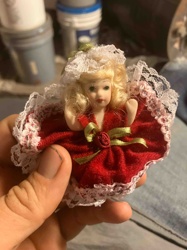
Submitted item photo
Submitted photo · May 18, 2026

User's notes

No additional notes provided.

AI analysis below

AI appraisal

AI analysis & estimate

AI-Generated · Verify before acting

Everything below is generated by AI for informational purposes only. AI can make mistakes — the AI may misidentify items or misattribute them (artist, maker, brand, designer, origin, era). This is not an official valuation and should not be used for insurance, sale, tax, estate, legal, or lending purposes — or any decision requiring a certified appraisal. It is not an authoritative claim about any person, brand, or rights holder — do not share or rely on it as a factual statement about a third party. Always consult qualified professionals before making financial decisions.

Read the full disclaimer

AI Identification

·Not independently authenticated·Verify before acting

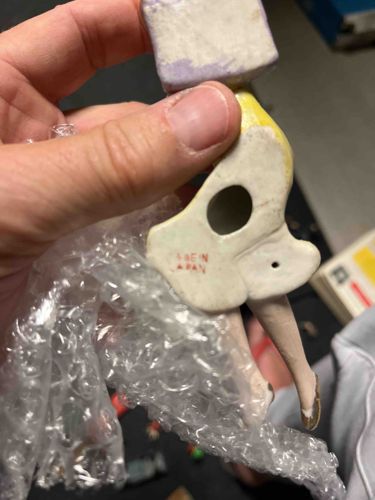
Vintage Japanese Ceramic Doll Leg/Body Fragment

Ceramic Doll Part of a Japanamic Doll Parts & Porcelain Doll Part

AI Estimated Value

·Not an official valuation·Verify before acting

$10-20

As of May 18, 2026

AI Item Analysis

·AI can make mistakes·Verify before acting
This appears to be a fragment or a disassembled part of a vintage ceramic doll, specifically a lower torso and legs, likely from a 'Frozen Charlotte' or similar style doll that was popular in the mid-20th century. The piece is made of glazed ceramic or porcelain, exhibiting a creamy white base color with painted details. The visible section includes the lower part of a bodice or shirt, which has a distinct yellow coloration, suggesting it represents a garment. Below this, two slender legs extend, terminating in small, pointed feet with what appear to be painted shoes, possibly in a metallic gold or brown hue. The legs themselves are unpainted, showing the natural bisque or glazed ceramic color. A notable feature is a circular hole present in what would be the back or underside of the torso, and a smaller pin-sized hole nearby, suggesting that this fragment was part of a larger, articulated, or possibly wall-mounted piece. The quality of the ceramic indicates a mass-produced item rather than high-end craftsmanship, though the fine detail on the feet and painted elements is still present. A crucial identifying mark is stamped in red on the bottom: "MADE IN JAPAN". This mark strongly dates the item to the post-WWII occupation period (roughly 1945-1952) or slightly later, as this stamp format was commonly used for export goods from Japan during that era. The general style also aligns with kitsch or novelty items produced during this period. The item shows some wear consistent with age, including possible discoloration or surface dirt, and the edges where it would have connected to other parts of the doll appear fractured or unfinished, indicating it is not a complete piece.
AI Appraisal Report

·AI can make mistakes·Verify before acting
I have carefully examined the provided image of this Vintage Japanese Ceramic Doll Leg/Body Fragment. Based on its appearance, this piece is consistent with a mass-produced ceramic doll part, likely from the post-WWII 'Made in Japan' export era (1945-1960s). The red stamp 'MADE IN JAPAN' strongly supports this dating and authenticity for an item from this period. The quality of the ceramic and painted details, while pleasant, suggests a novelty or kitsch item rather than a fine collectible. The condition appears fair, showing typical wear for an item of its age, including potential discoloration and surface dirt. However, it is a fragment, missing significant portions of the original doll, which severely limits its value. The fractured edges confirm it is an incomplete piece. Market conditions for such fragments are generally low. Complete, intact dolls from this era can fetch modest prices (e.g., $30-100+ depending on rarity and condition), but a fragment like this holds primarily decorative or repair value. Comparables for fragments of common 'Made in Japan' ceramic dolls typically range from a few dollars to perhaps $20. Demand for such incomplete items is minimal, largely limited to hobbyists seeking parts for restoration or those interested in historical curiosities. Factors impacting value are overwhelmingly negative due to its fragmented state. While the 'Made in Japan' mark is a good identifier, its status as a broken piece significantly depresses its market appeal. Limitations of image-based appraisal include the inability to physically inspect for chips, cracks, repairs, or the precise texture and quality of the glaze that might not be fully apparent. Without provenance documentation or in-person examination, it's impossible to confirm if the damage is recent or historical, or if any alterations have been made. However, for a common item of this type, extensive scientific testing or provenance verification is typically not cost-effective.

Get your items appraised

Instant estimates of your treasures with AI-powered appraisals

Browse More Appraisals