AI estimate as of August 1, 2025 · verify with a professional before acting
AI-Generated · Verify before acting
Everything on this page is generated by AI for informational purposes only. AI can make mistakes — the AI may misidentify items or misattribute them (artist, maker, brand, designer, origin, era). This is not an official valuation and should not be used for insurance, sale, tax, estate, legal, or lending purposes — or any decision requiring a certified appraisal. It is not an authoritative claim about any person, brand, or rights holder — do not share or rely on it as a factual statement about a third party. Always consult qualified professionals before making financial decisions.
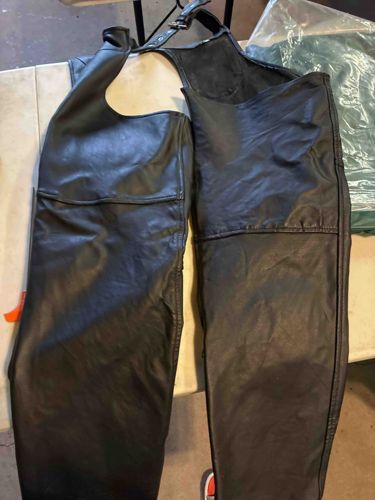
The item is a pair of black leather chaps, typically worn over regular pants by motorcyclists for protection and warmth or as part of a costume. They are constructed from what appears to be genuine, relatively soft black leather, exhibiting a slight sheen, suggesting it might be full-grain or top-grain leather. The overall color is a uniform black, though some areas show slight variations in shading due to lighting and minor wear. Each leg is a separate piece, connected at the waist by an adjustable belt mechanism visible at the top, featuring a metal buckle and multiple holes for size adjustment. The design includes cutouts at the groin area, characteristic of chaps, allowing the wearer's inner thighs and buttocks to remain uncovered. There are horizontal seams creating a pocket-like detail on the upper thigh area of each leg; however, it is unclear from the image if these are functional pockets or merely decorative flaps. The side seams of the legs appear to be zippered, allowing for easy donning and removal, and possibly for adjusting the fit around the leg. The leather shows signs of moderate use, with some creasing and slight indentations consistent with wear. No significant tears, scuffs, or repairs are immediately evident, indicating decent preservation. The stitching appears to be sturdy and intact, contributing to the perceived quality of craftsmanship. There are no discernible maker's marks, brand names, or specific identifying tags visible in the provided image. Given the classic design and lack of specific period embellishments, these chaps could belong to a broad timeframe, possibly from the late 20th century to the present day. The quality of the leather and construction suggests a durable item designed for practical use.
AI Appraisal Report
I have examined the provided image of these black leather motorcycle chaps. Based on visual assessment, the condition appears good, consistent with moderate use. The leather exhibits a slight sheen, suggesting decent quality, possibly full-grain or top-grain. There are creasing and minor indentations, but no apparent tears, major scuffs, or repairs, indicating good preservation. The stitching appears intact and sturdy. Authenticity, based solely on visual inspection, is presumed given the classic design; however, without maker's marks or tags, attribution to a specific brand or period is impossible.
Market conditions for used motorcycle chaps vary significantly based on brand, leather quality, and condition. Generic, unbranded leather chaps, even in good condition, typically fetch lower prices compared to branded items. Comparables for unbranded, used, good-condition leather chaps generally range from $75 to $150. Demand is consistent within the motorcycle community, but rarity is low for unbranded items. Factors impacting value include the lack of branding, which limits collectibility, and the general availability of similar items. While the leather appears to be of reasonable quality and the construction solid, the absence of distinguishing features prevents a higher valuation.
Limitations in authenticity verification are significant. Without physical inspection, I cannot ascertain the precise leather type (e.g., cowhide, buffalo, etc.), internal lining condition, or precise origin. In-person examination would allow for tactile assessment of leather suppleness, inspection of all seams, zipper functionality, and detection of any subtle deficiencies not visible in images. Provenance documentation, such as original purchase receipts or known history, would be crucial for determining any specific period or brand association. Scientific testing of the leather is not typically done for items of this nature unless there's a specific dispute regarding material composition, which is not the case here.