AI estimate as of August 1, 2025 · verify with a professional before acting
AI-Generated · Verify before acting
Everything on this page is generated by AI for informational purposes only. AI can make mistakes — the AI may misidentify items or misattribute them (artist, maker, brand, designer, origin, era). This is not an official valuation and should not be used for insurance, sale, tax, estate, legal, or lending purposes — or any decision requiring a certified appraisal. It is not an authoritative claim about any person, brand, or rights holder — do not share or rely on it as a factual statement about a third party. Always consult qualified professionals before making financial decisions.
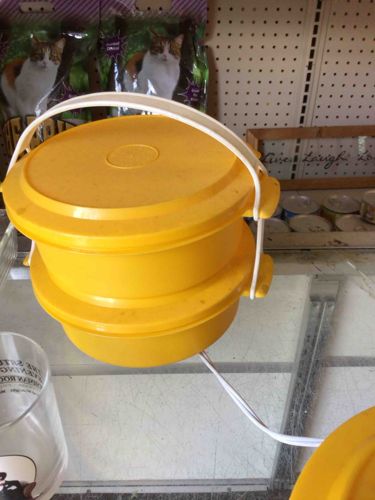
The item is a yellow, multi-tiered food carrier or warmer, likely made of plastic, given its vibrant color and smooth finish. It consists of at least two stacked circular containers, each with a corresponding lid. The top container features a prominent, circular handle of white plastic, which appears to be a rigid, fixed handle extending upwards, likely for easy portability. The handle is attached to the top container through white plastic projections on its sides. The overall color is a bright, somewhat matte yellow. Both containers appear to have a slightly concave or recessed top surface, with a distinct rim. The construction suggests a stackable design, possibly allowing for different food items to be carried or warmed simultaneously. There are visible signs of use and age, including smudges and dust on the yellow plastic, indicating a degree of wear or prolonged storage. A white electrical cord is visible extending from the base of the lower container, suggesting that this is an electric appliance, likely a slow cooker or a food warmer, designed to keep food warm while transported or served. This electrical component distinguishes it from a simple food storage container. The visible portion of the cord is clean, but its connection point to the unit isn't perfectly clear. The presence of the cord hints at a modern or mid-20th-century design, likely from the latter half of the 20th century, as electric food warmers became more common. The craftsmanship appears functional rather than ornate, typical of utilitarian kitchen appliances. No discernible maker's marks or signatures are visible in the provided image.
AI Appraisal Report
Upon visual examination of this yellow electric stackable food warmer/carrier, I assess its condition as fair to good used condition. There are visible smudges and dust, indicating prior use and some wear, but no apparent structural damage or significant cracks from what can be observed in the image. Authenticity, based solely on visual cues, suggests it is a genuine utilitarian electric food warmer from the mid to late 20th century, likely between the 1960s and 1980s, given the distinctive vibrant yellow plastic and white electric cord. However, without maker's marks or original packaging, and relying only on photographs, definitive authentication of origin or specific model is impossible.
Market conditions for such vintage electric kitchenware are niche. Comparables would include other vintage electric food warmers, slow cookers, or Bento boxes, though the stackable, multi-tiered electric design is somewhat unique. Demand is low to moderate, primarily from collectors of vintage kitchen appliances, enthusiasts of mid-century aesthetics, or individuals seeking functional retro items. Rarity is moderate; while not a one-of-a-kind piece, this specific design may not be widely available. Factors negatively impacting value include the lack of a known manufacturer, the general wear, and the inherent safety concerns associated with vintage electrical appliances, which often require professional inspection or rewiring before use. Factors positively impacting value are its unique stacked design and vibrant color, appealing to certain aesthetic preferences.
For full authentication and a more precise appraisal, an in-person examination would be crucial. This would allow for inspection of the electrical components for safety and functionality, a thorough search for hidden maker's marks or patent numbers, assessment of the plastic's integrity beyond surface appearance, and perhaps an electrical test. Provenance documentation, such as original receipts or manuals, would significantly enhance its value by confirming its history and specifications. Scientific testing, while unlikely for such an item, could potentially confirm plastic composition or age, though this is typically not cost-effective for an item of this type.