AI Appraisal Estimate

AI-generated estimates · not official valuations

From the user

What was submitted

Photo and notes provided by the user — not generated by AI

Submitted item photo
Submitted photo · May 18, 2026

User's notes

No additional notes provided.

AI analysis below

AI appraisal

AI analysis & estimate

AI-Generated · Verify before acting

Everything below is generated by AI for informational purposes only. AI can make mistakes — the AI may misidentify items or misattribute them (artist, maker, brand, designer, origin, era). This is not an official valuation and should not be used for insurance, sale, tax, estate, legal, or lending purposes — or any decision requiring a certified appraisal. It is not an authoritative claim about any person, brand, or rights holder — do not share or rely on it as a factual statement about a third party. Always consult qualified professionals before making financial decisions.

Read the full disclaimer

AI Identification

·Not independently authenticated·Verify before acting

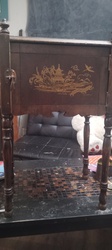
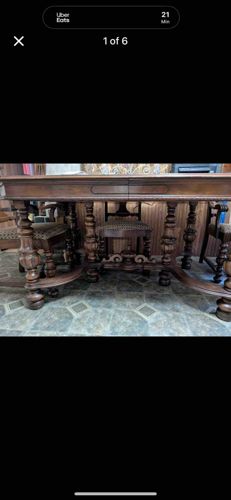
Renaissance Revival Style Carved Oak Library Table

Antique Furniture

AI Estimated Value

·Not an official valuation·Verify before acting

$1,500 - $2,200

As of May 18, 2026

AI Item Analysis

·AI can make mistakes·Verify before acting
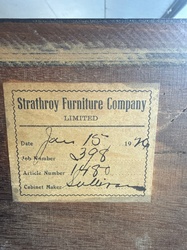
This is a substantial Renaissance Revival style library table or executive desk, likely dating from the late 19th to early 20th century. The piece is constructed from solid oak with a dark honey-brown finish and a visible tight grain. It features an ornate trestle-style base with four heavy, bulbous turned and carved legs connected by a shaped X-stretcher. The center of the stretcher is adorned with a decorative carved finial and scrollwork motif. The rectangular top includes a thick apron with a recessed oval panel detail, suggesting a hidden drawer or purely decorative relief. The legs exhibit elaborate 'melon-bulb' turnings with vertical gadrooning, a hallmark of Flemish or English Renaissance influence. In terms of condition, the table shows moderate surface wear consistent with age, including minor scuffs on the tabletop edges and some darkening of the finish in high-touch areas where a natural patina has formed. The craftsmanship is high, evidenced by the intricate symmetrical carvings and the robust joinery required to support the weight of the massive components. No visible maker's marks are discernible from this angle, but the scale and style are indicative of high-quality Victorian-era revival furniture manufacture.
AI Appraisal Report

·AI can make mistakes·Verify before acting
Based on my visual analysis, this is a high-quality Renaissance Revival library table, likely produced between 1880 and 1910. The craftsmanship is exemplary, particularly the 'melon-bulb' gadrooned legs and the complex X-stretcher. The thick oak construction and dark honey patina are consistent with premium American or European manufacturers of the Victorian era. The condition appears 'very good,' showing legitimate age-appropriate wear and oxidization on the stretcher that suggests an original finish rather than a modern reproduction. The market for heavy Renaissance Revival furniture has stabilized after a period of decline. While massive pieces can be difficult to place in modern smaller homes, this particular table doubles as an executive desk, maintaining its utility and value. Recent auction results for similar trestle-base oak tables in this condition range from $1,200 for generic pieces to $3,500 for those with confirmed makers like Horner or Herter Brothers. This piece’s lack of a visible mark keeps my estimate conservative. Key value drivers include the intricate central finial and the depth of the carving. However, I must note that image-based appraisal has limitations. To fully authenticate this item and potentially increase the valuation, a physical inspection is required to Check for secondary woods (such as poplar or pine in drawer linings), examine joinery (hand-cut vs. machine-cut dovetails), and verify the presence of 'witness marks' on the underside of the top to ensure the base and top are original to one another (a 'marriage' would reduce value by 50%). Provenance documentation, such as a bill of sale from a known estate, would further solidify its market position.

Get your items appraised

Instant estimates of your treasures with AI-powered appraisals

Browse More Appraisals