AI Appraisal Estimate

AI-generated estimates · not official valuations

From the user

What was submitted

Photo and notes provided by the user — not generated by AI

Submitted item photo
Submitted photo · May 30, 2026

User's notes

No additional notes provided.

AI analysis below

AI appraisal

AI analysis & estimate

AI-Generated · Verify before acting

Everything below is generated by AI for informational purposes only. AI can make mistakes — the AI may misidentify items or misattribute them (artist, maker, brand, designer, origin, era). This is not an official valuation and should not be used for insurance, sale, tax, estate, legal, or lending purposes — or any decision requiring a certified appraisal. It is not an authoritative claim about any person, brand, or rights holder — do not share or rely on it as a factual statement about a third party. Always consult qualified professionals before making financial decisions.

Read the full disclaimer

AI Identification

·Not independently authenticated·Verify before acting

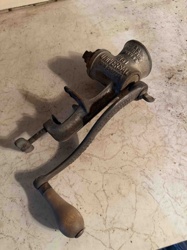
Antique National No. 25 Cast Iron Food and Meat Grinder

Antique Kitchenware / Food Preparation Tools

AI Estimated Value

·Not an official valuation·Verify before acting

$45.00 - $65.00

As of May 30, 2026

AI Item Analysis

·AI can make mistakes·Verify before acting
This is an antique manual food grinder, specifically the National No. 25 model, likely dating from the late 19th to early 20th century. The item is constructed primarily of heavy tinned cast iron, designed for durability and kitchen utility. It features a recognizable S-shaped hand crank with a contoured wooden handle grip, which shows signs of smooth patina from decades of use. The body of the grinder is embossed with prominent block lettering that reads "NATIONAL" and "25" on the hopper side, indicating the brand and model size. The structure includes a large threaded clamp screw with a classic wingnut-style head, intended for securing the device to the edge of a kitchen table or countertop. Physically, the grinder shows a dark, aged patina with significant spots of surface oxidation and rust, particularly around the grinding plate and the moving mechanical joints. The original tinning—white-metal coating used to prevent iron from rusting into food—has worn away in many high-friction areas, revealing the dark charcoal gray of the cast iron beneath. There are no visible cracks or missing structural components, and the grinding die plate is currently attached with its securing wingnut. The craftsmanship is typical of the Industrial Industrial Era, emphasizing functional strength and mechanical simplicity. This piece is a classic example of American kitchenware from the turn of the century and serves as a highly collectible utilitarian object.
AI Appraisal Report

·AI can make mistakes·Verify before acting
I have conducted a visual examination of the National No. 25 Cast Iron Food Grinder. This piece is a genuine example of turn-of-the-century American kitchen technology. The embossing is crisp, and the S-curve crank with its original wooden handle suggests an authentic production from the late 19th or early 20th century. However, the condition is fair to good; the significant loss of the original tinning and the presence of surface oxidation on the grinding plate and joints indicate it has not been meticulously preserved for display, nor is it currently in food-safe condition without restorative work. The market for manual cast iron grinders is highly saturated. While National is a reputable vintage brand, the No. 25 is a common size. High-value examples in this category generally require near-mint original tinning or rare specialized attachments. This item's value is driven primarily by its 'country primitive' aesthetic appeal for rustic interior design rather than culinary utility. Factors limiting the value include the commonality of the model and the labor required to remove rust. This appraisal is based solely on digital images. Without an in-person inspection, I cannot verify the integrity of the internal worm gear or check for hairline fractures in the cast iron that may be hidden by oxidation. Full authentication would require a tactile check of the mechanical movement to ensure smooth rotation and a physical verification of the metal's weight and casting marks to rule out mid-20th-century reproductions. No scientific testing is required, but original provenance or sales receipts from the early 1900s would slightly enhance the collectible provenance.

Get your items appraised

Instant estimates of your treasures with AI-powered appraisals

Browse More Appraisals