AI Appraisal Estimate

AI-generated estimates · not official valuations

From the user

What was submitted

Photo and notes provided by the user — not generated by AI

Submitted item photo
Submitted photo · June 13, 2026

User's notes

No additional notes provided.

AI analysis below

AI appraisal

AI analysis & estimate

AI-Generated · Verify before acting

Everything below is generated by AI for informational purposes only. AI can make mistakes — the AI may misidentify items or misattribute them (artist, maker, brand, designer, origin, era). This is not an official valuation and should not be used for insurance, sale, tax, estate, legal, or lending purposes — or any decision requiring a certified appraisal. It is not an authoritative claim about any person, brand, or rights holder — do not share or rely on it as a factual statement about a third party. Always consult qualified professionals before making financial decisions.

Read the full disclaimer

AI Identification

·Not independently authenticated·Verify before acting

Boer-Influence Domestic Goat

Livestock / Agriculture

AI Estimated Value

·Not an official valuation·Verify before acting

$450 - $650

As of June 13, 2026

AI Item Analysis

·AI can make mistakes·Verify before acting
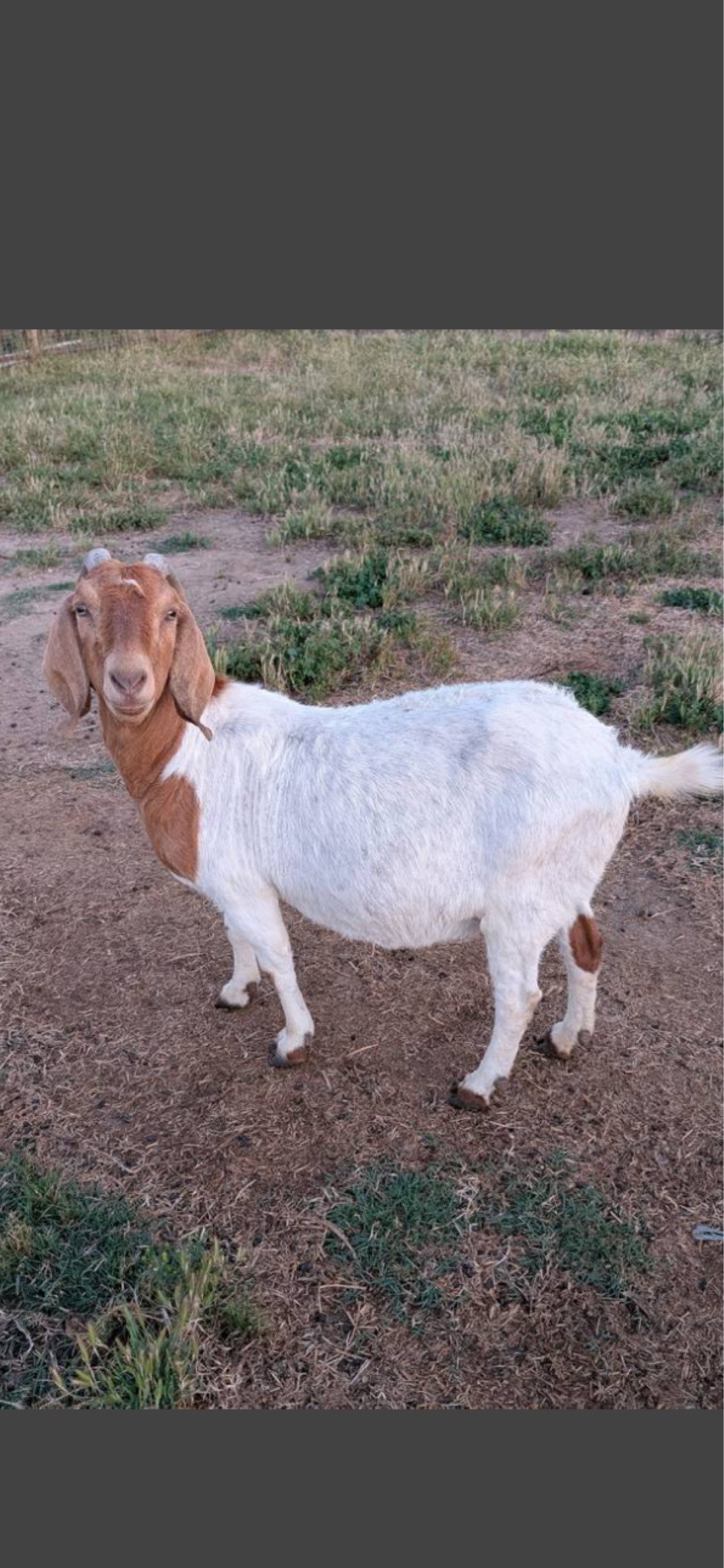
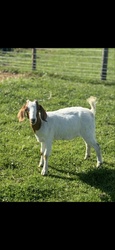
This specimen is a domestic goat exhibiting classic physical characteristics of the Boer breed, likely a doe based on the body structure. The animal displays a traditional color pattern consisting of a deep reddish-brown (cape) head and neck with a predominantly white body. A small, distinctive brown patch is visible on the inner rear leg. Morphologically, the goat possesses long, pendulous ears, a convex (roman) nose profile, and short, light-colored horns. The coat is short and appears well-maintained, though minor natural staining is present on the lower limbs and hooves from soil contact. The body is robust and barrel-shaped, indicating good nutritional status and heavy muscling consistent with meat-type livestock. There are no visible signs of injury, illness, or genetic defects. The hooves appear to be in functional condition without excessive overgrowth. This animal represents a high-quality example of contemporary livestock breeding, showing a strong frame and well-proportioned skeletal structure. Notable distinguishing features include the wide forehead and the specific distribution of 'ticking' or small dark spots visible through the white coat along the flank. The animal appears to be in its prime adult years, showing full physical development and a clear, alert expression characteristic of a healthy herd animal.
AI Appraisal Report

·AI can make mistakes·Verify before acting
Upon visual inspection of this Boer-influenced doe, I find the specimen to be in excellent physical condition, exhibiting the robust muscling and 'Roman' nose profile hallmark of high-quality meat goats. The coat is healthy, and the barrel-shaped body suggests superior nutritional management and meat-carrying capacity. The deep reddish-brown cape and pendulous ears are consistent with purebred or high-percentage Boer genetics, which are currently the gold standard in the commercial goat meat industry. This specific animal's strong frame and lack of visible defects position it at the higher end of the commercial market. Market demand for Boer meat goats remains strong due to their rapid growth rates and high dressing percentages. Current comparables for young, healthy females of this quality at livestock auctions range from $400 to $700, depending on regional demand and seasonal fluctuations. Factors enhancing this animal's value include its clear alert expression, well-proportioned skeletal structure, and maintained hooves. Factors that could potentially suppress value include the absence of pedigree registration and the minor staining on the lower limbs, which is typical for pastured animals but aesthetic in nature. Limitations: My assessment is based solely on photographic evidence. A definitive appraisal requires an in-person examination to assess the udder health (teat structure), dental wear (to determine precise age), and tactile muscle tone. Authentication of 'full-blood' status would require official American Boer Goat Association (ABGA) registration papers or DNA verification, as high-percentage crossbreeds can visually mimic purebreds. Furthermore, a negative test for CL, CAE, and Johne's disease would be necessary to verify its value as a foundation breeding animal.

Get your items appraised

Instant estimates of your treasures with AI-powered appraisals

Browse More Appraisals