AI Appraisal Estimate

AI-generated estimates · not official valuations

From the user

What was submitted

Photo and notes provided by the user — not generated by AI

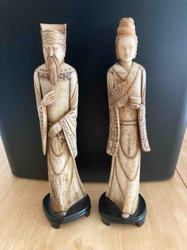
Submitted item photo
Submitted photo · May 22, 2026

User's notes

Solid heavy

AI analysis below

AI appraisal

AI analysis & estimate

AI-Generated · Verify before acting

Everything below is generated by AI for informational purposes only. AI can make mistakes — the AI may misidentify items or misattribute them (artist, maker, brand, designer, origin, era). This is not an official valuation and should not be used for insurance, sale, tax, estate, legal, or lending purposes — or any decision requiring a certified appraisal. It is not an authoritative claim about any person, brand, or rights holder — do not share or rely on it as a factual statement about a third party. Always consult qualified professionals before making financial decisions.

Note

This analysis also relies on unverified notes provided by the user, which may be incomplete or inaccurate and could affect the result.

Read the full disclaimer

AI Identification

·Not independently authenticated·Verify before acting

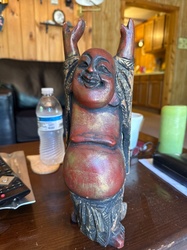
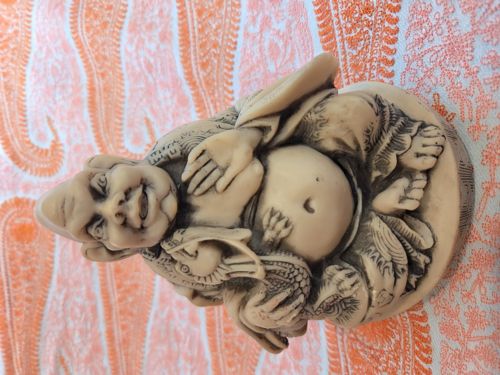
Carved Faux Ivory Budai/Laughing Buddha Figurine with Dragon

Collectibles / Asian Art and Sculptures

AI Estimated Value

·Not an official valuation·Verify before acting

$40-80

As of May 22, 2026

AI Item Analysis

·AI can make mistakes·Verify before acting
This is a solid, heavy figurine depicting the Budai, commonly known as the Laughing Buddha, seated in a relaxed posture. The piece appears to be crafted from a molded composite or high-quality cast resin designed to mimic the appearance of aged ivory, often referred to as cellulose nitrate or 'faux ivory.' It possesses a distinct creamy, off-white coloration with dark pigment rubbed into the recessed areas of the carving to accentuate the intricate details. The figure features the classic rotund belly, wide grin, and elongated earlobes typical of Chinese Buddhist iconography. Uniquely, the Buddha is entwined with a highly detailed dragon, signifying strength and good fortune. The craftsmanship is notable for the textured patterns on the dragon's scales and the draping of the Buddha's robes. The item sits on an integral carved base. Regarding condition, there is a visible dark spot or possible casting air bubble on the center of the abdomen and some surface dust in the crevices, but no major cracks or structural damage are visible. Based on the material composition and execution, it likely dates from the mid-to-late 20th century and was produced as a decorative export item.
AI Appraisal Report

·AI can make mistakes·Verify before acting
Based on my examination of the images provided, this figurine is a 20th-century decorative reproduction of a Budai, or 'Laughing Buddha,' featuring an accompanying dragon motif. The piece is crafted from a high-density polymer or cast resin, specifically designed to simulate the look and feel of carved ivory or bone. This is evidenced by the description of the piece as 'solid heavy' and the presence of what appears to be a casting air bubble on the abdomen, a flaw not found in natural organic materials. The dark wash applied to the crevices effectively highlights the molded details of the dragon's scales and the Buddha's robes, a technique common in mid-to-late 20th-century Chinese export wares. The condition appears generally good, though the surface shows minor signs of age and handling, such as dust accumulation and the aforementioned casting flaw on the belly. While aesthetically pleasing, this is not an antique hand-carved artifact but rather a mass-produced decorative item. Consequently, it does not command the high prices associated with genuine ivory or antique hand-carved bone. Market demand for 'faux ivory' or 'ivorine' collectibles is modest, driven primarily by their decorative appeal rather than investment potential. Comparable sales for similar resin-cast deity figures of this size typically range between $40 and $80 in online marketplaces and estate auctions. A physical examination—specifically a 'hot pin' test or magnified inspection of the grain (Schreger lines)—would definitively confirm the synthetic nature of the material, though visual indicators strongly point to resin. Provenance does not significantly impact value for pieces of this type.

Get your items appraised

Instant estimates of your treasures with AI-powered appraisals

Browse More Appraisals