AI Appraisal Estimate

AI-generated estimates · not official valuations

From the user

What was submitted

Photo and notes provided by the user — not generated by AI

Submitted item photo
Submitted photo · May 27, 2026

User's notes

It is in real good shape

AI analysis below

AI appraisal

AI analysis & estimate

AI-Generated · Verify before acting

Everything below is generated by AI for informational purposes only. AI can make mistakes — the AI may misidentify items or misattribute them (artist, maker, brand, designer, origin, era). This is not an official valuation and should not be used for insurance, sale, tax, estate, legal, or lending purposes — or any decision requiring a certified appraisal. It is not an authoritative claim about any person, brand, or rights holder — do not share or rely on it as a factual statement about a third party. Always consult qualified professionals before making financial decisions.

Note

This analysis also relies on unverified notes provided by the user, which may be incomplete or inaccurate and could affect the result.

Read the full disclaimer

AI Identification

·Not independently authenticated·Verify before acting

Iridescent Carnival Glass Bowl/Plate

Decorative Glassware

AI Estimated Value

·Not an official valuation·Verify before acting

$75 - $125

As of May 27, 2026

AI Item Analysis

·AI can make mistakes·Verify before acting
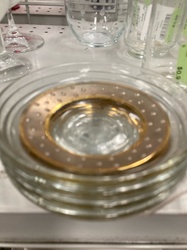
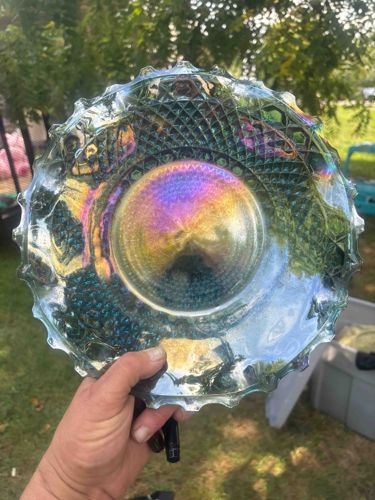
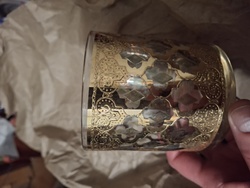
The item is a round, shallow bowl or plate made of iridescent carnival glass, exhibiting a striking array of colors including blues, greens, purples, and gold, which shift and shimmer depending on the angle of light. The primary base color appears to be a deep teal or blue. The central portion of the piece features a clear, smooth, raised area, likely impressed from the mold. Surrounding this central medallion, the design transitions into a detailed textured pattern, resembling a repeating diamond or hobnail motif, providing a tactile and visual contrast to the smooth center. The rim of the bowl is irregularly scalloped or crimped, further enhancing its decorative appeal and indicating a manufacturing process that allowed for intricate shaping. There are no visible chips, cracks, or significant wear marks, suggesting the 'real good shape' as mentioned. The iridescence, a hallmark of carnival glass, is vibrant and evenly applied, indicating good quality and careful preservation. The absence of maker's marks or signatures is common for carnival glass from the early 20th century, which is its typical style period (roughly 1900-1930s). The craftsmanship is evident in the crispness of the molded patterns and the consistent iridescence.
AI Appraisal Report

·AI can make mistakes·Verify before acting
Based on my visual examination of the provided image and the owner's description, this iridescent carnival glass bowl/plate is in remarkably good shape. The vibrant iridescence, ranging from blues and greens to purples and gold, appears well-preserved and evenly applied, indicating minimal handling wear or fading. The crispness of the diamond/hobnail pattern and the clean appearance of the central medallion suggest a high-quality molding process and no significant surface abrasion. The absence of chips, cracks, or substantial wear marks aligns with the 'real good shape' assessment. This condition is crucial for carnival glass, as surface integrity and iridescence directly impact market desirability. From a market perspective, carnival glass, particularly well-preserved examples with strong iridescence and desirable patterns, continues to hold steady demand among collectors. While not exceptionally rare, pieces in this condition with an attractive multi-color play tend to command higher prices. Comparative sales data for similar teal/blue base color carnival glass bowls, especially those with intricate patterns and scalloped rims from makers like Fenton or Northwood (though no specific maker is identifiable here, which is typical), generally fall within a certain range. The lack of a maker's mark is common for early 20th-century carnival glass and does not negatively impact value unless a specific, highly sought-after marked piece is expected. However, it is imperative to note the limitations of image-based appraisal. While the visual evidence is strong, definitive authenticity and condition verification would require an in-person examination. Physical inspection would allow me to critically assess the tactile feel, confirm the absence of hairline fractures or subtle surface imperfections not visible in photographs, and analyze the iridescence under various direct light sources to fully appreciate its depth and consistency. Provenance documentation, though rarely available for common carnival glass, could offer additional historical context. Scientific testing is generally not applied to standard carnival glass unless there are questions of material composition or age, which are not suggested here.

Get your items appraised

Instant estimates of your treasures with AI-powered appraisals

Browse More Appraisals