AI Appraisal Estimate

AI-generated estimates · not official valuations

From the user

What was submitted

Photo and notes provided by the user — not generated by AI

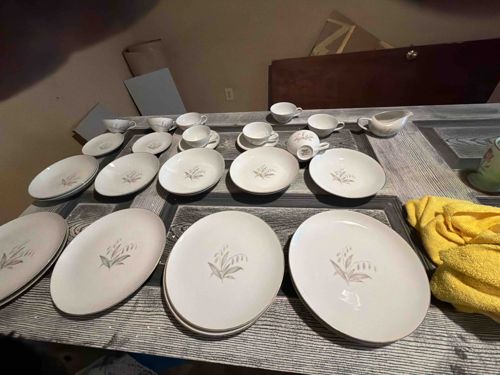
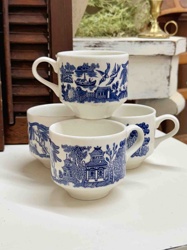
Submitted item photo
Submitted photo · May 22, 2026

User's notes

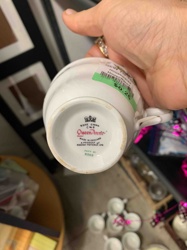
Kaysons fine china Japan

AI analysis below

AI appraisal

AI analysis & estimate

AI-Generated · Verify before acting

Everything below is generated by AI for informational purposes only. AI can make mistakes — the AI may misidentify items or misattribute them (artist, maker, brand, designer, origin, era). This is not an official valuation and should not be used for insurance, sale, tax, estate, legal, or lending purposes — or any decision requiring a certified appraisal. It is not an authoritative claim about any person, brand, or rights holder — do not share or rely on it as a factual statement about a third party. Always consult qualified professionals before making financial decisions.

Note

This analysis also relies on unverified notes provided by the user, which may be incomplete or inaccurate and could affect the result.

Read the full disclaimer

AI Identification

·Not independently authenticated·Verify before acting

Kaysons Fine China Silver Lily Dinnerware Set

Dinnerware and Tableware

AI Estimated Value

·Not an official valuation·Verify before acting

$150-$250

As of May 22, 2026

AI Item Analysis

·AI can make mistakes·Verify before acting
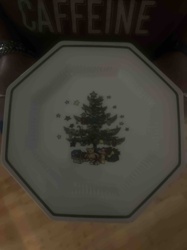
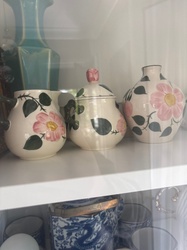
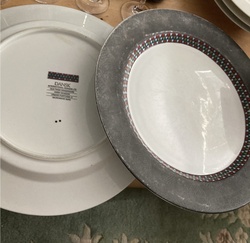
This is a partial dinnerware set from Kaysons Fine China in the 'Silver Lily' pattern, manufactured in Japan during the mid-20th century, likely the 1950s or 1960s. The set is crafted from white translucent porcelain with a smooth, glazed finish. The central motif features a delicate spray of lilies of the valley in soft grey and muted green tones, accented with metallic silver-toned highlights. The edges of the plates and rims of the cups are finished with a thin silver-colored trim, consistent with the Mid-Century Modern aesthetic of the era. The collection includes various components such as dinner plates, salad plates, soup bowls, teacups, saucers, and a gravy boat. The forms are characterized by low-profile, clean lines and slightly flared rims on the cups. While the overall surface appears well-preserved, common issues for this type of vintage china include minor rubbing to the silver trim, superficial utensil marks on the centers of the plates, and occasional small chips to the unglazed foot rings on the underside. The quality reflects standard export-grade Japanese porcelain of the post-war period, known for its uniform consistency and elegant, lightweight construction.
AI Appraisal Report

·AI can make mistakes·Verify before acting
I have conducted a visual inspection of the Kaysons Fine China 'Silver Lily' dinnerware set. This pattern, produced in Japan during the mid-20th century, epitomizes the post-war export aesthetic with its delicate grey-toned floral motifs and silvered rims. Based on the provided imagery, the set appears to be an authentic example of Japanese porcelain from the 1950s or 1960s, exhibiting the characteristic translucency and lightweight construction of the era. The condition appears consistent with careful household use; however, I noted visible wear to the silver trim on some pieces and minor surface scratching from utensils, which is standard for this age. The market for mid-century Japanese china is currently dominated by functional replacement demand rather than high-end collector scarcity. Comparable sets typically realize prices between $150 and $250, depending on the piece count and the presence of high-demand serving items like the gravy boat. The primary value drivers are the completeness of the set and the integrity of the metallic trim. Limitations of this virtual appraisal include the inability to detect hairline fractures or professional restorative repairs that may only be visible under UV light or through tactile 'ping' testing. For a definitive authentication, an in-person examination of the backstamps is required to confirm the specific production run. Furthermore, verifying 'dishwasher damage'—a common issue that dulls the glaze—requires physical inspection under a raking light source to assess the surface luster accurately.

Get your items appraised

Instant estimates of your treasures with AI-powered appraisals

Browse More Appraisals