AI Appraisal Estimate

AI-generated estimates · not official valuations

From the user

What was submitted

Photo and notes provided by the user — not generated by AI

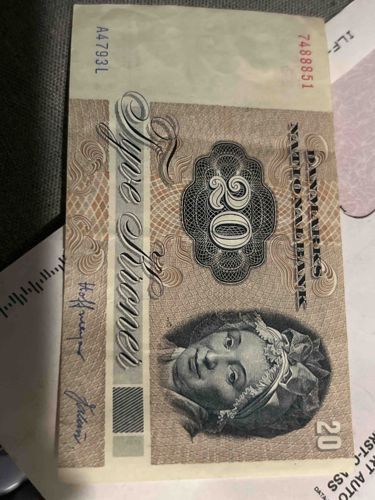
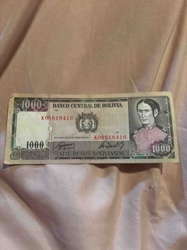
Submitted item photo
Submitted photo · June 6, 2026

User's notes

No additional notes provided.

AI analysis below

AI appraisal

AI analysis & estimate

AI-Generated · Verify before acting

Everything below is generated by AI for informational purposes only. AI can make mistakes — the AI may misidentify items or misattribute them (artist, maker, brand, designer, origin, era). This is not an official valuation and should not be used for insurance, sale, tax, estate, legal, or lending purposes — or any decision requiring a certified appraisal. It is not an authoritative claim about any person, brand, or rights holder — do not share or rely on it as a factual statement about a third party. Always consult qualified professionals before making financial decisions.

Read the full disclaimer

AI Identification

·Not independently authenticated·Verify before acting

Danish 20 Kroner Banknote (Series 1972)

Numismatics / Paper Currency

AI Estimated Value

·Not an official valuation·Verify before acting

$5.00 - $12.00

As of June 6, 2026

AI Item Analysis

·AI can make mistakes·Verify before acting
This is a 20 Kroner banknote issued by Danmarks Nationalbank, belonging to the series produced between 1972 and 1990. The note features a portrait of Pauline Tutein (1725–1799) on the obverse, based on a painting by Jens Juel. The color palette is dominated by earth tones, specifically shades of brown, tan, and grey, printed on a standard banknote paper substrate. Notable design elements include 'Tyve Kroner' in elegant script, the large '20' denomination inside an intricate guilloché rosette, and two printed signatures in the lower left corner from Danmarks Nationalbank officials. The serial numbering is visible in two different colors: a red number (7488851) and a blue prefix/number (A4793L). The reverse typically features a depiction of a pair of sparrows, though only the obverse is fully visible here. Physically, the note appears to be in 'Fine' or 'Very Fine' circulated condition; it displays visible vertical and horizontal fold lines (creasing) consistent with manual handling, slight softening of the corners, and minor overall surface soiling or aging. There are no obvious tears or large stains visible on the face, though the edges show minor wear common for paper currency of this age. The intaglio printing remains sharp, showing high-quality craftsmanship characteristic of 20th-century Danish security printing.
AI Appraisal Report

·AI can make mistakes·Verify before acting
I have conducted a visual examination of this Danish 20 Kroner banknote (Series 1972). The note features the portrait of Pauline Tutein and exhibits the characteristic brown and tan palette associated with this era of Danmarks Nationalbank currency. My assessment of the condition places this specimen in 'Very Fine' circulated state. While the intaglio printing remains crisp, there is evident horizontal and vertical folding ('cross-creasing') and slight rounding of the corners. The paper maintains moderate body, but surface soiling is consistent with regular commercial use. From a market perspective, this specific series (1972–1990) was produced in high volume. The 20 Kroner was the lowest paper denomination and was widely circulated before being replaced by a coin in 1990. Consequently, common serial numbers in circulated condition possess very little numismatic premium, typically trading slightly above their demonetized face value or as accessible specimens for beginner collectors. There are no 'fancy' serial number sequences or rare signature combinations observed here that would drive a higher valuation. Limitations: This appraisal is based solely on high-resolution digital imagery. A physical examination is required to verify the 'feel' of the paper (crispness), the presence of the watermark (a profile of Pauline Tutein), and to ensure the absence of pinholes or expert repairs that may be hidden in the folds. Furthermore, UV light testing is necessary to confirm the fluorescent security fibers are genuine. While the note appears authentic based on the quality of the guilloché work and serial typography, provenance or bank-stamped documentation would be required for a definitive guarantee of authenticity.

Get your items appraised

Instant estimates of your treasures with AI-powered appraisals

Browse More Appraisals